Empty seats at the Toyohashi venue and a muted response from Japanese spectators were more than just an image from the karate competition at the Aichi-Nagoya 2026 Asian Games.
They raised a broader question for a sport that was born in Japan, spread across the world and even secured a place in the Olympic movement for a brief period. Is the current WKF competition format still capable of attracting a global audience?
The Asian Games themselves struggled to capture the level of public attention in Japan that had been expected, with ticket sales reflecting the problem. The empty sections of the karate stands therefore cannot, on their own, be attributed to the World Karate Federation. Yet when the WKF format receives such a limited response in the sport’s homeland, the question of what has happened to karate becomes difficult to avoid.
The issue was not simply the size of the crowd. Some judging decisions added to the uncertainty surrounding the competition. In the women’s under-55kg final, Iran’s Fatemeh Saeidabadi repeatedly attacked Malaysia’s Adeola with front-leg techniques to the head, but the attacks did not result in points from the judges. Saeidabadi’s coach, Pegah Zangeneh, protested the officiating and was subsequently removed from the tatami.
The incident quickly attracted attention on social media, with images and reactions circulating widely. Regardless of whether each technique should have been awarded a point under WKF rules, such moments highlight a significant problem. When a judging decision is not easily understood by spectators, athletes or viewers watching outside the venue, the appeal of the competition can also suffer.
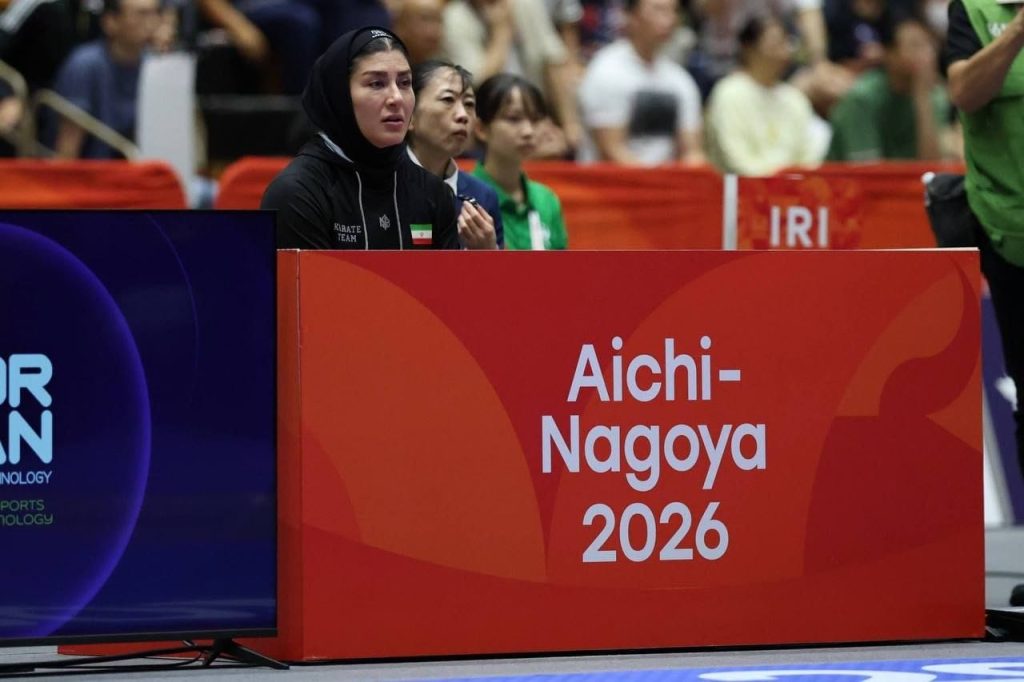
Pegah Zangeneh
The technical level of some contests did little to fill that gap. Limited attacking sequences, repeated stoppages and a lack of variety in some bouts raised further questions about whether the current WKF format can deliver the pace, variety and excitement expected by today’s spectators.
That concern becomes more significant when karate’s historic position in Japan is considered. Japan remains one of the world’s leading karate nations, with a large community of practitioners and supporters. Yet inside the Toyohashi venue, where the sport’s Japanese roots might have been expected to generate greater enthusiasm, empty seats became a significant part of the picture.
Japan also failed to finish at the top of the karate medal table. The Japanese team won two gold, one silver and two bronze medals to finish third. Kazakhstan was second with two gold, one silver and two bronze, while Iran topped the karate standings with two gold, three silver and two bronze medals.
But the medal table is not the main issue. The more significant concern is whether the WKF can make its competitions sufficiently compelling to compete for attention in an increasingly crowded global sports market.
The wider uncertainty surrounding the World Karate Federation, unclear relationships and the fragile situation visible within some national federations have made it harder to address the sport’s challenges, particularly in Asia. Karate has a broad international sporting structure, but the size of its organisational network does not necessarily translate into greater spectator appeal.
Iran provides a notable example. In recent years, the country’s national karate federation has faced criticism over the management of its national teams and its administrative structure. Federation presidents have also, in some cases, left office before completing their four-year terms. Sports federation elections in Iran have likewise remained closely connected to the country’s wider sports administration.
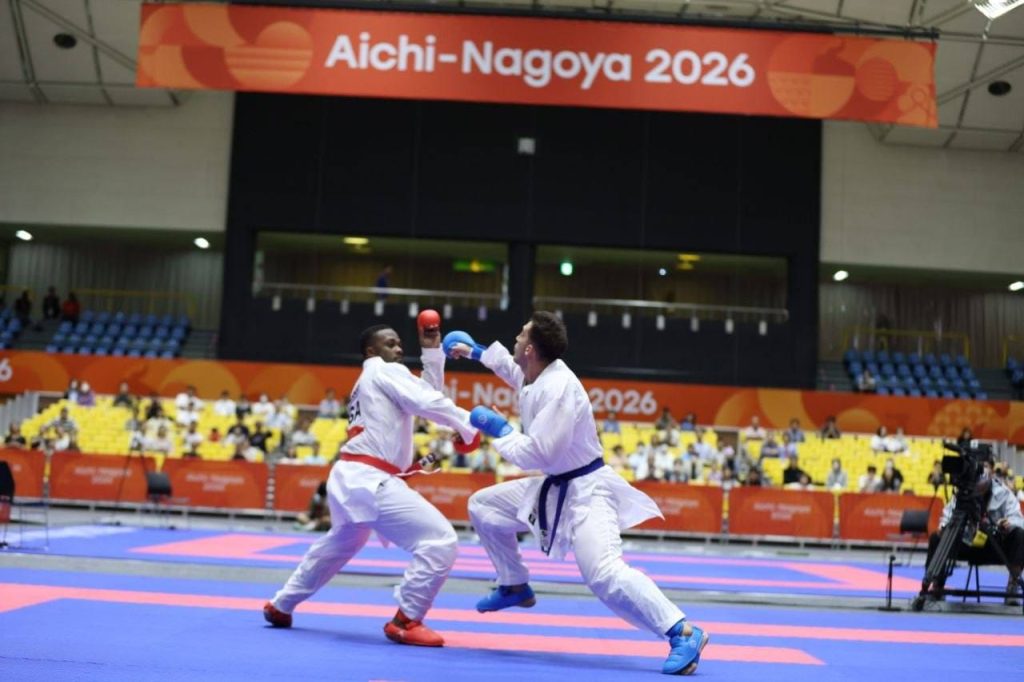
+84kg Final – Iran vs Saudi Arabia
In such circumstances, expecting Iran’s karate federation to pursue controversial international cases or judging-related issues with strength and consistency is not straightforward.
This is also not the first time that decisions involving Iranian karate have raised questions at international level. Before the Tokyo Olympic Games, where karate made its first and so far only appearance in the Olympic programme, the allocation of Iran’s quota place involving Rosita Alipour and Kazakhstan’s Moldir Zhangbyrbay became a contentious issue. The decision was not followed by the level of sustained action from Iranian sports officials and the karate federation that some had expected.
Taken together, these issues present a complicated picture of karate today. On one side is a sport with deep historical roots, millions of followers and a broad presence across Asia and the rest of the world. On the other is a WKF competition format facing challenges in attracting spectators, generating excitement and presenting a sporting product that is easy for a general audience to understand.
Nagoya therefore leaves karate facing questions that go well beyond the medal table. The WKF will need to address the appeal of its competitions, the clarity of judging, the quality of contests and its ability to connect with a new generation of spectators.
For a sport that emerged from Japan, became one of the world’s best-known martial arts and secured a place in the Olympic programme, the response to those challenges could shape how karate is perceived on the international stage.
Photos: IKF Telegram
 Last related articles