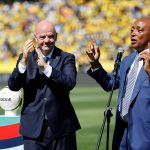
Aleksander Čeferin, President of the Union of European Football Associations -UEFA-, and Victor Montagliani, President of the Confederation of North, Central America and Caribbean Association Football -CONCACAF-, have sent a new letter to Gianni Infantino, copied to Council members of the International Federation of Association Football -FIFA–, according to ‘The Times’. They renew their proposal to provide an additional $10 million to each of FIFA’s 211 member associations, approximately $2.1 billion in total, and demand answers about the withdrawn FIFA Forward Enterprise -FFE- project. The debate reaches Thursday’s Council meeting in Zurich, Switzerland, with two connected issues: development funding and the authority to decide how it is raised and distributed.
The financial request builds on September’s letter, which proposed a one-off allocation for the 2027–2030 cycle, in addition to existing FIFA Forward commitments. Their argument was that FIFA could direct more resources towards football without selling stakes linked to its competitions. That proposal questions the financial necessity of FFE, but does not, in itself, establish that any involvement of private capital would have been unjustified. Assessing that requires the revenue, cost, risk and liability assumptions underpinning the project. The disagreement concerns both the economic model and the information that should have reached the body responsible for evaluating it.
The reserves and who decides how they are used
According to ‘The Times’, the new letter adds $36 million for each of the six confederations and $3 million for each regional union. Its authors propose a prudent reserve of $2.3 billion, equivalent to one year of projected recurring expenditure, and calculate that $2.6 billion would remain after the distribution. They also seek simpler access to funding. These are their estimates, rather than an approved allocation. Accounting reserves, liquidity and spending capacity are not interchangeable: substantial net assets do not remove future commitments or guarantee that all funds can be paid out immediately. The institutional question is who checks the calculations, what documentation they use and how they explain the available financial headroom.
Infantino has agreed to examine additional funding without committing to an amount. In his September 28 letter, reviewed by ‘Reuters’, he instructed FIFA to assess the financial models and make any distribution subject to checks and formal approval. “I will not prejudge the amount,” he wrote. He also identified the amount, timing, required reserves and eligibility, reporting and audit conditions as matters for the Council to determine. That position deserves recognition: requiring financial prudence does not amount to rejecting development. But the process must enable the Council to scrutinise the options, rather than simply receive a figure prepared by the administration.
FFE left questions about authority
FFE would have brought FIFA’s commercial and operational activities together in a new company and attracted private investment through the sale of a 20% minority stake. FIFA argued that it would increase resources for its member associations and proceed only with the necessary approval. The project was withdrawn, but its abandonment does not automatically answer questions about its preparation. According to ‘The Times’, the new letter insists that unresolved questions must be addressed by the Council. This exposes the difference between consultation on an already developed proposal and involvement early enough to examine alternatives, assumptions and consequences before commitments are made.
An agreement to distribute more money could settle part of the debate over resources, but it cannot replace that accountability. The official proposals backed last week by UEFA and 54 European associations give the issue concrete form: they separate presidential and management functions, seek Council involvement before commitments are made and protect oversight bodies from interference. They also propose guaranteeing Forward allocations to compliant associations through a transparent framework. The connection between funding and governance lies in those rules: receiving funds as an institutional entitlement subject to known conditions, rather than a concession dependent on political relationships.
The review and Thursday’s decisions
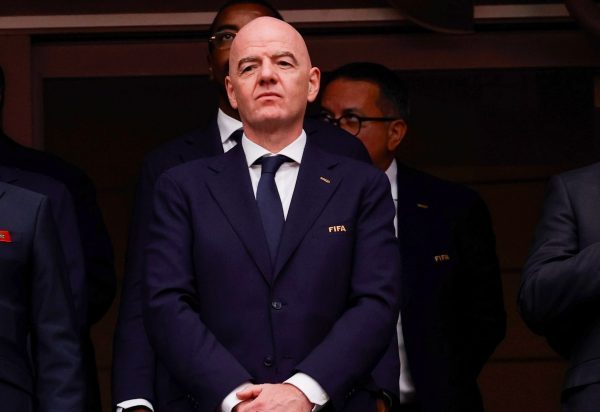
Infantino has also expressed willingness to ask the Council about an independent external assessment and consultation on decision-making. That openness represents a response to the dispute, although it still needs to become an approved mandate. Its usefulness will depend on its scope: examining the overall design of FIFA’s bodies differs from reconstructing how FFE was prepared and what information circulated between them. A review capable of addressing both would need access to documents, independent assessment and a process for translating recommendations into institutional decisions. Approval would be a first step; defining those conditions would determine what it could clarify.
The Council is FIFA’s principal decision-making body between Congresses and comprises 37 members. On Thursday, an approved allocation must be distinguished from a financial recommendation or an instruction to continue the assessment. Whether a review is agreed, who conducts it and what it can examine will also matter. In his September letter, Infantino envisaged presenting a recommendation where sufficient evidence was available, or setting the shortest reasonable timetable for completing the work. Thursday’s meeting will establish what decisions are taken on the distribution and what process is put in place to address the governance questions.
 Last related articles