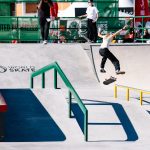
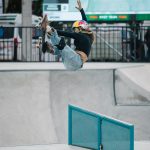
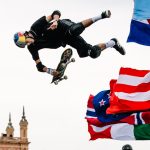
The World Skate Games ASU26 concluded on 18 October in Asunción, Paraguay, after bringing together world championships across eleven roller sports and approximately 10,000 accredited participants, including athletes, coaches, officials, medical staff, judges and journalists, according to the organisers’ review. The fifth edition combined sports facilities with urban courses and settings beside landmark buildings. Following the finals, the country retains new courses and adapted venues, while World Skate is proposing training projects and further international competitions.
The farewell brought spectators onto their own wheels with a Roller Disco outside the COP Arena, featuring music, dancing, free admission and skate hire. The finals also provided concrete examples of crowd interest: World Skate reported almost 2,000 spectators at the men’s rink hockey final and described packed, standing-room-only stands for street skateboarding. The programme allowed visitors to combine watching leading athletes with activities they could take part in themselves.
The championships meet the city
The spread of venues brought different disciplines to different audiences. The Paraguayan Olympic Committee -COP-, in Luque, and the National Sports Secretariat -SND- hosted much of the competition, while the waterfront Costanera and Cerro Lambaré brought the urban landscape into the programme. The vert ramp beside the Palacio de López provided one of the event’s most recognisable images. Free competitions in those locations complemented ticketed events at sports venues and freely accessible communal areas within the COP and SND parks.
The wider programme included food, music, crafts and school visits. Lorena Veiluva, president of the Paraguayan Skating Confederation, explained that schools were bringing pupils to the parks and competitions through the Azufance educational programme. She hopes to turn that interest into new participants, highlighting the need for discipline-specific equipment. Encounters between delegations and visitors also offered a more personal perspective: Mexican roller freestyle competitor Obed Mejía summed up the hospitality to La Nación by saying: “People treated us very well; we would always come back.”
Rain and the course tested the organisers
The schedule had to accommodate rain and hail, particularly in outdoor disciplines. Interruptions affected training and competition, requiring timetable changes. In roller freestyle street, the cancellation of the finals meant world titles were decided by the semi-final results. Weather conditions therefore directly affected the format of some events, alongside the work required to protect facilities and resume competition.
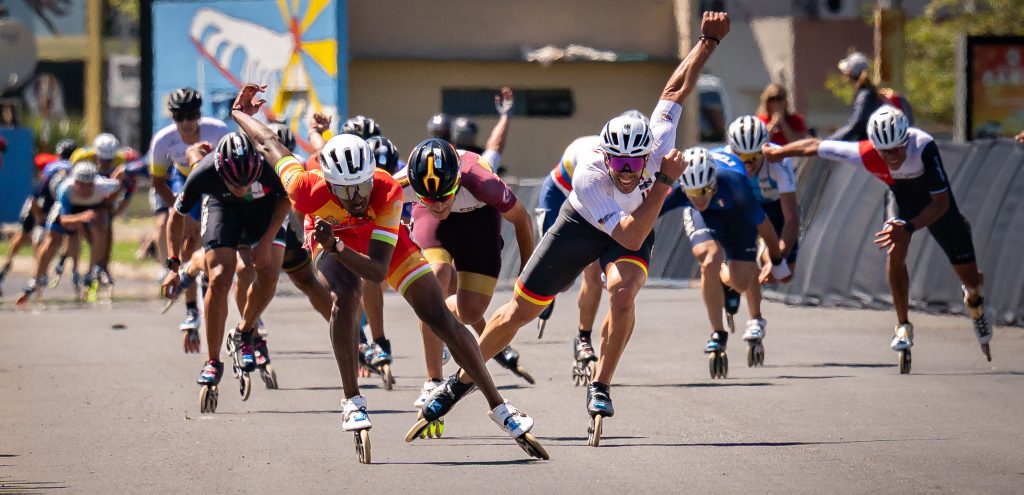
Road speed skating faced an additional problem on the Costanera. Complaints about the surface and corners led to suspensions and meetings between athletes, technical officials and organisers. Larissa Schaerer, who oversaw the organisation, explained that the turning angle was modified and races rescheduled at the same location. The changes also affected traffic: following congestion caused by road closures, the authorities delayed restrictions to ease morning access to the capital. Using a major road for competition required coordination between athlete safety and residents’ daily journeys.
New facilities and world records
The infrastructure legacy includes specific additions. Schaerer told La Nación that the new courses were built by Paraguayan companies with advice from specialists from the United States and Brazil. The facilities expand opportunities to develop park skateboarding, inline hockey and rink hockey alongside disciplines with a longer local tradition. The COP velodrome was also adapted to host inline hockey. Paraguay fielded a national team in that sport for the first time, adding a team-sport experience to the development of its roller disciplines.
The venues also produced notable sporting records. The Colombian Skating Federation recorded three world records from its delegation: Santiago Vásquez set a new mark in the 200m time trial, while Kollin Andrea Castro established two more in the 500m + distance and 1,000m events. Castro finished the championships with three golds and two silvers. Those performances accompanied the artistic skating and free jump records set during the first week, reflecting the range of disciplines brought together in Asunción.
From the finals to an international academy
Among the closing titles, France won its first men’s rink hockey world championship, defeating Argentina in a penalty shootout. Japan took both street skateboarding titles through Yumeka Oda and Ginwoo Onodera. For the hosts, Julio César Mirena’s bronze in the 15,000m elimination race delivered a podium finish in front of his home crowd. Paraguay competed across six disciplines, combining established strengths with participation in other sports on the programme.
The institutional development following the Games is a proposal for a world training academy in Asunción. World Skate president Sabatino Aracu announced the intention at a gathering at the Italian embassy, with support envisaged from Olympic Solidarity. The proposal involves international athletes attending training stays lasting between twenty days and a month. It follows the interest expressed during the competition by Francesco Zangarini, the Games’ sports director, in staging several World Cups in Paraguay: two concrete avenues for continuing training and competition beyond ASU26.
 Last related articles