For the first time, tennis has overtaken football in the number of registered members in Italy, reflecting a significant shift in the country’s sporting landscape.
Figures for 2024 show that the Italian Tennis and Padel Federation (FITP) had 1,162,477 registered members, compared with 1,123,540 for the Italian Football Federation (FIGC). The margin is relatively small, but the significance is considerable in a country where football has traditionally enjoyed an almost unrivalled position.
There is an important detail behind the figures. The achievement belongs to FITP, which also governs padel, a sport that now accounts for a substantial part of its membership.
The news even made the front page of a political newspaper, partly because FITP is a shareholder in La Stampa.
The contrast between the two sports extends beyond membership. Football television audiences have stagnated, while tennis has benefited for years from its own channel, SuperTennis, which complements the extensive coverage provided by Sky, alongside broadcasts on Rai and Mediaset.
Tennis is an individual sport, but its clubs operate much like football clubs. They also cater for a wider age range, with particular attention to veteran players aged 35 and over, an area largely overlooked by football.
The two sports also offer very different environments. Italian football remains a difficult landscape, although there are signs of improvement. Euro 2032 is seen as an opportunity to secure investment in new stadiums. Tennis, by contrast, enjoys an exceptionally well-organised environment. Its venues have the atmosphere of elegant salons, from the Foro Italico in Rome to Turin’s Olympic Palasport, home of the ATP Finals. The new arena at the Bologna Exhibition Centre will be inaugurated with the Davis Cup, while Pentimele in Reggio Calabria will host the Next Gen Cup.
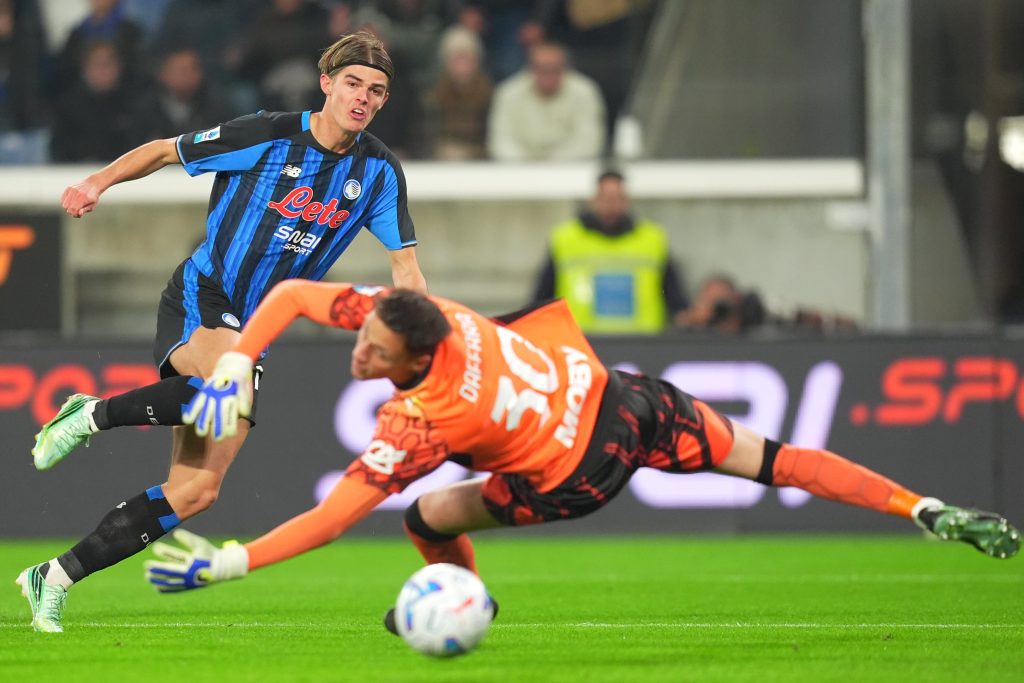
The financial figures reinforce the contrast. The value of production generated by Italian tennis reached €240 million in 2025, compared with €214 million for the FIGC.
Football, however, continues to send contradictory signals.
The latest Milan derby between AC Milan and Inter, played just hours before the presentation of Milan’s new stadium, which will be called Generali Stadium, generated record gate receipts for the Italian league of €8.7 million. The proposed name, however, has not been welcomed by everyone.
At the other end of the spectrum, Lazio, despite being the only team at the top of Serie A, recorded the league’s lowest attendance. Just 8,000 spectators attended the weekend match against Cagliari at the Stadio Olimpico, amid the continuing dispute between supporters and club owner Claudio Lotito. By comparison, 10,000 Lazio fans travelled to watch their team play Sassuolo in a midweek fixture.
But Italian football is currently focused on another issue: the election of the next FIGC president, scheduled for 14 December. The deadline for submitting candidacies is 4 November.
Giovanni Malagò, former president of the Italian Olympic Committee, subsequently appointed commissioner and a member of the International Olympic Committee, has once again secured the backing of Serie A, or more precisely, a substantial proportion of its clubs.
His rival, Adriano Galliani, 82, who spent much of his career at AC Milan and is now a member of parliament, has received the support of coaches and players.
The decision may therefore rest with the votes of the lower leagues, leaving Italian football facing a political choice at a time when its position in the country’s sporting landscape is also being challenged.
 Last related articles