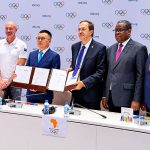
The agreement signed in Dakar provides practical support for African NOCs, as Mustapha Berraf seeks to extend the initiative worldwide.
The Association of National Olympic Committees of Africa (ANOCA) has secured an agreement to provide free standby generators to all 54 African National Olympic Committees, in an initiative aimed at reducing operating costs and strengthening organizational resilience across the continent.
The binding memorandum of understanding was signed in Dakar on November 8, on the sidelines of the 2026 Youth Olympic Games, by ANOCA President Mustapha Berraf and the chief executive of Shanghai Yude (YDPOWER). James Macleod, the Director of Olympic Solidarity at the International Olympic Committee (IOC), also attended the ceremony. The signing formalized a partnership initially agreed on October 10.
Under the five-year agreement, YDPOWER will supply 54 generators, each with a capacity of 60 kVA, together with the necessary installation accessories, at no cost to the recipient committees. Every African NOC will receive one unit, providing backup electricity for essential administrative operations and, where appropriate, critical functions during sporting events.
Although the equipment represents a tangible benefit, the initiative addresses a broader challenge facing many National Olympic Committees: maintaining basic operational capacity while directing limited financial resources toward athlete preparation and participation in international competitions.
Reliable electricity can be essential for communications, computer networks, security systems and event operations. In regions where power outages remain a practical concern, access to backup generators can reduce disruptions without requiring NOCs to make a substantial capital investment.
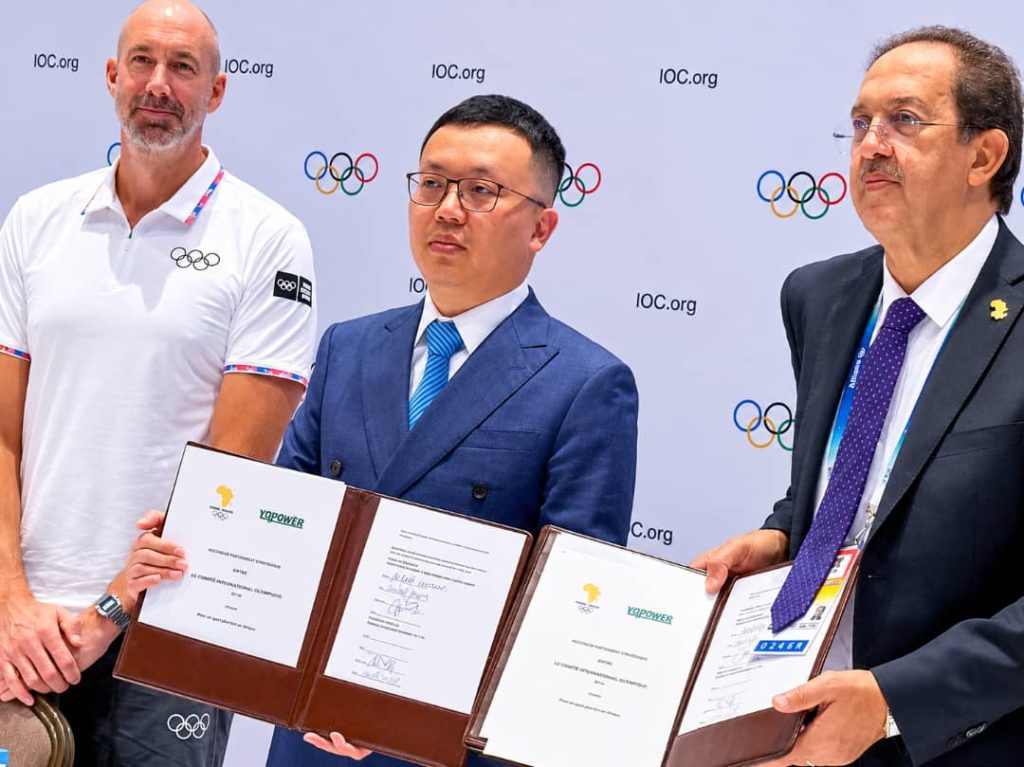
For Berraf, the agreement also represents a model of cooperation between the Olympic Movement and private-sector partners. The ANOCA president, who is seeking to become president of the Association of National Olympic Committees (ANOC), has indicated that he intends to pursue similar arrangements for NOCs on other continents, particularly those facing financial constraints.
The proposal comes against a wider funding backdrop. According to figures cited by ANOCA, 176 of the world’s 206 recognized NOCs — more than 85% — receive support from Olympic Solidarity. The IOC has allocated $650 million to this program for the 2025–2028 cycle, representing a 10% increase over the previous four-year period.
Although Olympic Solidarity remains a central source of assistance, the Dakar agreement demonstrates how targeted commercial partnerships can complement existing support programs, addressing specific operational needs rather than providing unrestricted funding.
The next challenge will be implementation: the delivery and installation of the equipment, its long-term maintenance and the possibility of replicating this model in countries with different infrastructure requirements.
For African NOCs, the immediate benefit is clear: access to essential equipment without the purchase costs. For the Olympic Movement as a whole, the agreement raises a more strategic possibility: turning partnerships built around practical needs into a sustainable source of support for National Olympic Committees operating under financial pressure.
 Last related articles