Greg Barclay, John Eales and Agustín Pichot are the three candidates for two places on World Rugby’s Executive Board reserved for southern hemisphere high-performance unions. The election will take place in Dublin on 19 November at the federation’s Council meeting. New Zealand Rugby has nominated Barclay, seconded by the South African Rugby Union; Rugby Australia has nominated Eales, supported by New Zealand; and the Argentine Rugby Union -UAR- has put forward Pichot, also seconded by South Africa. Their candidacies bring together experience in international federation leadership, business management and rugby development.
The successful candidates will replace Mark Alexander, President of the South African Rugby Union, and New Zealand representative Bart Campbell. Alexander is leaving the Board after reaching the maximum cumulative term of eight years, while Campbell is stepping down after six years as his mandate as a New Zealand representative on Council concludes. Council representatives from Australia, Argentina, South Africa and New Zealand are eligible for these positions, but the full World Rugby Council elects them. Candidates undergo an eligibility vetting process and, with more nominees than available places, the election will be conducted by secret ballot under the federation’s bye-laws.
What the Executive Board decides
The election concerns the body responsible for developing and overseeing World Rugby’s strategy and implementing policy decisions. Council retains the major institutional powers, including approving the strategy, selecting World Cup hosts and admitting or excluding members. Following the governance reforms adopted in 2024, the Executive Board comprises two representatives from northern hemisphere high-performance unions, two from their southern hemisphere counterparts, one performance union representative, one regional representative, two independent player representatives, four independent directors, the Chair and the Chief Executive Officer. Brett Robinson remains Chair, with Alan Gilpin serving as CEO.
The new members will help oversee the 2026–2031 strategic plan, unveiled in May after Council approved it in September 2025. Its priorities include financial sustainability, investment in the game’s development, growth in women’s rugby and support for member unions. The period encompasses the men’s and women’s World Cups in Australia in 2027 and 2029, followed by the men’s tournament in the United States in 2031. The election will determine who fills two positions on the body overseeing those objectives, within an agreed strategy and a collective decision-making structure.
Greg Barclay: from cricket to rugby governance
Barclay brings a background in law, business and sports administration. A commercial lawyer and founding partner of Claymore Partners, he serves on the New Zealand Rugby Board and has represented the union on World Rugby Council since 2025. From 2020 to 2024, he chaired the International Cricket Council -ICC-, gaining experience in negotiations between national governing bodies with different financial resources and interests. During his tenure, cricket’s inclusion at Los Angeles 2028 was confirmed following a bidding process led by the international federation.

In his recent work within New Zealand rugby, Barclay has advocated accessible leadership that stays connected with those who play, follow and fund the sport. “We’ve got to make ourselves available, that’s absolutely essential,” he said in a March 2026 interview with ‘DSPN’. He explained that attending school, club and domestic rugby helps directors understand what works and what needs to change. That position illustrates his approach to communication and relationships across the game, although it is not a specific manifesto for November’s election.
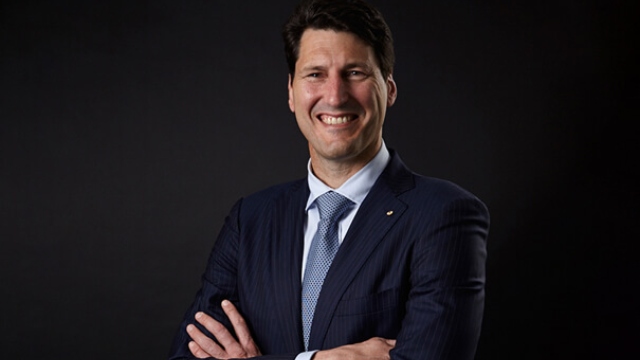
John Eales: business experience and a focus on players
Eales won the World Cup with Australia in 1991 and captained the victorious team in 1999, but his candidacy also draws on an extensive career after retirement. He joined the Australian union’s board in 2010 and has served on World Rugby Council since 2024. Away from the pitch, he has worked as an executive, director, adviser and investor, and co-founded the Mettle Group consultancy in 2003, which was subsequently acquired by Chandler Macleod. His psychology degree and business career complement his experience of leading organisations and teams.
Internationally, he chaired the France 2023 Players’ Committee, established to connect participants with supporters, amateur rugby and initiatives addressing social responsibility, sustainability and discrimination. He also served on the advisory board for Australia’s 2027 World Cup bid. “The legacy of the 2027 World Cup doesn’t start in 2027,” he said during the campaign in 2021, arguing for young people to be involved from the preparation stage. His experience therefore connects major events with opportunities for players and community clubs, an issue of particular relevance as Australia prepares for its two forthcoming World Cups.
Agustín Pichot: expansion and rugby’s finances
Pichot has the background most directly connected with previous World Rugby leadership elections. The former Argentina captain served as Vice-Chair from 2016 to 2020 and challenged Bill Beaumont for the chairmanship that year, losing by 28 votes to 23. After leaving Council, he returned in 2023 as a UAR representative. His administrative career is closely associated with Argentina’s integration into major international competitions and the professionalisation of South American rugby. Those experiences place his current candidacy within a sustained interest in access to opportunities and the sport’s growth.
His comments in 2026 provide concrete examples of those priorities. In March, he told ‘Radio Provincia’ that he was working on a project to bring the 2035 World Cup to Argentina alongside Uruguay, Chile and Brazil, while acknowledging the need to demonstrate its financial viability. In June, speaking to ‘La Fábrica TV’, he proposed a football-style transfer market for Super Rugby Americas, generating income when players move to other competitions. He also called for investment in franchises and support for development in Brazil and Paraguay. These regional initiatives predate the election and outline his ideas for expanding professional rugby and improving its funding.
 Last related articles