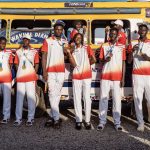
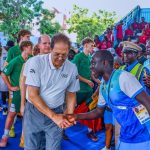
Dakar 2026 has been a success for the Olympic Movement from a political perspective. Senegal has hosted the first Olympic event ever held on African soil, brought together nearly 2,700 athletes from 204 National Olympic Committees and offered an image of organisational capability that the IOC needed to project in a continent historically excluded from its major events. Africa also won 76 medals, its best result at a Youth Olympic Games, with five delegations finishing in the top 10 of the medal table. For Mustapha Berraf, President of ANOCA, the deepest value of that result lies in the fact that “somewhere in Africa, a child will have watched these athletes compete and thought that they can do it too.”
But that success does not answer the central question. While the IOC celebrated an edition in Dakar that, according to Kirsty Coventry, exceeded expectations, it kept the process of selecting the host for the 2030 Games on hold. There is no timetable for restarting it. That is because the debate is no longer about which city should host the event, but whether the current model of the Youth Olympic Games still makes sense.
A format searching for its purpose
The process was suspended in May after consultation with National Olympic Committees and International Federations. Before the pause, Asunción, Bangkok and Santiago de Chile had entered preferred dialogue with the IOC. The election had initially been scheduled for 2026. Those three cities are now awaiting a decision on an event whose format could change profoundly or even cease to exist as a standalone competition.
The IOC acknowledges that it needs to define the purpose of the Games. Their original objective was to connect with teenagers, trial new disciplines and create a platform for education, innovation and culture around sport. However, Coventry herself has pointed out that only around 15 per cent of participants go on to compete at the Olympic Games.
Dakar demonstrates the political value of the Games
Senegal has given the IOC something more valuable than a strong medal table or an effective closing ceremony: proof of concept. The organisation has allowed the Olympic Movement to present itself as an actor capable of bringing a global event to Africa and of creating opportunities for athletes, volunteers, local businesses and young people who would normally experience the Games from afar.
It has also served as a sporting showcase. Senegal celebrated its first major Olympic successes; countries such as Egypt, Ethiopia, Nigeria and The Gambia found a space for visibility that they would have struggled to achieve at a senior Olympic Games; and the programme introduced sports and formats intended to attract a different audience. The Youth Olympic Games have demonstrated that they can expand the Olympic map without requiring the vast budget of a Summer Games edition.
Success does not erase the weaknesses
The main weakness is social. Dakar held two weeks of competition amid a high cost of living, youth unemployment and pressure on public finances. The Government committed tens of billions of CFA francs to organising the Games and renovating facilities, while part of the population questioned whether that investment responded to the country’s real priorities. Traders displaced by construction works and mobility restrictions also reported losses during the preparation of the Games.
The other weakness concerns the model itself. If the IOC wants to engage young people, it must ask whether a competition held every four years, with limited visibility compared with professional sport and digital platforms, is the right response. Dakar has shown that the Games can be useful as a project of development, representation and diplomacy. But it has not yet demonstrated that they are essential in their current format.
The 2030 decision will be a decision about the IOC
The dilemma is to decide whether the Youth Olympic Games should become a lighter, regionalised event connected to school and digital programmes; whether they should retain their identity as a global Olympic competition; or whether the IOC should find another formula for engaging with new generations.
Dakar 2026 has been a victory for Africa and Senegal. But it has also forced the IOC to recognise that a successful event is not enough to justify the automatic continuation of a format. Talent needs “facilities, coaches and genuine opportunities to compete,” as Berraf recalled. The decision on 2030 will determine whether the Olympic Movement can turn the inspiration left by Dakar into a lasting project for young people.
 Last related articles