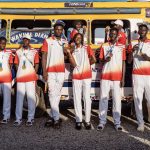
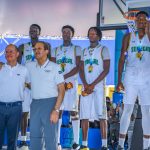
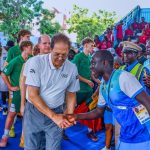
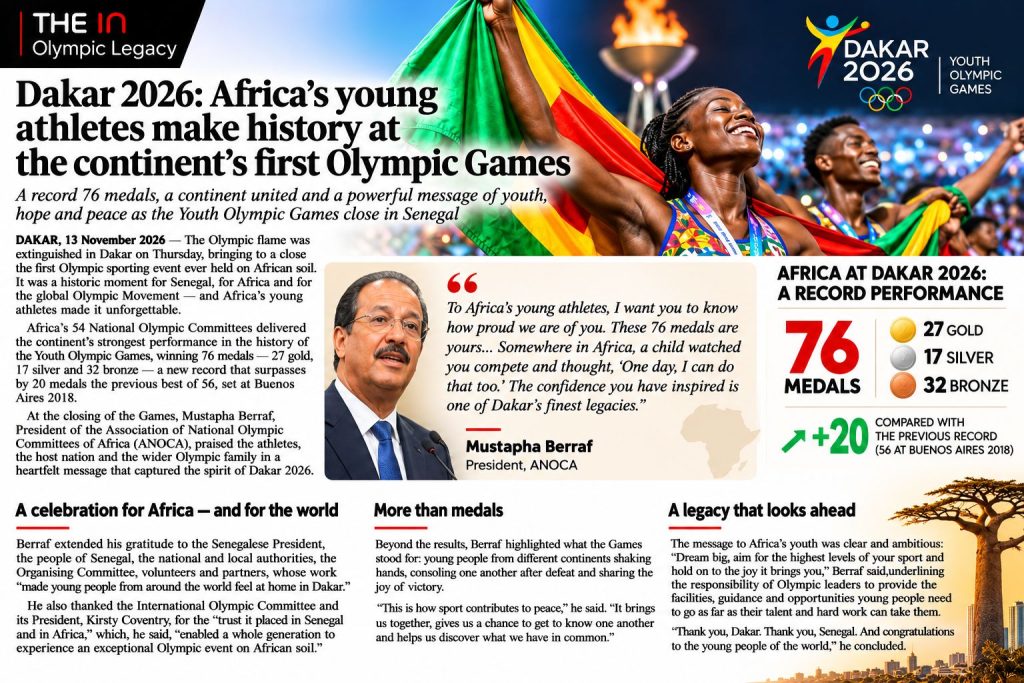
When the Olympic flame was extinguished in Dakar, Senegal had accomplished something that will remain part of Olympic history. For the first time, an Olympic sporting event had been staged on African soil. Yet the significance of Dakar 2026 went far beyond the successful hosting of the Youth Olympic Games. Africa’s young athletes had seized the occasion to deliver the continent’s finest performance in the history of the competition.
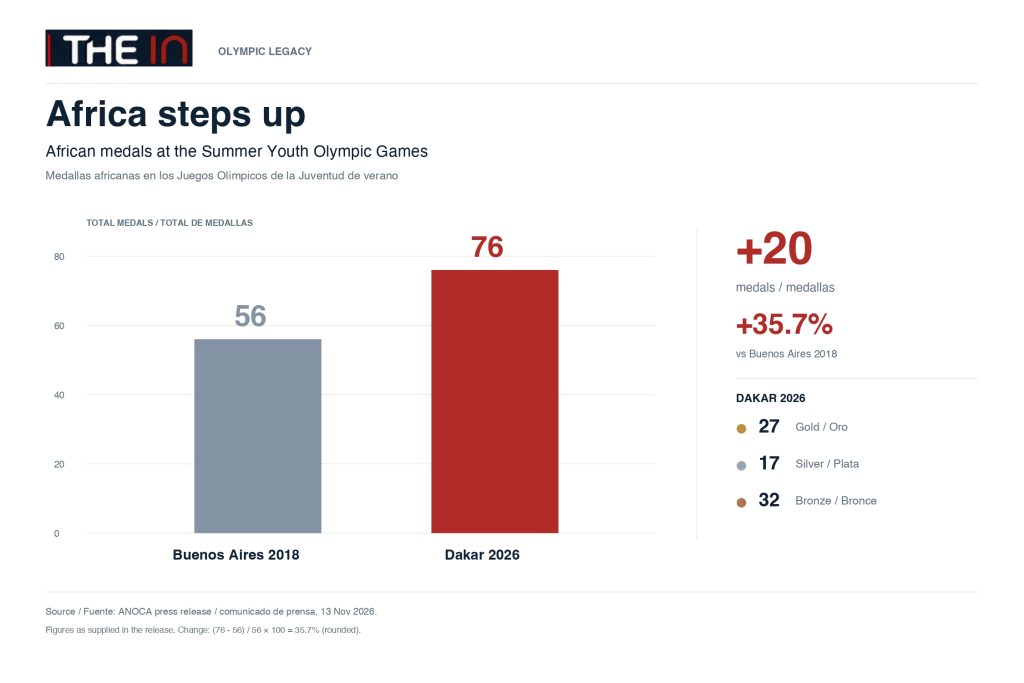
According to the Association of National Olympic Committees of Africa (ANOCA), African delegations won 76 medals — 27 gold, 17 silver and 32 bronze — surpassing the previous continental record of 56 medals at Buenos Aires 2018. An improvement of 20 medals, or nearly 36 percent, was a remarkable achievement for a continent whose sporting potential has often exceeded the resources available to develop it.
For Mustapha Berraf, President of ANOCA, the achievement belonged first and foremost to the young athletes, their coaches and families, and the 54 National Olympic Committees whose work made their participation possible. His message at the conclusion of the Games was one of pride, gratitude and, above all, responsibility.
“Somewhere in Africa, a child watched you compete and thought, ‘One day, I can do that too.’” Those words captured something more important than the medal table. Dakar offered millions of young Africans an opportunity to see athletes from their own continent compete, succeed and become examples of what determination and opportunity can achieve. For a new generation, the Games brought the Olympic dream closer to home.
Berraf was equally emphatic in recognizing the work of Africa’s National Olympic Committees, many of which operate under considerable financial and logistical constraints. Preparing young athletes for international competition requires years of investment, coaching, organization and commitment. The record medal haul was therefore not simply a collection of individual victories. It was also a tribute to the institutions and people who helped those athletes reach the starting line.
But the historic significance of Dakar 2026 cannot be measured by African success alone. Senegal welcomed young competitors from across the world and demonstrated that Africa can provide a home for the Olympic Movement at its most universal. The Games brought together athletes from different continents, cultures and languages in an environment where competition and friendship could coexist.
Berraf paid particular tribute to the Senegalese authorities, the Organising Committee, volunteers and the many people whose efforts made the event possible. He also expressed appreciation to the International Olympic Committee and its President, Kirsty Coventry, for the confidence placed in Senegal and Africa. That confidence carried considerable symbolic weight: the continent was no longer merely participating in Olympic history, but hosting it.
The ANOCA President also chose to emphasize a dimension of the Games that can easily be overshadowed by records and results. He spoke of young competitors congratulating one another after victory, offering consolation after defeat and finding common ground despite differences in language and background. In those gestures, he saw the values that give the Olympic Movement its wider purpose. “This is how sport contributes to peace,” Berraf said.
It was a message particularly suited to the first Olympic Games held in Africa. Dakar became a meeting place for young people from around the world, demonstrating that the Olympic ideals of respect, friendship and solidarity remain relevant far beyond the competition arena.
The challenge now is to ensure that the achievement becomes a foundation for lasting progress. Berraf’s closing appeal to young people was matched by a reminder to Olympic leaders that talent alone is not enough. Young athletes need places to train, people to guide them and genuine opportunities to compete. Without those foundations, even the most inspiring Olympic moment risks remaining an isolated celebration.
That is where Dakar’s most important legacy may ultimately be found. The 76 medals demonstrate what African youth can achieve. The historic hosting of the Games demonstrates what Africa can organize. Together, they offer a compelling argument for sustained investment in sporting development across the continent.
Dakar 2026 has given Africa an extraordinary moment of pride. The responsibility of its sporting leaders is now to turn that moment into opportunity for the generations that follow.
The Olympic flame may have been extinguished in Senegal, but for countless young Africans, a new ambition has been ignited.
 Last related articles