India made its case to host the 2036 Olympic and Paralympic Games on Thursday before the Future Host Commission of the International Olympic Committee -IOC-. The Indian Olympic Association -IOA- presented a plan with seven venue clusters centred on Ahmedabad and Gandhinagar. The facilities being developed for the 2030 Commonwealth Games give the bid a starting point. India will need to show which venues it can reuse, who will cover the cost of staging the Games and what conditions athletes would compete in. Travel times and air quality are among the IOC’s criteria.
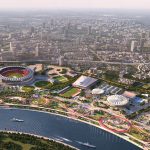
One project already out to tender is the aquatics centre in Motera, designed for the 2030 Commonwealth Games and a possible Olympics six years later. The plans provide for 12,000 seats during major competitions, falling to 4,000 afterwards, with swimming pools open to the public. The complex would be built next to the Narendra Modi Stadium, which seats around 132,000 and hosted the 2023 Cricket World Cup final. An indoor arena, a tennis centre and the Olympic Village are also planned in the area. Land acquisition disputes have already delayed the original construction timetable, according to ‘The Times of India’. Bids for the aquatics centre are due by 22 December.
The cost and the venue plan
The 50.5 billion rupees reported by ‘The Times of India’ is the estimated cost of the Motera complex. The IOA confirmed that funding was discussed at the meeting, although the full budget for the Olympic bid has yet to be made public. If India advances to the strategic dialogue phase in March 2027, it will have to submit revenue and spending projections to the IOC and identify who would cover any shortfall in the cost of staging the Games.
Spreading events across seven clusters could make it easier to use existing venues and could also mean longer journeys. The IOC assesses how long athletes would take to reach venues and what proportion could stay in the main Olympic Village. The dates for the Games are still to be determined. Figures from India’s meteorological service show that Ahmedabad averages 310 mm of rainfall in July and 242 mm in August, with average daily highs of 33.7°C and 32.2°C respectively. The dates will shape the scheduling of outdoor events and plans for transport.
Ahmedabad’s waste and air quality
In February, Gujarat’s environmental regulator asked the city council to explain how waste was being handled at Pirana, after finding shortcomings at the site, where rubbish had accumulated within 200 metres of homes. In November, the Congress party in Gujarat questioned the national cleanliness awards and raised complaints about rubbish piling up and persistent odours in several neighbourhoods. A study backed by the state government and city council also identified waste burning as one source of air pollution near the Narendra Modi Stadium.
The council has set up a unit to prepare for the 2030 Commonwealth Games and allocated 500 million rupees to it, according to a municipal circular reported by ‘The Times of India’. The work includes a zero-waste programme, measures to improve air quality and a plan to integrate the metro and bus services. With the Olympic vote expected in mid-2029, Ahmedabad will have to show what has changed before the Commonwealth Games take place. Monitoring around the venues will show whether air quality, one of the IOC’s criteria, has improved. In the affected neighbourhoods, progress will depend on how rubbish is collected and what happens to the waste that has already built up.
Governance and anti-doping controls
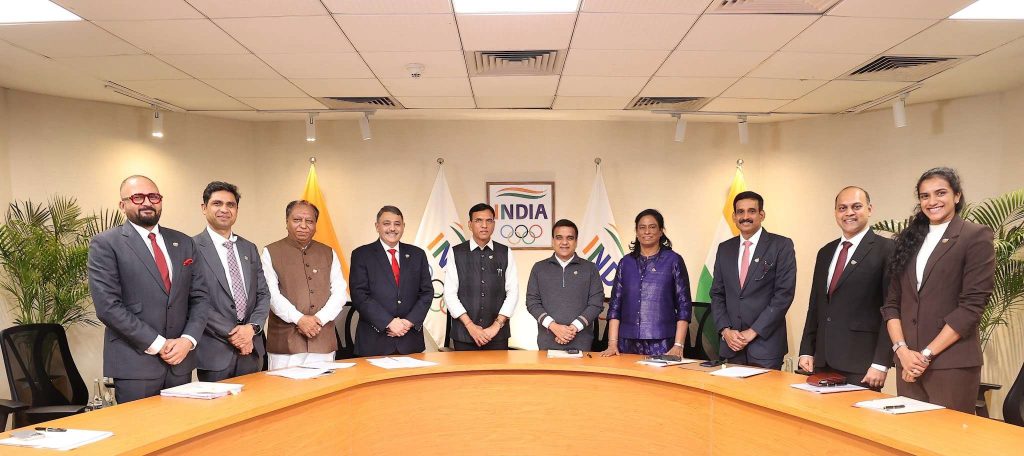
The Indian government acknowledged that sports governance and doping had already come up in Olympic talks in 2025. This November, following disputes over the IOA’s election process, the IOC called for the vote to be held free from interference. P. T. Usha, who took part in the Olympic presentation as the association’s president, did not put herself forward for re-election in the vote scheduled for 5 December.
The Indian delegation addressed doping at Thursday’s meeting. Raghuram Iyer, the IOA’s chief executive, told ‘The Indian Express’ that it had outlined the work of the national anti-doping agency and the measures set out in Indian law. The World Anti-Doping Agency -WADA- recorded 260 adverse analytical findings in 7,113 samples collected by the Indian agency in 2024. In April 2026, the Athletics Integrity Unit -AIU- placed India’s athletics federation in its highest-risk category. That classification means stricter testing requirements for athletes representing India at major international athletics competitions.
The experience India can show before the vote
The IOC asked how India would broaden its sporting base beyond cricket and ensure that Paralympic facilities were accessible, according to ‘The Indian Express’. The delegation presented Khelo India, a programme that aims to support 27,000 athletes across 30 sports by 2031. India won 85 medals at the 2026 Asian Games. At Paris 2024, it won 29 Paralympic medals and six Olympic medals. As for hosting experience, New Delhi staged the 2025 World Para Athletics Championships and Bhubaneswar will host the World Athletics Indoor Championships in March 2028.
Among India’s rivals, Qatar says it already has around 95% of the competition venues its bid requires. Like Ahmedabad, Doha will stage its next major multisport event in 2030, when it hosts the Asian Games. Turkey will have an earlier opportunity to show what it can deliver. The Istanbul European Games are scheduled for 16 to 27 June 2027, a year and a half before the IOC selects its preferred hosts for the final phase.
 Last related articles