Rowing’s question for Brisbane 2032 is no longer simply whether Queensland can offer it a course. The more difficult question is how much Olympic program its sporting and audience value can justify. With classic rowing adapting its presentation and beach sprints preparing for their Olympic debut, the sport is already negotiating the balance between continuity and renewal. THE IN’s assessment is that this is a case for scrutiny of formats, resources and the scale of competition, rather than a confident prediction that rowing as a whole will disappear.
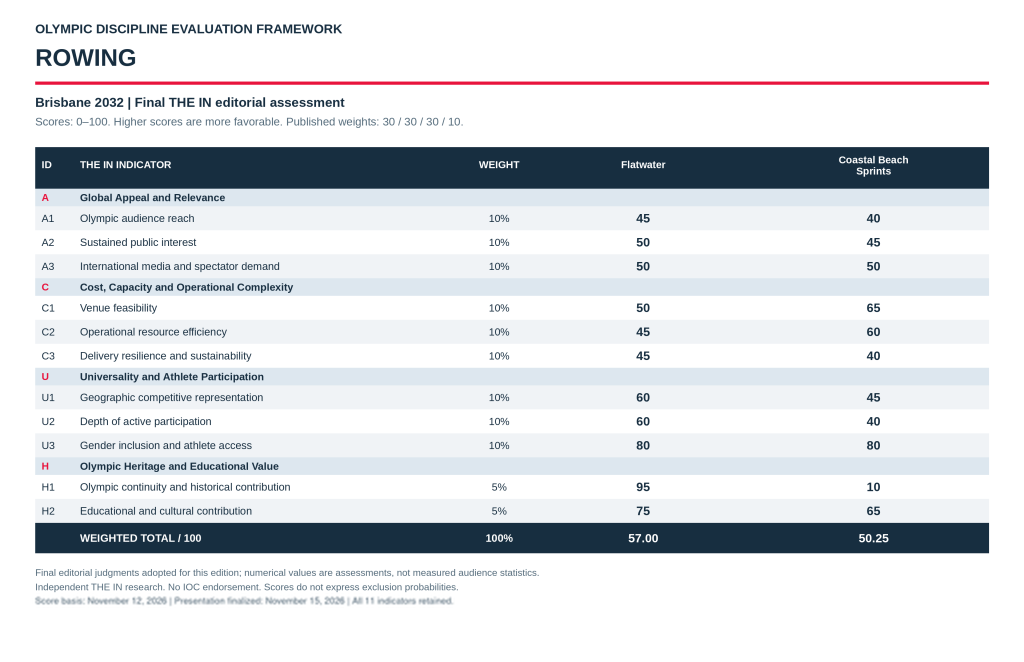
Our published framework examines eleven indicators, with global appeal, delivery requirements and athlete participation each weighted at 30 percent, and heritage and educational value at 10 percent. Classic flatwater rowing receives 57.00 out of 100; coastal beach sprints receives 50.25. These are independent THE IN editorial judgments, not IOC scores or exclusion probabilities. Classic rowing earns substantial credit for its history and established competitive structure. Beach sprints offers a more compact venue proposition, but its shorter Olympic history and developing pathway produce a different profile. The lower total is not evidence that the newer format faces a greater institutional threat.
The Rockhampton evidence materially strengthens the delivery case. In their joint statement of September 18, 2026, World Rowing, Paddle Worldwide, Rowing Australia and Paddle Australia accepted that the Fitzroy River course could provide safe, fair and consistent competition under the conditions assessed. They also requested confirmation of further technical details, service levels and facilities through the next validation stage. This is meaningful technical acceptance, with further work identified. It supports the proposed solution without establishing its final operating cost.
 Last related articles