The Star Sailors League has asked World Sailing to include a regatta for national teams, modelled on the football World Cup, at the Brisbane 2032 Olympic Games. Its race director, Paul Hutton-Ashkenny, made the proposal public on 18 November as the Gold Cup opened in Rio de Janeiro. Over the coming weeks, World Sailing will have the chance to judge the format on the waters of Guanabara Bay.
In Rio, 40 national teams are racing in identical SSL47 yachts, each with a crew of ten. The opening rounds are held in groups of four, with the title decided in a grand final on 13 December. Fans following Brazil, for example, will know when their team first races, who they are up against and what they need to do to advance. The organisers believe that ease of following a team through the tournament is one reason the format could work at the Games.
What Rio can show World Sailing
The Gold Cup has one advantage over other competitions seeking a place at the Olympics. World Sailing already recognises the winner as world champion among national teams. The federation knows the boat, the rules and how the event is run. The Star Sailors League is now asking it to take a further step and back the format for Brisbane. World Sailing had yet to make its position public when Hutton-Ashkenny announced the proposal.
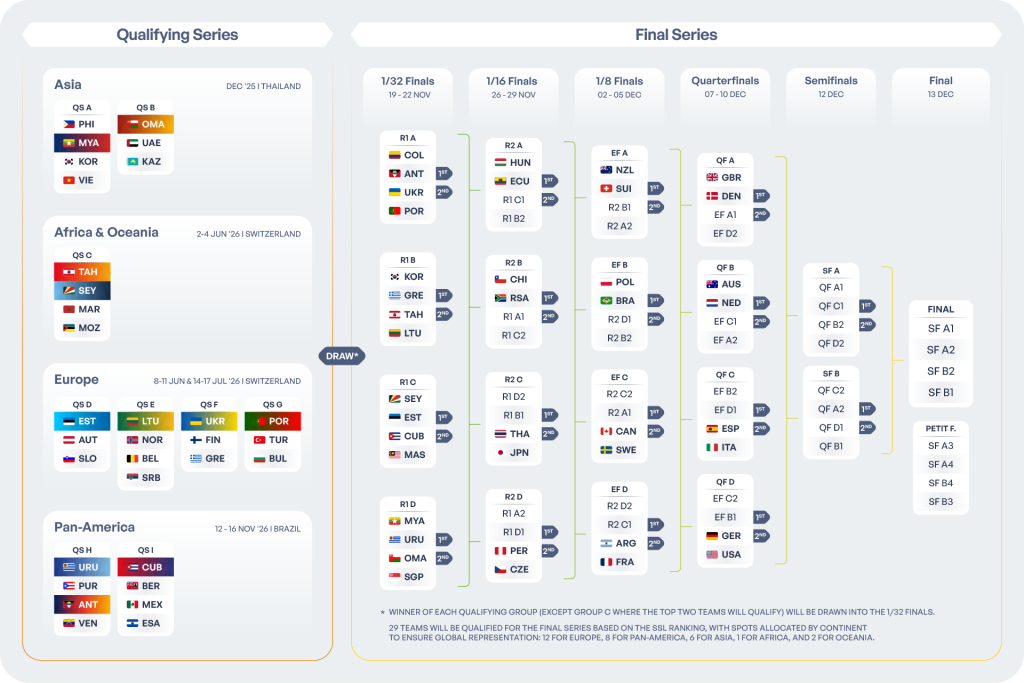
The timing matters as much as the proposal itself. The IOC is reviewing the Brisbane programme against criteria that include international participation, cost and the complexity of staging each discipline. The Gold Cup can point to Colombia, Oman, Seychelles and Antigua and Barbuda among the countries racing in the opening round in Rio. Their federations can field national crews against rivals sailing exactly the same boats.
The Olympic cost of a crew of ten
The numbers behind the Gold Cup’s appeal also reveal its biggest challenge. Taking the Rio format to the Games in full would mean 400 sailors for a single event. That figure gives a sense of the scale of the Brazilian tournament. The details made public so far do not specify how many countries would compete in Brisbane, how they would qualify or how many athlete places sailing would need to accommodate the event.
World Sailing would have to make that case to its own Olympic classes. Setting aside places for a national team event would affect sailors who have spent years preparing for individual or two-person events. Reducing the number of countries to fit the Olympic programme would weaken one of the organisers’ main arguments. For Brisbane, the telling figure will be how many of the 40 flags flying in Rio an Olympic Gold Cup can accommodate.
 Last related articles