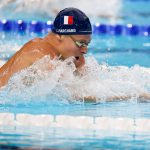
Sport can begin with something as simple as a pair of shoes, a T-shirt or the opportunity to train under suitable conditions. For those who have had to leave their country and rebuild their lives far from home, that access can represent much more than athletic preparation: it can become an opportunity to regain a routine, keep a goal alive and continue building a future. In this context, adidas has become the new official sportswear supplier of the Refugee Olympic Team, after signing a multi-year agreement with the Olympic Refuge Foundation (ORF).
The collaboration will run from this year until the Los Angeles 2028 Olympic Games and will also include the Dakar 2026 Youth Olympic Games. The company will provide high-performance sportswear and uniforms to both the Refugee Olympic Team and athletes who are part of the ORF’s Refugee Athlete Support Programme, while the agreement also includes support for community initiatives developed in different parts of the world.
An alliance that goes beyond competition
The agreement comes at a time when the Refugee Olympic Team continues to strengthen its presence within the Olympic Movement. The initiative was launched in 2015, when the then-president of the International Olympic Committee, Thomas Bach, announced the creation of a team that would allow refugee athletes to compete at the Olympic Games under the Olympic flag. A year later, ten athletes competed at Rio 2016 alongside thousands of athletes representing national delegations, bringing a reality that had previously received little representation in elite competition onto the sporting stage.
Since then, the project has experienced significant growth. The team expanded from ten athletes competing in three sports at Rio 2016 to 37 athletes across 12 sports at the Paris 2024 Olympic Games, after also competing at Tokyo 2020. For adidas and the ORF, the new alliance is built on the belief that sport can provide support and opportunities for people affected by displacement and crisis, particularly when access to facilities, equipment or training programmes can be difficult.
Dakar 2026 and Los Angeles 2028 as the next stages
The next major milestones of this collaboration will be the Dakar 2026 Youth Olympic Games and the Los Angeles 2028 Olympic Games. Jeroen Carrin, director of the ORF, highlighted that from the earliest conversations there had been a shared understanding between the two organisations regarding their commitment to supporting refugees and displaced people through sport. Attention will initially turn to Dakar, where the partnership will begin to take shape at one of the most important events for new generations of athletes.
Kerryn Foster, general manager of Specialist Sports at adidas, said the collaboration is rooted in a shared belief in the power of sport to transform lives. However, the scope of the agreement is not limited to those who will compete on the biggest Olympic stages. Over the next three years, adidas will also support the community work of the Olympic Refuge Foundation, an organisation created by the IOC in 2017 that works alongside National Olympic Committees, International Federations, coaches and other partners to create safe spaces where young refugees can play sport, connect with others and find stability amid realities shaped by displacement.
 Last related articles