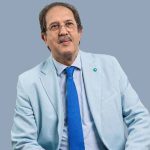
Swiss justice has definitively upheld the forgery conviction of Ahmad Al-Fahad Al-Sabah, a former member of the International Olympic Committee -IOC- and, for years, one of the most influential figures in world sport. The Swiss Federal Court rejected his final appeal and confirmed the suspended two-year prison sentence, after the initial 2021 sentence of 30 months had been reduced on appeal. The ruling brings to an end a legal process that lasted more than a decade and judicially seals the downfall of an official who had concentrated power within the Olympic movement, Asian sport and the wider politics of international sport.
The significance of the case goes far beyond an isolated criminal conviction. Ahmad Al-Fahad Al-Sabah was not a secondary sports official. He served as president of the Olympic Council of Asia -OCA- for 30 years, led the Association of National Olympic Committees -ANOC-, chaired the IOC’s Olympic Solidarity commission, was an important ally in Olympic politics and also held positions within FIFA, before leaving that body in 2017 after becoming implicated in corruption investigations opened by US prosecutors. Reuters described him at different stages as one of the main power brokers in international sport and one of the most influential men inside the Olympic system.
The origin of the case: manipulated videos and an alleged conspiracy
The origin of the proceedings dates back to 2013 and 2014, when videos began circulating in Kuwait that purported to show former prime minister Nasser al-Mohammed al-Sabah and former parliament speaker Jassem al-Kharafi taking part in a conspiracy against the Kuwaiti government and linking themselves to the interests of Israel and Iran. The prosecution’s case held that those videos were fake and that Ahmad Al-Fahad Al-Sabah took part in an operation designed to give them an appearance of authenticity in order to damage political rivals with whom he maintained a long-running dispute within the ruling family and Kuwait’s political system.
The operation did not stop at the circulation of manipulated material. The scheme sought to manufacture a legal framework that would allow the videos to be presented as if they had been independently validated. To do that, corporate structures were set up and a fictitious dispute was promoted with the aim of obtaining a favourable arbitral ruling that could later be used in Kuwait as proof of authenticity. That is where the seriousness of the case lay: it was not only about fake videos, but about an attempt to give them legal cover through an arbitration procedure fabricated in Geneva.
A fake arbitration in Geneva that was ultimately dismantled by the courts
The case was opened in Switzerland because one of those involved was a Geneva-based lawyer acting for Ahmad Al-Fahad Al-Sabah. The investigation ultimately held that the Kuwaiti official had orchestrated a complex mechanism to obtain an apparently valid decision on the authenticity of the videos. In 2018, experts appointed by the Geneva justice system concluded that the material was fake, and the courts eventually found it proven that the former official had driven and fully financed the fraudulent process at its essential stages. The Federal Court upheld that reading and confirmed that a case of “intellectual forgery” had been committed through the fabrication of a false arbitral ruling.
The judicial sequence was lengthy. In September 2021, a criminal court in Geneva sentenced Ahmad Al-Fahad Al-Sabah to 30 months in prison, half of them to be served. Later, the appeals court reduced the sentence to a suspended two-year prison term with a three-year probation period, while maintaining the substance of the conviction. His defence then appealed to the Federal Court in an attempt to obtain a final acquittal, but Switzerland’s highest judicial body rejected the appeal and left the conviction in place. By then, it had also been reported that other defendants, including lawyers and a Kuwaiti aide, were convicted in the proceedings, although one of the lawyers was acquitted on appeal.
From Olympic power to effective exclusion from the sports system
The sporting consequences of the case had begun to emerge before the final ruling. Ahmad Al-Fahad Al-Sabah temporarily stepped aside from the IOC in 2018, when criminal charges were already pending against him in Switzerland. After the first-instance conviction, he continued to lose ground within the international sports system. In 2023, the IOC suspended him for three years for ethics breaches, and in 2024 extended that sanction to 15 years. In internal documentation, the organisation held that his conduct amounted to a very serious breach of ethical principles, a betrayal of the member’s oath and severe damage to the IOC’s reputation.
The final consequence came in March 2025. The IOC then confirmed that Ahmad Al-Fahad Al-Sabah’s membership had ended with the close of the IOC’s 144th Session, when his eight-year term expired without any request for an extension. By that stage, he had become a former heavyweight within the Olympic structure, a figure who had gone from controlling key areas of the system, including Olympic Solidarity, to being outside the main sports institutions. The final ruling of the Swiss Federal Court does not alter that institutional outcome, but it does seal it conclusively: it closes the last open judicial front in Switzerland and confirms the end of a man who for years had been one of the main centres of power in the international Olympic movement.
 Last related articles