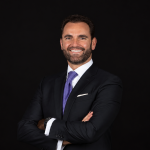
In 2023, Brad Morgan stepped into a new dimension of his sporting career by competing at the World Combat Games in Riyadh, an event widely regarded as the Olympic equivalent of combat sports. His presence there was not limited to an institutional invitation as a New Zealand athlete ambassador by the International Federation of Muaythai Associations -IFMA-, but reflected growing recognition of his trajectory within Muaythai, a discipline still developing its Paralympic structure. That participation evolved into a competitive opportunity, resulting in a bronze medal in a demonstration event that confirmed his place within para Muaythai. “It was the biggest thing I’ve ever been part of,” he said after returning, describing a moment that marked a turning point in his international projection.
His sporting story had been defined from the beginning by constant adaptation. Morgan was born in New Zealand with a congenital condition affecting his left leg, with only three toes and part of the bone missing. Before his first birthday, his parents made the decision to amputate the limb to allow him to use a prosthetic leg and develop with greater balance and stability. Rather than becoming a structural limitation, the change became part of his daily life. “I couldn’t balance on my original leg, so I got a prosthetic and started walking straight away. Honestly, it hasn’t made anything harder for me. It’s just normal,” he recalled.
Discovering the sport that redefined his life
The turning point came at the age of nine, when he discovered Muaythai, a discipline that would redefine both his personal and sporting identity. “The first time I tried Muaythai changed my life. I loved the feeling of being able to fight. Once I put the gloves on, there was no turning back,” he said. His first experiences took place in New Zealand, but he soon travelled to Phuket, Thailand, one of the global epicentres of the sport. There, he found an environment that went beyond physical training and became a defining reference point. “The first time I trained Muaythai, I fell in love instantly. My gym is basically my home. When I walked in, I felt like I belonged there.”
Before focusing fully on Muaythai, he also practised Brazilian Jiu-Jitsu at The Fight Shop NZ, where coaches Stew Chambers and Tasha Chambers played a key role in his sporting and personal development. His technical and family environment helped shape not only his competitive progression but also a mindset oriented toward constant improvement. His mother, Helen Morgan, highlighted his dedication to training and his involvement in the sporting community, where he also helped mentor younger athletes.
Competing without rivals: the structural challenge of para Muaythai
As his career progressed, Morgan encountered a structural obstacle that continues to shape the development of para Muaythai internationally: the lack of competitors in his category. In New Zealand, the limited number of athletes with similar profiles restricted his competitive opportunities, forcing him to face able-bodied opponents or travel overseas to find suitable match-ups. “They see it as a situation they can’t win,” he explained. “They think if they win, they’ve beaten a disabled athlete, and if they lose, it looks bad for them.”
This reality defined his early years as a senior athlete, with limited competitive activity despite his technical progression. However, his determination led him to international competition, including the World Kickboxing Championship in Wales, where he won gold and reinforced his status as one of the few para Muaythai references in his country.

International recognition and his role as a sporting ambassador
His participation in the 2023 World Combat Games marked a decisive institutional milestone. Initially invited as an ambassador, he ultimately took part in a demonstration competition designed to showcase para Muaythai within the international programme. The event included traditional elements such as the wai kru, a ceremonial ritual deeply embedded in the sport’s cultural identity. Morgan earned the bronze medal in a competition created to highlight the potential of adaptive Muaythai within a multi-sport environment bringing together Olympic and non-Olympic disciplines.
During his time in Saudi Arabia, he shared experiences with international delegations, including the Australian team, in an environment that reflected the global expansion of Muaythai as an institutionalised sport. “Being part of that event was significant,” he said, emphasising the importance of competing on a stage that reinforced his role as an international representative of adaptive combat sports.
A trajectory that extends beyond competition
Beyond competitive results, Morgan’s journey reflects progressive integration into the international Muaythai movement. His development has been shaped by international mobility, training in elite environments and participation in structures linked to the International Federation of Muaythai Associations -IFMA-, which promotes inclusion and global expansion of the sport.
Morgan has described his relationship with Muaythai as a process that transformed his life beyond competition. “Before Muaythai, I didn’t have direction. Now I have goals, confidence and the drive to chase my dreams,” he said. His experience has become a reference point within a sport still expanding its institutional and competitive structures, as athletes like him contribute to redefining the boundaries of high-performance sport.
 Last related articles