“This is something you do not find anywhere else in the world, at least not in a town like ours… Having three World Cup winners from such different generations is incredible, because Jesús Navas won his final title with the national team at almost 40, while Gavi was barely 20,” explains Juan Manuel Valle. The mayor of Los Palacios y Villafranca sees the latest World Cup as the culmination of an extraordinary coincidence: a town of around 40,000 people in the province of Seville, southern Spain, has also produced Fabián Ruiz and Pablo Páez Gavira, better known as Gavi.
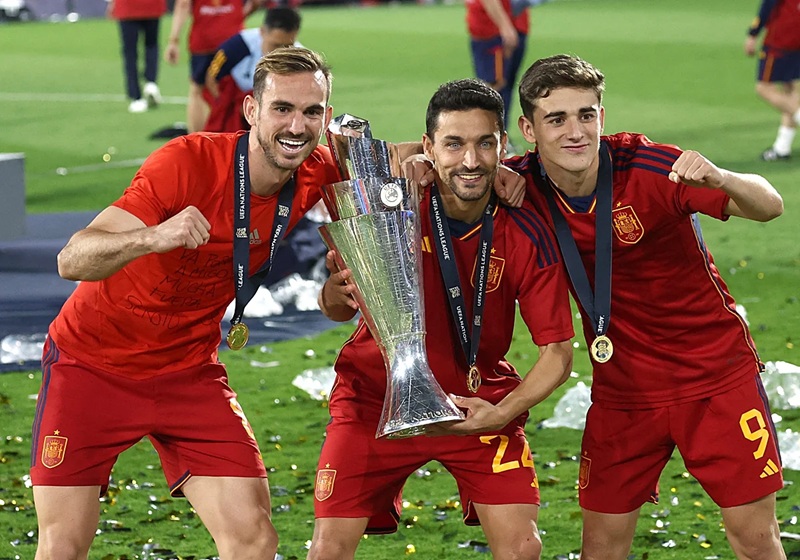
Navas became a world champion with Spain in 2010; Fabián and Gavi repeated the achievement in 2026. The two World Cups are also connected by another title: all three started the 2023 UEFA Nations League final against Croatia. Navas played at right-back, Fabián controlled the midfield and Gavi operated further forward. “Despite having 40,000 inhabitants, people in Los Palacios do not say they come from a city. They tell you: ‘I’m from the town,’” Valle says. All three left home at an early age to join major academies, but retained that same way of describing where they came from.
Jesús Navas and his accidental discovery
Jesús Navas took his first footballing steps with Unión Deportiva Los Palacios, the town’s historic club. He played alongside older footballers and stood out for his speed and ability to repeat high-intensity runs despite his small, slender frame. His brother, Marco Navas, also represented the club before joining the Sevilla FC academy. In the late 1990s, the family began making the journey between Los Palacios and Seville so that both brothers could continue their development.
The discovery of ‘Jesusito’ was partly accidental. Pablo Blanco, who was responsible for Sevilla’s academy, attended a match to watch a goalkeeper named Wilfred and instead noticed “a little kid” about whom he had received no reports. “He did not just run; he did everything well,” Blanco later recalled. Navas was invited to train with Sevilla and performed even better against stronger teammates. For months, his coach accompanied him on the approximately 25-kilometre journey to the training ground. He joined the academy at 15, made his LaLiga debut at 18 and became the first World Cup winner born in Los Palacios in 2010.
Fabián and his mother’s journeys on a Vespino
Fabián began at the Escuela de Fútbol La Unión de Los Palacios before joining Real Betis at under-10 level in the 2004-05 season. His journey was shaped from the beginning by the sacrifices of his mother, Chari Peña, who had started working in the fields at 13 and raised her children in difficult financial circumstances. Some of the family journeys to training were made on a Vespino moped. “Chari is my mother, the most important person in my life. I owe everything I have to her,” the midfielder later explained.
Sevilla attempted to sign him and offered Chari a salary to facilitate his training. Betis retained Fabián by providing his mother with a cleaning job at the club’s training complex. She would finish work, return home and then take her son back to the same facilities for training. Fabián also endured two difficult seasons after a sudden growth spurt temporarily left him tall, ungainly and less coordinated. When he received his first call-up to the senior team, Chari went to the offices of his former football school in her work clothes and shared the news through tears. Fabián made his Betis debut in 2014, while a subsequent loan spell at Elche helped him complete his physical adaptation to professional football.
Gavi, the boy who refused to tie his boots
Gavi joined La Liara Balompié at the age of six. His first coach, Manuel Basco, remembers that he already played with his laces undone because he did not want to waste time before going onto the pitch. The coaches would call him over to tie his boots, but the boy preferred to keep chasing the ball. There were two players named Pablo in the team, so they began using Gavira to tell them apart; that everyday solution produced the name by which he would eventually become known. He was shy and sometimes appeared distracted away from the action, but read matches with unusual speed. The ground would fill with spectators whenever he played.
La Liara’s relationship with the Betis academy facilitated his next move. Gavi scored 96 goals during one of his youth seasons and spent three years within the club’s development system. FC Barcelona made its final decision after watching him at a tournament in Portugal and brought him to La Masia in 2015, when he was 11. His family had to relocate with him, although Gavi continued returning to Los Palacios to visit his first club and spend time with his childhood friends. Basco recognises the same character in the intensity he shows today: “He always plays hard, but he is very fair.”
 The ‘bombón colorao’ tradition
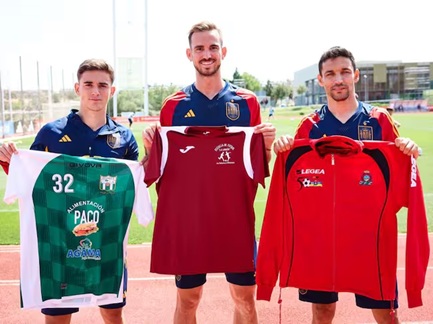
The three stories came together again in Plaza de Andalucía after the 2026 World Cup. Jesús Navas appeared at the town’s reception for Fabián and Gavi. “For two close friends to achieve this for our town is something very special,” said its first world champion. Fabián wrote in the visitors’ book at Los Palacios y Villafranca Town Hall that returning home after winning the World Cup was one of those moments that would stay with him forever. From the balcony, he reminded the children that 16 years earlier he had been standing where they were, watching Navas: “Whatever dream you have, whether it is becoming a footballer, a doctor or anything else, pursue it.” Gavi said becoming a champion alongside “a friend from Los Palacios like Fabián” was one of the greatest experiences he could have and reiterated that the town would always remain his home.
The reception ended with a tradition connected to the municipality’s best-known agricultural product. Fabián and Gavi stepped onto a scale to receive their body weight in Los Palacios tomatoes, an award known locally as the ‘bombón colorao’: around 84 kilograms for Fabián and 68 for Gavi. The municipal grounds at Marismas and San Sebastián will be renamed after Fabián Ruiz Peña and Pablo Páez Gavira ‘Gavi’, while Navas already has the Jesús Navas Sports Complex named in his honour. The Town Hall also unveiled the model for a monument to the three champions that will be installed on Juan José Vaquero Avenue, close to the pitches where their development began.
 Last related articles