The Ukrainian Olympic legend is expected to continue as President of World Masters Sport, with the composition of the organisation’s governing Board emerging as the main point of interest ahead of the November 25 General Assembly.
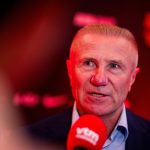
Sergey Bubka is expected to secure another term as President of World Masters Sport at the organisation’s upcoming General Assembly on November 25, with no opposing presidential candidate currently expected to challenge the Ukrainian Olympic legend.
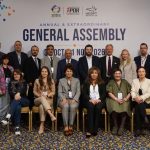
The online General Assembly will mark an important moment for the international masters sport movement, as members prepare to elect a new Board under the governance arrangements adopted in November 2025.
While the presidential position is unlikely to be contested, attention is increasingly turning to the composition of the new governing body and the individuals who will shape the organisation’s next four-year term.
Bubka, the former Olympic pole vault champion and world record-holder, is currently serving his first term as President. His expected re-election would provide continuity at the top of the organisation that has been developing its international profile and expanding its activities under its World Masters Sport identity.
A significant number of the current Board members are completing their first term and could return for another four-year mandate, potentially maintaining considerable continuity within the organisation’s leadership.
Among those serving their first term are several prominent figures from international sport, including three current members of the International Olympic Committee (IOC): Sweden’s Petra Sörling who is also President of the International Table Tennis Federation (ITTF), Finland’s Sari Essayah, and Singapore’s Ser Miang Ng and two IOC honorary members Manuela Di Centa and Uğur Orderer, alongside international sports administrators Alexander Mc Lin and Makoto Chogahara.
Vice-President Kate Caithness and Board member Poul-Erik Høyer are listed as serving their last terms, while fellow Vice-President David Eades and well-known journalist with a career in BBC News is completing his second term. Their respective positions will be among the points of interest as the new Board takes shape.
The new governance arrangements provide for a Board comprising the President, up to three representatives proposed by member International Federations, up to three independent members proposed by the Board, and the organisation’s CEO in an ex-officio, non-voting capacity.
The November 25 General Assembly will therefore determine not only the continuation of the presidential leadership but also the balance of federation representation and independent expertise within the organisation’s governing structure.
 Last related articles