The 2026 FIFA World Cup is producing stories that go beyond results, and few are as inspiring as that of Cape Verde. With a population of just over half a million people and a territory made up of ten islands in the Atlantic Ocean, the African nation has emerged on football’s biggest stage with a personality that has captivated fans across the globe. In its first-ever World Cup appearance, the Blue Sharks have achieved what once seemed unlikely: remaining unbeaten against two historic football powers, Spain and Uruguay.
The scoreless draw against Spain and the subsequent 2-2 result against Uruguay have not only kept their hopes of reaching the Round of 32 alive, but have also established Cape Verde as one of the tournament’s biggest surprises. Behind this campaign lies a story of perseverance, identity, and football development that began long before the ball started rolling in North America. Today, a country that spent decades dreaming of competing among the world’s best is proving that the size of a nation does not determine the scale of its ambitions.
From an Impossible Dream to a Historic Qualification
Cape Verde’s presence at the 2026 World Cup is the result of a project built over many years. After gaining independence from Portugal in 1975, the country began developing its national team in the late 1970s, fueled by a deep passion for football that united local communities and a large diaspora spread across Europe and the Americas. For years, the Cape Verdean side came close to making a breakthrough, but it was during the qualification campaign for 2026 that it finally overcame that historic barrier.
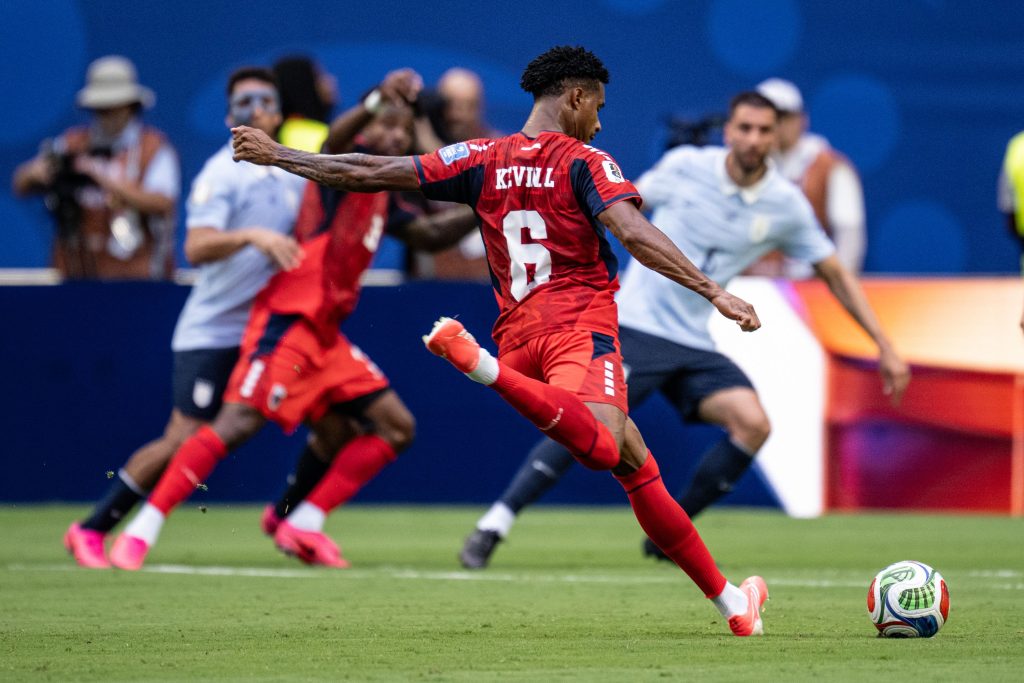
Mandatory Credit: Photo by Riquelve Nata/Sports Press Photo/Shutterstock (16948818ab)
Kevin Pina of Cabo Verde during the FIFA World Cup 2026 Group H match between Uruguay and Cabo Verde at Miami Stadium in Miami Gardens, Florida, United States, on June 21st, 2026.
FIFA World Cup 2026: Group H – Uruguay vs Cabo Verde – Miami Stadium, Miami Gardens, Florida, United States – 21 Jun 2026
Under the leadership of Pedro “Bubista” Brito, Cape Verde finished first in its African qualifying group ahead of Cameroon, one of the continent’s most successful national teams. A 3-0 victory over Eswatini secured the first World Cup berth in the country’s history and sparked celebrations across the archipelago. For a nation of just over 500,000 people, qualifying for the tournament was already an extraordinary achievement; doing so ahead of an African powerhouse confirmed that Cape Verdean football had become a force to be reckoned with.
Kevin Pina and a Generation Refusing to Stop Dreaming
While the draw against Spain featured veteran goalkeeper Vozinha, 40, as the hero, the match against Uruguay introduced the world to Kevin Pina. The 29-year-old midfielder wrote his name into the history books by scoring Cape Verde’s first-ever World Cup goal. He did so with a spectacular free kick from more than 30 meters out, the longest-distance goal scored in the tournament so far, a moment that quickly became a symbol of this team’s courage and belief.
Yet Cape Verde’s story goes far beyond a single goal or result. The team represents a nation that has learned to compete through resilience, relying on players developed both on the islands and within emigrant communities around the world. This blend of identities has shaped a squad convinced that it can defy expectations. Now, ahead of its decisive match against Saudi Arabia, the chances of reaching the knockout stage are very real. But even before learning its final fate, the Blue Sharks have already accomplished something few teams achieve at a World Cup: becoming the story everyone wants to see continue.
 Last related articles