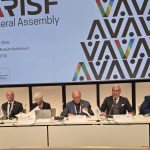
The health of a fencer is not defined solely by their ability to react in a fraction of a second, maintain precision under pressure or sustain performance during a competition. Behind every bout lies a physical, psychological and medical dimension that is essential for an athlete to develop their career safely. With this perspective, the International Fencing Federation (FIE) organized its first Sports Medicine Conference during the 2026 Senior World Championships in Hong Kong, making health and scientific innovation central themes of an event that brought together more than 100 specialists, researchers and leading figures from the sport.
Held on July 23 at AsiaWorld-Expo, the conference brought together participants from 39 countries and regions across all five continents, with 26 speakers and presenters addressing some of the main medical challenges facing modern fencing. The event was aligned with the FIE Strategic Plan 2025-2028 and the objectives of the International Olympic Committee (IOC) Medical and Scientific Commission, placing issues far beyond injury prevention on the agenda, including training load, recovery, mental health, well-being and the need for scientific tools to support athletes throughout the different stages of their careers.
The fencer’s health as part of athletic performance
The conference opened with fencing leaders and international sports medicine specialists, including Abdelmoneim ElHusseiny, FIE Interim President; Gulnora Saidova, Secretary General; Dr. Antonio Fiore, Chair of the FIE Medical Commission; Alexander NW Yeung, President of the Hong Kong, China Fencing Association; and Dr. Margo Mountjoy, Chair of the ASOIF Medical and Scientific Commission. The discussions highlighted an idea that is increasingly central to high-performance sport: protecting athletes does not simply mean treating an injury when it occurs, but understanding the conditions that can affect their health before a problem becomes a barrier to competition.
Saidova described the conference as a milestone for the fencing community and emphasized the importance of knowledge sharing among professionals. Dr. Mountjoy, meanwhile, highlighted that the mission of developing fencing worldwide depends directly on the health, safety and well-being of those who practice the sport. That perspective was also present in the keynote presentations by Dr. Hosam El-Sherbiny and Dr. Anna Tomori. The former presented the FIE Medical Commission’s strategic planning for 2025-2028, structured around seven pillars aimed at making sports medicine a strategic component of the discipline, while Tomori focused on the need to integrate medical examinations and athlete protection into development pathways.
Dr. Tomori’s presentation offered a particularly clear view of the challenges that can remain hidden behind traditional performance indicators. Her research on young fencers in Japan showed that, despite training for an average of more than 14 hours per week and apparently getting sufficient rest, nearly 60% had a history of sports injuries. More than 10% reported training with active pain without receiving medical attention, while almost one-third experienced symptoms of autonomic stress, including severe morning fatigue and orthostatic dizziness. The data highlight an important tension: an athlete can continue training and competing while their body sends signals that are not necessarily reflected in a performance, result or sporting statistic.
Science, prevention and new tools for fencing
Based on these concerns, the conference organized its content around three main areas: injury prevention, biomechanics and load management; performance optimization, recovery and well-being; and athlete safety alongside multidisciplinary collaboration. The goal was to examine fencing from different scientific perspectives, taking into account both the physical demands of bouts and the factors that can influence recovery and athletic continuity. Digital posters also provided additional space for sharing research, clinical observations and sports medicine initiatives related to the discipline.
One of the projects presented by Dr. El-Sherbiny was the launch of the FIE Injury Surveillance System (FISS), together with the development of a digital medical platform looking ahead to the Los Angeles 2028 Olympic Games. Other initiatives include expanding medical training and certification worldwide, strengthening research collaborations and establishing new working groups focused on areas such as women’s physical and mental health. The aim is to build a structure capable of collecting information, identifying needs and providing tools that allow medical and sporting decisions to be made on a stronger scientific basis.
The academic dimension also had a clear presence during the event. The FIE signed a Letter of Intent with the University of Hertfordshire, in the United Kingdom, to promote joint research related to sports medicine applied to fencing, athlete health and performance science. Led strategically by Dr. El-Sherbiny on behalf of the FIE Medical Commission, the collaboration seeks to strengthen scientific oversight, governance and connections between academic and clinical networks. At the same time, the conference brought together professionals from 39 countries and regions, creating a space where experiences from different sporting environments could come together around common challenges in a discipline that demands speed, precision, power and a high capacity for recovery.
 Last related articles