
Although FIFA has taken steps to ensure the participation of the Iran national team, including enforcing restrictions on flags and political symbols inside stadiums, the federation’s delegation has faced additional obstacles after the U.S. State Department denied visas to its president and several officials.
At the same time, the Iranian Football Federation made extensive efforts to pressure FIFA into preventing political opponents of the regime from entering stadiums. However, the overwhelming presence of Iranian spectators, most of whom appeared disillusioned with their national team and viewed it as aligned with the ruling system, created a situation that FIFA officials struggled to control during Iran’s matches against New Zealand and Belgium.
A striking number of Lion and Sun flags, widely regarded as a historic and cultural symbol among Iranians, were visible inside SoFi Stadium. Combined with persistent booing directed at players perceived by some fans as supporters of the regime, the atmosphere drew the attention of major international media outlets, many of which highlighted these public displays of dissent among Iranian fans.
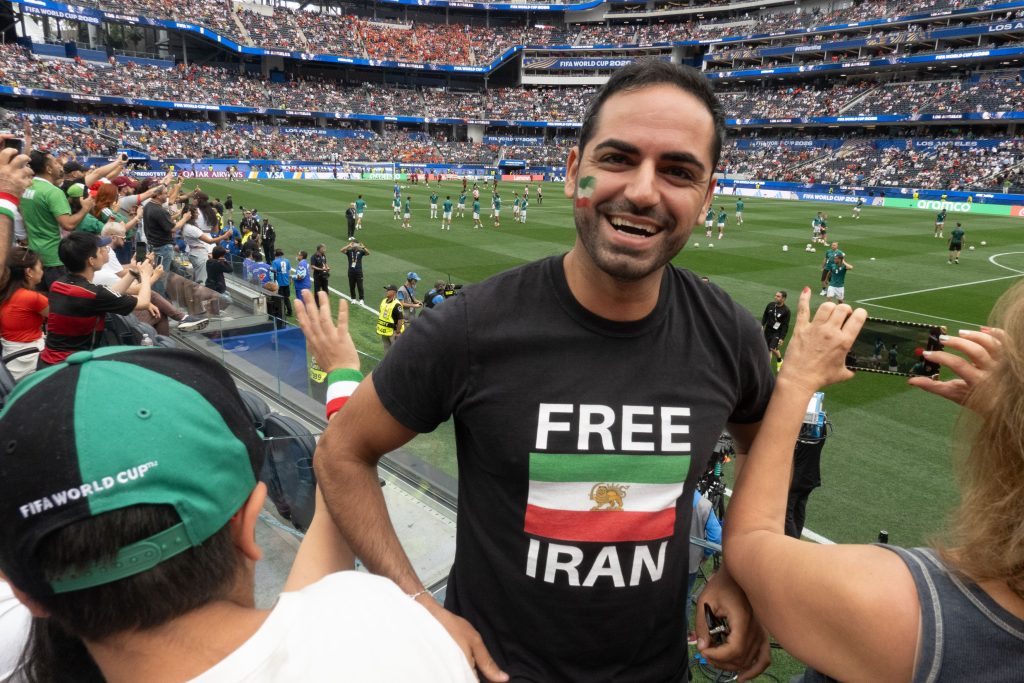
An Iranian fan at the FIFA World Cup 2026
Despite this, the FIFA broadcast director appeared to act under instruction and refrained from showing Iranian spectators on television, even briefly. Nevertheless, the scale and intensity of the crowd’s reactions proved impossible to conceal entirely.
The booing of Iran’s national anthem echoed throughout the stadium, accompanied by chants against the Islamic Republic and repeated calls of Reza Pahlavi’s name. While the broadcast avoided visual coverage of Iranian fans, it could not suppress the sound of their protest.
This apparent systematic omission of Iranian spectators from FIFA’s broadcast coverage during the matches against New Zealand and Belgium has raised significant questions. Meanwhile, a smaller number of supporters carrying the official flag of the Islamic Republic and Palestinian symbols were present in the stadium. None of these fell under FIFA’s list of prohibited symbols. Some of these individuals, when confronted by Iranian fans, did not appear to be Iranian but were instead attending to support the team.
The situation has drawn reaction from members of the Iranian diaspora, including Noor Pahlavi, who posted on X:
“Why do @FIFAWorldCup and the free press bend over backwards to protect the Islamic Republic? The fact that cameras at the World Cup deliberately cut away from shots of Iran fans to exclude their Lion and Sun flags is baffling. We should not have to convince anyone to care about the horrors this regime has inflicted on innocent Iranians for decades.”
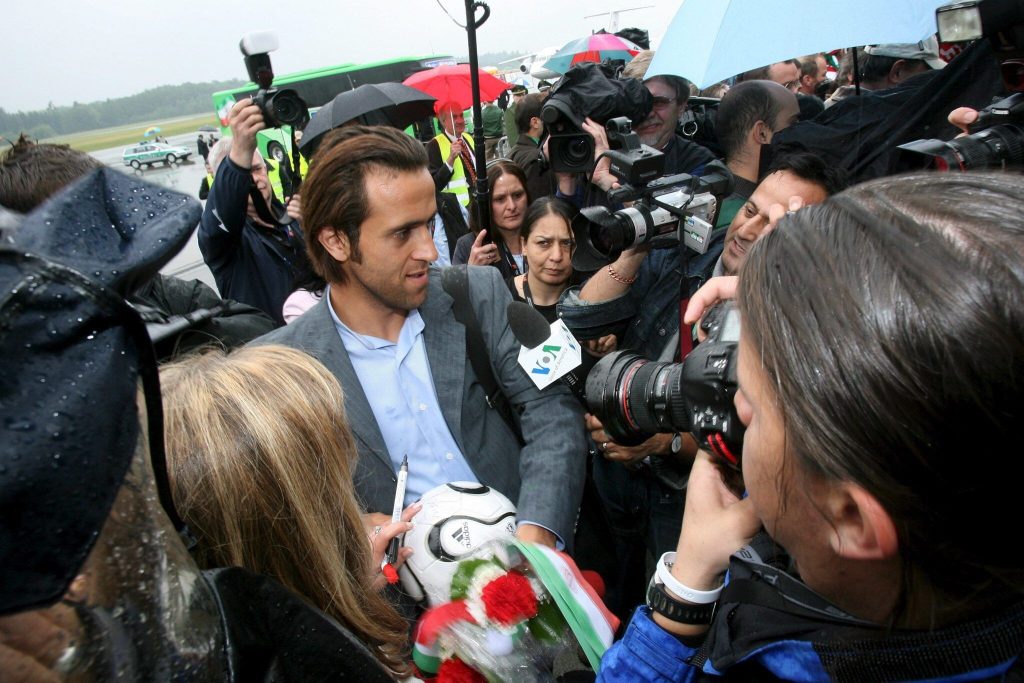
Ali Karimi Iranian footballer
The post reflects a broader narrative among parts of the Iranian diaspora, who argue that international institutions and media outlets are inconsistent in how they treat political expression depending on context and actors involved.
Public frustration among Iranians toward the politicisation of football is not new. It became more visible during the Green Movement, initially a reformist uprising. At that time, Ali Karimi, the popular Iranian footballer and former Bayern Munich player, publicly expressed solidarity with victims such as Neda Agha-Soltan by wearing a green wristband. In more recent years, during the “Woman, Life, Freedom” movement, he and many other athletes continued to support the people.
Following what some reports described as widespread public backing for Reza Pahlavi in January 2026, an event that reportedly coincided with a deadly crackdown resulting in tens of thousands of casualties, many athletes distanced themselves from Iran’s national teams. Ali Karimi, who now lives in exile, has been at the forefront of efforts supporting the families of victims, to the extent that his name has been chanted in the streets of Iran.
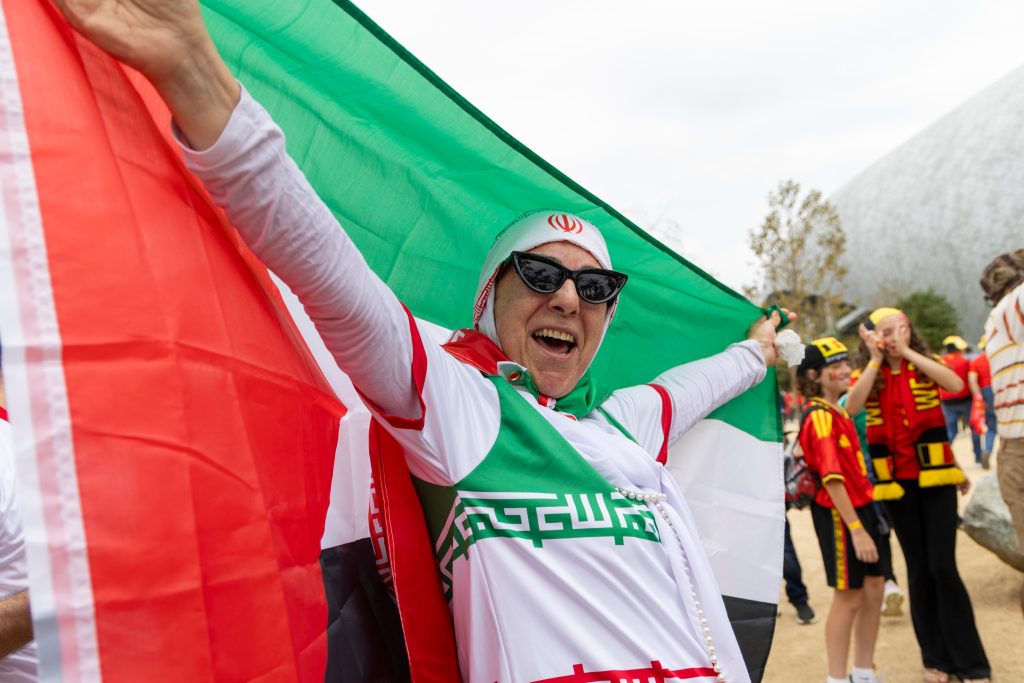
Iran Regime Supporters – World Cup 2026
Pressure on Iranian athletes has intensified significantly in recent years. Authorities have confiscated the assets of several sports figures, while others who took part in protests have been arrested and remain imprisoned.
During Iran’s match against Belgium, one spectator held a sign bearing the name of Rashid Mazaheri, the national team’s goalkeeper, who was detained after expressing support for victims of recent crackdowns. A petition has been launched in his support, though FIFA has shown no indication of backing it.
The events surrounding Iran’s matches have once again highlighted the deep divide between the Iranian people and the political structure that represents them on the international stage, a divide that even global sporting bodies appear unable or unwilling to fully acknowledge.
 Last related articles


