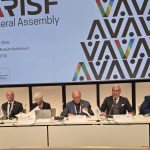
FIFA has decided to increase by 15 percent the financial allocation for the 48 national teams set to compete in the 2026 World Cup, a move that reinforces the financial weight of a tournament expected to mark a turning point in football history. The decision, approved by the governing body’s Council in Vancouver, sets the total distribution for participating federations at 871 million dollars, in an edition that will be played for the first time with 48 teams and 104 matches across Mexico, Canada and the United States.
Beyond the scale of the figure, the move reflects how FIFA is seeking to redistribute part of the economic growth generated by its most important tournament. The governing body justifies the increase through the World Cup’s “commercial success,” an expansion that not only broadens the competitive scope of the tournament, but also its economic dimension. In that context, the increase signals how the global football business continues to grow and how part of that growth is beginning to filter down to the structures that sustain the game in each country.
A bigger World Cup, with more resources and new demands
The financial leap responds directly to the World Cup’s new scale. Expanding from 32 to 48 national teams not only multiplies the number of matches and extends the competitive calendar, it also raises the logistical, sporting and operational demands on every federation. In that context, FIFA adjusted the financial distribution to support a more complex structure, where preparation, delegation travel and team planning take on a much greater dimension than in previous editions.
The breakdown of the new financial package makes that intention clear. The preparation grant rises from 1.5 to 2.5 million dollars, an increase designed to strengthen each team’s pre-tournament planning. Added to that is the qualification bonus, which rises from 9 to 10 million dollars, along with new contributions aimed at covering delegation costs and expanding ticket allocations for teams. In these additional forms of support alone, FIFA will allocate more than 16 million dollars, a figure that shows just how much the 2026 World Cup will require a far more robust operation both on and off the pitch.
The business of football and its impact on federations
The decision also highlights FIFA’s current financial moment. In the words of Gianni Infantino, the organization is experiencing the strongest financial position in its history, a statement meant to reinforce the idea of a stronger FIFA with greater capacity for reinvestment. The message is significant: at a time when football’s commercial growth is often concentrated in major leagues, sponsors and broadcast rights, the governing body is trying to position this measure as a way of returning part of that capital to the global football ecosystem.
For many federations, especially those with more limited structures, this increase could represent far more than budget relief. In many cases, the resources generated by a World Cup do not only fund participation in the tournament, but also sustain development programs, infrastructure and training for years. That is why behind the announcement there is not only an accounting improvement, but also a structural dimension: the possibility that greater revenue distribution will allow the World Cup’s impact to extend far beyond a single month of competition and endure within each country’s football system.
 Last related articles