World Aquatics has taken another step in the consolidation of high diving by expanding its High Diving World Cup to three stops for the first time. The organisation has signed an agreement with the China Swimming Association to bring the competition to Zhaoqing from 21 to 22 November 2026, in a season that has already started in Fort Lauderdale and will continue in Porto Flavia.
The addition of Zhaoqing makes 2026 the first edition of the High Diving World Cup with more than one event in the same year and takes the circuit to three continents: the United States, Italy and China. The season will also introduce the High Diving World Cup Trophy, which will be awarded to the best male and female athletes across the three stops after the Chinese event.
From Barcelona 2013 to a world tour
The current growth has a clear starting point in Barcelona 2013, when high diving made its debut at the World Aquatics Championships as a new discipline within the global championship programme. Since then, the sport has gained scale and profile, and it will return to the world championship stage for the eighth time at Budapest 2027. The shift from a one-off presence at major championships to a World Cup with several stops marks a new phase in its competitive development.
The format maintains a very specific technical demand. In Zhaoqing, men will compete from the 27-metre platform and women from the 20-metre platform, with four dives spread across two days of competition, the same model planned for the Fort Lauderdale and Porto Flavia stops. That structure also explains one of the particular features of high diving: its growth depends not only on the calendar, but also on the availability of facilities capable of hosting competition-level dives.
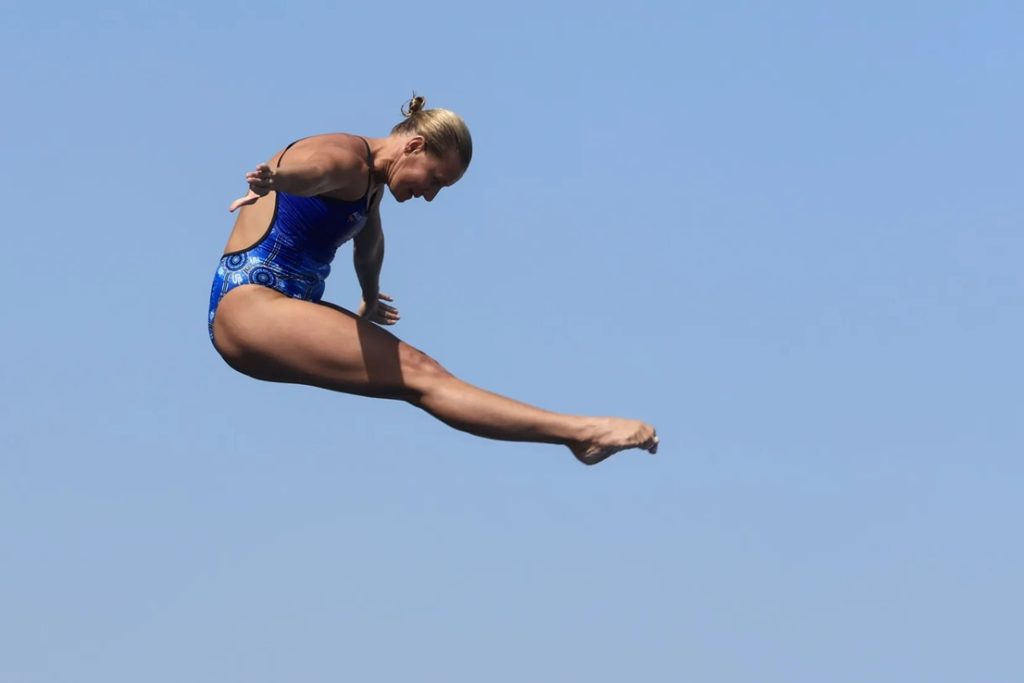
Zhaoqing, a venue with its own infrastructure
Zhaoqing holds a special place in that history. The city in southern China opened the world’s first permanent high diving towers in 2018, with competition platforms of 27 metres for men and 20 metres for women, and hosted its first global competition the following year. At the 2019 World Aquatics High Diving World Cup, Rhiannan Iffland and Gary Hunt took victory at a venue that has since become associated with the structural development of the discipline.
The return to Zhaoqing also has value for some of the leading names on the circuit. “Having a three-event High Diving World Cup tour is such a breath of fresh air and a big step forward for the sport,” said Iffland, who recalled her experience in the city seven years ago and noted that the event could be “a real highlight” for younger athletes competing there for the first time. For Armenian high diver Nikita Fedotov, who often trains at the facility, Zhaoqing feels like “a second home stop” on tour. “The conditions here are world-class,” he said.
A season with its own trophy
Orlando Duque, chair of the World Aquatics High Diving Technical Committee and former world champion, placed Zhaoqing’s return in a broader context. “High diving is a sport that demands vision, commitment and an unwavering belief — and in Zhaoqing, we have all three,” he said. He also recalled that one of the barriers to entry for athletes and prospective organisers is “the cost and complexity of constructing competition-grade towers”, which is why bringing the World Cup back to a venue with permanent infrastructure “adds momentum” to the sport.
Zhou Jihong, vice president of World Aquatics, Olympic diving champion and president of the China Swimming Association, described the event’s return as a validation of the investment made in the city. “We are truly excited and grateful about renewing our high diving partnership with World Aquatics and bringing the sport’s global elite back to Zhaoqing,” she said. According to Zhou, the event “validates the long-term vision” of the facility and will allow it to be shared again with athletes and the international audience. Thirteen years after Barcelona 2013, high diving is entering a phase less dependent on one-off appearances and more supported by stable venues, its own calendar and a season-long narrative.
 Last related articles