Before they debut, some are already products. The NBA Draft no longer marks only the sporting start of a professional career for top prospects, but also the definitive conversion of many players into commercial assets. The new elite of rookies arrives in the league with NIL deals, agreements that allow them to monetise their name, image and likeness before turning professional, as well as sneaker endorsements, trading cards, advertising campaigns, signature products and a personal economy that began to take shape before they ever stepped on an NBA court.
The rookie salary remains the biggest jump, but it is no longer always the first major income stream. AJ Dybantsa, the No. 1 pick in the Draft, is the clearest example: he arrived with an NIL valuation of around $4.2 million, a reported NIL package with BYU worth between $5 million and $7 million, an exclusive multiyear agreement with Fanatics for trading cards and collectibles reportedly valued by some outlets at eight figures, and a professional deal with Nike after entering the NBA. On top of that comes a projected rookie salary of around $69 million over four years. The new No. 1 does not arrive only as a franchise player; he arrives as a commercial platform.
The No. 1 pick already arrives as a brand
Nike does not only dress him, but is also starting to build a visual identity around his name with a personal logo. Fanatics turns him into a collectible product before his first official game. Topps NOW exploits the Draft moment with limited-time cards, autographs and short print runs. He has also been linked to Red Bull, although no public figure is known. The first NBA contract no longer comes only from the franchise; it arrives alongside brands trying to capture the player’s first minute of commercial value.
Darryn Peterson, the No. 2 pick, represents another route: the teenager turned into a brand asset before even reaching college. Adidas signed him in 2023, when he was 16, as the company’s first high school player with an NIL deal, in an agreement reported to be in the seven-figure range. Shortly after, he signed a multiyear deal with Fanatics and became the youngest athlete with a trading card company contract. After the Draft, Boardroom reported a new rookie deal with Adidas ranked among the five richest rookie sneaker contracts in history. The Draft amplifies and professionalises what was already being built.
Sneakers before the first minute
The race for rookies’ feet is starting earlier and earlier. Cameron Boozer, the No. 3 pick, had already signed with Jordan Brand alongside his brother Cayden Boozer, appeared in an NIL campaign with Samsung during March Madness and carried an NIL valuation of $2.2 million according to On3. Caleb Wilson, the No. 4 pick, arrived with an NIL valuation of $1.9 million and a multiyear, multimillion-dollar deal with New Balance. Mikel Brown Jr., the No. 6 pick, was already an Adidas NIL ambassador from his time at Overtime Elite, although his known NIL valuation was much lower, at $128,000 in 2024. Kingston Flemings, the No. 8 pick, was linked to Nike Basketball after being selected in the Draft, with no public figure attached.
The case of Darius Acuff Jr., the No. 7 pick, adds an even stronger angle because this was not only about sponsorship. Reebok announced the Acuff 1 in March 2026, a signature shoe built around his name before he had played in the NBA. His NIL valuation was placed at around $1.1 million, although the specific value of his Reebok deal was not made public. Nate Ament, the No. 13 pick, also arrived with Reebok: he had signed a long-term NIL and NBA sneaker agreement in October 2024, described by Boardroom as one of the highest NIL sneaker deals in basketball, although no exact figure was published.
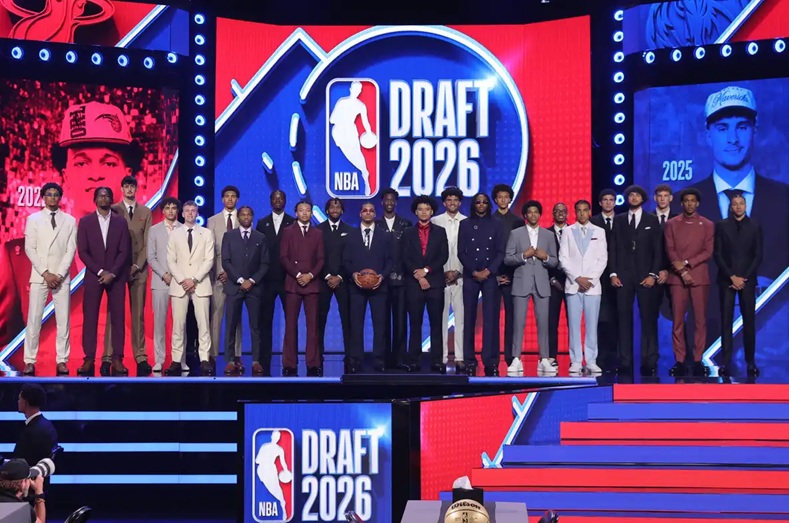
The Draft is also printed on cards
The trading card business has turned the Draft into an almost immediate product. Dybantsa had held an exclusive multiyear agreement with Fanatics since July 2025, reportedly valued at eight figures. Peterson signed a multiyear trading card deal with Fanatics in 2023. Cameron and Cayden Boozer announced an exclusive agreement with Topps in April 2026. At the same time, Topps NOW released Draft cards with autographs, short print runs and limited purchase windows for several selected players. In some cases, the card does not reveal how much each player earns, but it does show that their image is already being exploited as an official product before their debut.
That market extends the rookie business beyond the biggest names in the top 10. Joshua Jefferson, Ebuka Okorie, Keaton Wagler, Morez Johnson Jr., Brayden Burries, Yaxel Lendeborg, Aday Mara, Hannes Steinbach, Dailyn Swain, Christian Anderson, Allen Graves, Labaron Philon Jr., Cameron Carr and Chris Cenac Jr. also appear in Topps NOW products from the 2026 Draft.
The business does not end in the top 15
Outside the top 15, the phenomenon changes shape but does not disappear. Richie Saunders, the No. 32 pick, signed with Ore-Ida and Kraft Heinz because of his family link to the inventor of Tater Tots. The deal was completed in March 2025 in just five days after his story went viral and included the “Ore-Richie” campaign, limited packaging and fan promotions.
Braden Smith, the No. 38 pick, arrived at the Draft with a cited NIL valuation of $1.9 million and reported deals with Stanley, The NIL Store, HEYDUDE Shoes and Purdue NIL Store, as well as appearances linked to campaigns with Dove Men+Care. Otega Oweh, the No. 41 pick, signed NIL deals with Buffalo Wild Wings and Intuit TurboTax after his decisive three-pointer with Kentucky in the NCAA Tournament, and had also been linked to previous agreements with Club Blue, Young Family Athletic Center and Crimson and Cream. Jaden Bradley, the No. 50 pick, had an early deal with Embassy Suites dating back to June 2022, although without a known figure or a new activation clearly tied to the Draft.
The NBA has not yet seen them play a single official minute, but the market has already sold them as sneakers, cards, logos, campaigns, viral stories and future promise. For some, being drafted improves contracts that already existed; for others, it opens up new deals; for many, it turns their image into an immediate product.
 Last related articles