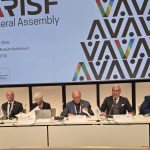
In weightlifting, history is not an abstract concept. For Mihajlovic, it is deeply personal. This interview with Dr Milan Mihajlovic, Secretary General of the European Weightlifting Federation, offers a rare insight into how history, technology, and long-term vision are shaping the future of the sport in Europe.
In 1981, his late father, Vladan Mikhailovich, was elected General Secretary of the federation. Forty years later, in 2021, Mihajlovic himself stepped into the same role. What may appear symbolic carries significant weight.
“When I was elected, I told myself I cannot do anything my father would be ashamed of. I must do something he would be proud of.”
That sense of duty has defined his approach from the very beginning.
Rebuilding history through data
One of the most ambitious projects under his leadership is the creation of a unified historical database for European weightlifting.
The origins of this effort go back to the mid-1980s, when one of the first digital databases of competition results was introduced in Belgrade. At the time, Mihajlovic, then a secondary school student, was directly involved in entering athletes’ names and results.

Decades later, that early experience has evolved into a structured effort to centralise all European Championship results at senior level, while youth and junior records are already in place.
The project also extends beyond athletes. International Technical Officials are being included, recognising their role in shaping the sport.
“They are also part of our history.”
Technology: Progress without perfection
Technology has improved fairness in weightlifting, particularly through video replay systems used in judging. Yet, according to Mihajlovic, the system still falls short of absolute certainty.
Unlike sports such as tennis, where line technology provides clear answers, weightlifting relies on complex human movement that is far more difficult to evaluate with precision.
“We improved justice, but we are still not 100 percent sure. Technology must be improved.”
He also points to a broader concern. While technology supports sport, it can reduce physical activity by replacing human effort.

Bridging digital and physical sport
Looking ahead, Mihajlovic identifies engaging younger generations as a key priority.
One potential pathway is the integration of video games with real-life sport. The concept is already emerging in other disciplines. Young people compete virtually and then transition into physical participation.
“Let’s compete in video games, and then go to the gym to be physically active.”
Such a model could offer weightlifting a new way to connect with modern audiences.
Georgia: Where weightlifting meets passion
Reflecting on recent championships, Mihajlovic highlighted both organisational quality and the atmosphere created by the host nation.
He acknowledged the leadership of Dr. Astrit Hasani, President of the European Weightlifting Federation, while pointing to the high standards delivered at the event.
Yet beyond organisation, what stood out most was the visible passion for the sport.
Figures such as Kakhi Kakhiasvili and Lasha Talakhadze were present throughout the competition, actively engaging with the environment and supporting athletes.
“Kakhi Kakhiasvili was present throughout the competition, constantly standing, moving, and supporting. This was not politeness. This was reality.”
For Mihajlovic, this level of engagement reflects something deeper than organisation. It signals a genuine cultural respect for weightlifting across the Georgian community.
Building a lasting legacy
Beyond competitions, Mihajlovic’s long-term objective is clear. He aims to leave behind a structured and accessible legacy for the sport.
This includes a comprehensive database integrating results, officials, and photographic archives, designed to serve national federations and future generations.
At its core, the project reflects a broader philosophy.
“We cannot predict the future. Every day is new. But we must try.”
Photos by Easy Sport
 Last related articles