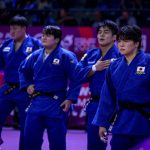
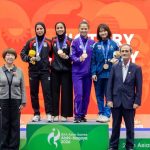
At first glance, the Qazaqstan Barysy Grand Slam in Astana appeared to be a standard elite judo competition, bringing together top athletes for a weekend of high-level performance. Yet the broader significance of the event extended far beyond the tatami, reflecting a deeper institutional and political commitment to judo in Kazakhstan.
The presence of President Kassym-Jomart Tokayev at the opening ceremony highlighted the elevated status of judo within the country’s national agenda. Sport, in this context, is increasingly viewed as part of a wider strategy for human development and international engagement rather than a purely recreational activity.
This context gives added importance to the signing of a memorandum of understanding between the International Judo Federation, the Ministry of Defence of Kazakhstan, and the Jenys Judo Sports Club. The agreement focuses on the implementation of the IJF programme “Judo in Military Schools and Academies”, an initiative designed to combine physical education with the development of values such as discipline, respect, self-control, and resilience.
The decision to introduce the programme within military institutions is significant. Armed forces structures offer organisational stability, long-term funding capacity, and clearly defined training systems. These conditions provide a suitable environment for the sustained integration of sport into formal educational pathways. In this setting, judo’s principles align closely with the behavioural expectations of military training, reinforcing both its educational and cultural relevance.

Marius Vizer with President Kassym Jomart Tokayev
The role of the IJF in this initiative reflects a broader evolution in its institutional approach. Beyond its traditional function as a governing body for international competitions, the federation is increasingly involved in structured development programmes. Through partnerships with state institutions, it is extending the reach of judo into areas linked to education and public policy.
The participation of the Jenys club adds an important operational component to the agreement. Acting as a link between state structures and the sporting community, it is expected to support implementation and ensure continuity beyond the formal signing of the agreement.
The implications of this initiative extend beyond Kazakhstan. It signals a growing recognition that sustainable sports development often requires integration with educational systems and state institutions. Without such coordination, disparities in talent development and competitive depth are likely to increase over time.

Marius Vizer and Kosanov Zhumatayevich
This approach also highlights the growing role of the IJF in fostering closer cooperation between sport and state institutions. It reflects an increasingly effective model in which international federations and governments work together to support sustainable sport development, while maintaining strong institutional frameworks and shared long-term objectives.
What is clear is that judo in Kazakhstan is entering a new phase of development. Its role is no longer limited to competition but is becoming increasingly embedded within a broader framework of education, social organisation, and national strategy.
 Last related articles