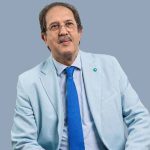
Brazil does not only compete: it sets the pace for much of South American sport through infrastructure, talent, results and international projection. The mission now is to sustain that position of privilege with a management model capable of turning the country’s potential into a broader, more stable and lasting sporting culture. In conversation with SportsIn, Marco La Porta, president of the Brazilian Olympic Committee -COB-, outlines the keys to an administration focused on high performance, education, regional cooperation and the cycle towards the Lima 2027 Pan American Games.
La Porta gives a positive assessment of his first months at the head of the COB, although he avoids presenting the process as a finished project. “The assessment is very positive, but it is still the beginning of a journey,” he says. The official highlights that his administration has built “a more participatory and modern management style”, closer to all actors within the Brazilian Olympic movement: confederations, athletes, clubs, coaches and officials. The aim, he adds, is “to create the best conditions for our athletes to perform at the highest level”, while strengthening governance and improving administrative efficiency.
Brazil as a sporting nation
The COB president insists that the country cannot measure its project only through the medal table. “We believe that Brazil cannot think only about medals,” he says. His reference point is the countries that occupy the Olympic top 10, which he identifies not only as results-driven powers, but as “sporting nations”, with sport deeply rooted in society. “We need to build this true sporting nation in Brazil, with more people practising sport, more talents in development and more infrastructure for the future,” he explains.
La Porta believes that Brazilian sport still has room to grow, but that progress will not come automatically. “Brazil’s international results demonstrate the strength of our sport, and I have no doubt that we still have a lot of room for improvement,” he says. “We know that this leap will not happen by chance. It will be the consequence of greater investment, better athlete training, greater professional development, greater application of science in sport, and all of this is the result of efficient management.” For the official, the country has “enormous sporting diversity, a very large population and a lot of talent”, but the challenge is “to transform this potential into results”.

Youth, education and new protagonists
Youth development appears as another pillar of the Brazilian model, although La Porta makes clear that it does not depend solely on the Olympic Committee. “Although it is not directly linked to the Olympic Committee, youth development is a priority for us. In Brazil, this work is mainly carried out by clubs, federations and confederations, and the COB works to contribute directly to this ecosystem,” he explains. Grassroots results, he adds, show the country’s “enormous potential”, but also the need to keep evolving: “This concern and a closer relationship between the COB and everyone involved in Brazilian Olympic sport will be fundamental. Ultimately, there is no Olympic champion without training.”
The official is also paying close attention to sports that have gained prominence in recent years. “Brazil has historically very strong sports, but we also see with great enthusiasm the growth of newer sports or those that have recently gained ground,” he says. In that group he places skateboarding and surfing, because of their strong Brazilian identity, but also taekwondo, following the world titles won by Henrique Marques, aged 21, in the under-80kg category, and Maria Clara Pacheco, aged 22, in the under-57kg category. “It was an extraordinary achievement that demonstrates the strength of this sport in our country,” he says.
Education, regional cooperation and the cycle towards Lima 2027
Education is another axis of the administration. La Porta recalls that “modern sport requires the constant updating of coaches, officials, technical teams and sports administrators”, and identifies the Brazilian Olympic Institute -IOB- as a central tool of the COB to generate and share knowledge. Through courses, seminars, congresses and training programmes, the organisation has already trained almost 90,000 professionals from different disciplines, from grassroots to high performance, across all regions of the country.
La Porta’s view also extends across South America. “Like Brazil, I see South America as having enormous potential. We have talent and a great passion for sport as defining characteristics,” he says. The official recognises common challenges, such as the improvement of infrastructure and the need for greater investment, and argues that Brazil can contribute by “sharing experiences, promoting technical exchange and expanding this regional cooperation”. After meeting different committees across the region, he insists that a closer relationship strengthens the whole continent: “A stronger region generates better competitions, better prepared athletes and greater international representation for everyone.”
The next major point on the calendar will be the South American Games in Santa Fe, Rosario and Rafaela, a key event because of its competitive weight and its qualification places for Lima 2027. La Porta does not lower Brazil’s ambition: “Another thing I always say is that Brazil enters competitions to fight for victory. And I have no doubt that we will arrive at the South American Games very well prepared, with a strong and competitive delegation.” The COB president also highlights Argentina’s preparation as host and hopes the event will be “another great celebration of South American talent”.
 Last related articles