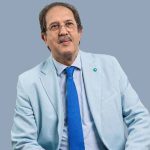
Mustapha Berraf and Alejandro Blanco have agreed to coordinate their candidacies for the presidency of the Association of National Olympic Committees (ANOC) through a common programme and a proposed division of the 2026–2030 term. Under their agreement, each would serve as president for two years, subject to ANOC’s Constitution, electoral procedures and General Assembly approval.
The agreement was signed on the sidelines of the Aichi-Nagoya 2026 Asian Games, in Japan, following consultations facilitated by Sheikh Joaan bin Hamad Al Thani, President of the Olympic Council of Asia and ANOC Senior Vice President. The candidates’ stated objective is to promote unity, stability and solidarity among National Olympic Committees.
Berraf first, followed by Blanco
The proposed arrangement would see Berraf serve as president from 2026 to 2028, followed by Blanco from 2028 to 2030. The agreement does not itself establish the succession: its implementation remains subject to the organisation’s rules, the applicable electoral procedures and approval by the General Assembly.
Both candidates have also committed to developing a joint programme covering their objectives, strategic priorities and proposed actions for the four-year term. It is expected to be presented by 8 November 2026, giving National Olympic Committees a month to consider it before the presidential election scheduled for 8 December.
A common programme ahead of the election
The understanding comes as Berraf has been expanding the international profile of his presidential bid, with closer ties to Asian Olympic leaders and expressions of support from the Caribbean. As SportsIn previously reported, his campaign has sought to broaden an established African support base into backing across the five continents. The agreement with Blanco introduces a shared proposal into that campaign.
The candidates place institutional continuity and cooperation at the centre of their understanding, arguing that unity among National Olympic Committees is essential at a time of growing challenges for the Olympic Movement. The next step is to turn that commitment into a programme members can assess. The proposed rotation will depend on the formal institutional and electoral process.
 Last related articles