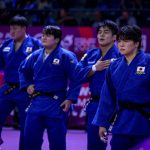
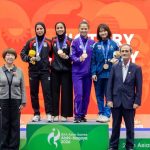
The 2026 IBSA Judo Americas and Oceania Championships in São Paulo offered more than a list of continental winners. Staged immediately after the IBSA Grand Prix, the event provided a rare, concentrated snapshot of competitive balance and emerging trends in Para judo at a moment that closely mirrors Paralympic conditions.
Brazil’s return to the top of the medal table with 11 titles came as little surprise. What stands out, however, is not simply the volume of gold medals, but the structure behind them. Competing with a full squad across weight categories, the host nation demonstrated depth rather than reliance on a handful of elite athletes. That depth remains a defining advantage in multi-day, high-intensity events and will be critical as the Paralympic cycle progresses.
Beyond Brazil’s dominance, the distribution of titles tells a more nuanced story. Colombia, Argentina, Mexico and Australia each secured continental gold, underlining a gradual shift in competitive access. This does not yet point to full parity across the field, but it does suggest that the pathway to the podium is widening. Margins are tightening, and outcomes are increasingly sensitive to small tactical or technical differences.
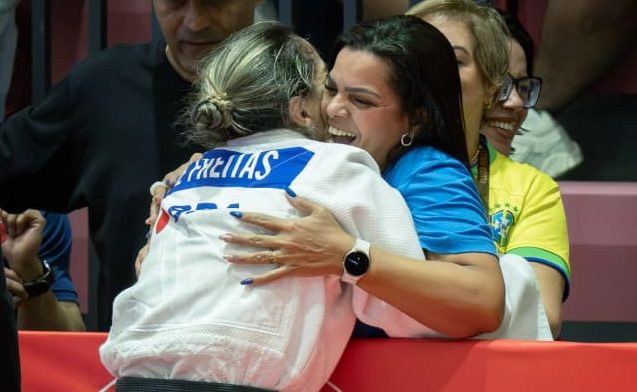
The most revealing indicator, however, lies in the contest data. With 97.5 per cent of bouts decided by score and 83.8 per cent ending in ippon, the championships reinforced a distinctive competitive identity. Unlike trends in some areas of Olympic judo, where tactical management and penalties can shape outcomes, Para judo continues to favour decisive execution. Athletes are consistently seeking to finish contests through technique rather than control. The result is a faster, more direct style that preserves the core principles of the sport while enhancing its appeal to spectators.
From a strategic perspective, São Paulo effectively marked the opening phase of qualification for the Los Angeles 2028 Paralympic Games. At this stage, results are less about final hierarchy and more about trajectory. Nations that performed strongly leave with both ranking points and competitive confidence, while others face early evidence of the adjustments required to remain relevant in the cycle ahead.
Equally significant was the operational standard of the event. Efficient scheduling, low-disruption officiating and cohesive organisation ensured that the focus remained firmly on performance. For IBSA, consistency in delivery is becoming as important as competitive quality, particularly as the sport moves deeper into the Paralympic qualification pathway.
In that sense, São Paulo functioned as an early benchmark rather than a conclusion. It highlighted where depth exists, where gaps are closing and where pressure points may emerge over the next two years. With the circuit now moving on to Europe, the next phase will begin to clarify whether these patterns hold or evolve under different competitive conditions.
 Last related articles