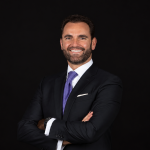
The International Olympic Committee -IOC- has elected Pau Gasol Sáez as the new Chair of its Athletes’ Commission, placing the former Spanish player at the head of the body responsible for representing athletes within the governance structure of the Olympic Movement. His appointment also brings him onto the IOC Executive Board, where key strategic decisions about the organisation are made. “I have tried to add value and contribute to the Olympic Movement, and I will continue to do so for as long as I remain part of it,” Gasol said when referring to his institutional role.
His election continues a process that began during the Tokyo 2020 Olympic Games, held in 2021, when he was elected to the Athletes’ Commission after receiving the highest number of votes among the candidates. That result granted him an eight-year mandate as an athlete representative and marked the beginning of his transition into sports governance after announcing his retirement from professional basketball on 5 October 2021 at Barcelona’s Gran Teatre del Liceu. “Being here, representing the voice of athletes and sportspeople, has great meaning,” he said about his involvement in the Olympic body.
From Olympic medallist to IOC leadership figure
Since joining the IOC, Gasol has progressively expanded his responsibilities within the Olympic system. He serves as a member of the IOC Ethics Commission and sits on the Coordination Commission for the Los Angeles 2028 Olympic Games, contributing to the organisational oversight of the future edition. His presence across these working bodies has reinforced his position within the institutional structure of the Olympic Movement. “I am very involved… I take it with the seriousness and responsibility it requires,” he said about his role.
His ability to adapt to the institutional environment has been recognised by senior Olympic officials. “He delivers outstanding speeches. As an IOC member, I feel very proud of Pau Gasol,” said IOC member Luis Mejía, who has served in the organisation since 2017. Gasol himself has described his institutional evolution as part of a broader learning process within Olympic governance. “Being here, especially representing the voice of athletes, has great meaning. Learning how things work and trying to contribute in the way I can is part of that responsibility,” he explained.

His growing role in promoting sport beyond competition
Gasol has established a constant presence within the international sports governance ecosystem, taking part in strategic meetings, Olympic governance processes and programmes linked to the development of the Olympic Movement. The former player has said his transition has been defined by the responsibility of representing athletes from a new position. “I like it because it’s a different side of sport, but also a very important one. Being able to represent the voice of athletes has great meaning,” he said when describing his evolution within the IOC.
He has also highlighted the structural importance of expanding sport across all disciplines. Speaking during the Milano Cortina 2026 Olympic cycle, Gasol emphasised the broader impact of athlete participation and representation. “In the end, it’s about promoting sport, whether summer or winter, and knowing there is also a pathway here for young people from our country to pursue,” he said, referring to the growing presence of Spanish athletes in international competition. His continued involvement in Olympic activities reflects his integration into the institutional framework of global sport.
Gasol Foundation, social leadership and investment in sport
Alongside his IOC responsibilities, Gasol maintains an active role in the social sector through the Gasol Foundation, which he co-founded with his brother Marc Gasol in 2013 to combat childhood obesity. The organisation develops educational programmes, scientific research and institutional initiatives aimed at promoting healthy lifestyles among children. One of its key milestones was its participation in Spain’s National Strategic Plan against Childhood Obesity, developed in collaboration with the national government. “I’ve retired, but I haven’t stopped working. I want to give back to society, which has given me so much,” Gasol said when describing his post-playing career.
His activity also extends into business and technological innovation through Gasol16 Ventures, his investment platform focused on sport, health and performance. Through this structure, he is involved in companies such as Overtime Elite, Sports Innovation Lab, Therabody, Oura Ring, BetterUp, INDYA and Draftea, while also contributing to investment initiatives supporting the growth of women’s sport, including the WNBA. Gasol also serves as a global ambassador for UNICEF, a member of the Spanish Olympic Committee, vice president of Bàsquet Girona, and a strategic advisor and global ambassador for FC Barcelona, combining institutional leadership with social and entrepreneurial initiatives. “It’s a different side of sport, but an important one. Being able to represent athletes and be part of this process has special meaning,” he said of his current role within the Olympic Movement.
 Last related articles