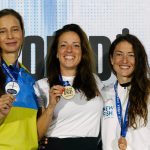
World Rowing has announced that Plovdiv, Bulgaria, will host the 2027 World Rowing Under 19 and Under 23 Championships. The decision was announced at the Nations Dinner during the 2026 World Rowing Under 19 Championships, attended by the nine Bulgarian medallists from Montreal 1976. Their presence connected the women who secured Bulgaria’s first Olympic rowing medals with the young athletes preparing to begin their own international careers.
The Under 19 Championships will take place from 27 to 31 July 2027, while the Under 23 event will run from 28 July to 1 August. Together, the two regattas are expected to welcome more than 1,000 athletes from over 60 nations. World Rowing president Jean-Christophe Rolland underlined the significance of announcing the host during the tribute: “It is particularly meaningful to announce this event during a celebration of the women whose achievements helped define Bulgarian rowing. Their success inspired generations of athletes, and today their legacy lives on through a venue that continues to welcome the world’s best rowers.”
The women who established Bulgaria in Olympic rowing
Rowing was one of the original sports of the modern Games, but women had to wait 80 years to join its Olympic programme. A total of 205 women competed across six events in Montreal, opening a new chapter for the sport. Canadian rower Guylaine Bernier, a member of that first generation, later explained its importance: “The impact of the first time having women rowing in the programme of the Olympic Games changed the development of rowing, not only in Quebec, in Canada, everywhere in the world. It opened the door. It was like a spark.” The athletes did not always recognise their pioneering status during the Games, but their participation created opportunities for the generations that followed.
Bulgaria used that Olympic debut to secure its first medals in rowing. Svetla Otsetova and Zdravka Yordanova won the women’s double sculls; Stoyanka Gruycheva and Siyka Kelbecheva claimed gold in the women’s pair; and Ginka Gyurova, Lilyana Vaseva, Reni Yordanova, Maria Modeva and coxswain Kapka Panayotova earned silver in the women’s coxed four. Zdravka Yordanova recalled the commitment required to reach Montreal: “It was a crazy year. I spent 10 months preparing, with no opportunities for anything else but for achieving my goal.” Her first feeling after winning was that she had completed an extremely demanding task; the historical significance became clear later. Yordanova also recalled Queen Elizabeth II standing to applaud the Bulgarian crew during the lap following the competition.
A story that continued beyond Montreal
Otsetova and Yordanova had only begun competing together in 1975, earning a World Championship bronze in Nottingham a few months later. Their connection was immediate. “It was like dancing. Either it works between two people, or it doesn’t, and it worked from the start,” Otsetova explained. Their coach concentrated on developing the pair’s synchronisation, but reduced his instructions before the Olympic final to one simple message: they should go out and do what they already knew. “I don’t think we realised at the time that it was historic. We were just happy to be there,” the Olympic champion later acknowledged.
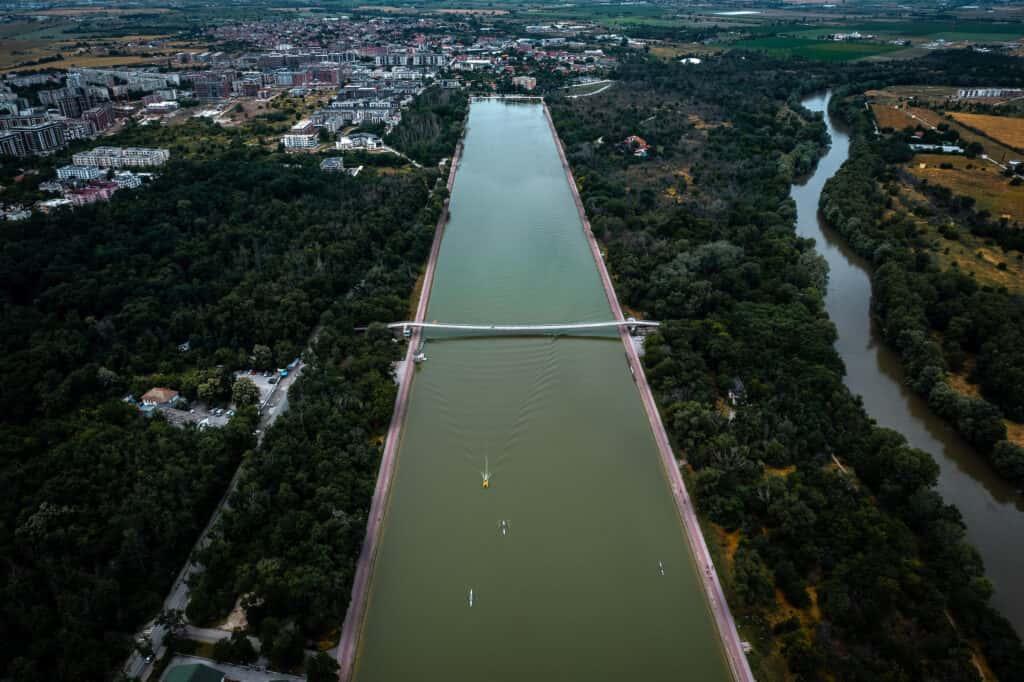
During that same season, Otsetova was also completing her architecture degree. Coaches and professors advised her to choose between rowing and her studies, but she condensed her examinations, defended her final project in May and became an Olympic champion two months later. From 1980, she worked as chief consultant alongside architect Valentin Marinov on the development of the Plovdiv rowing course, contributing particularly to the location of its boathouses. She later became involved in planning around 60 Olympic and World Rowing venues, from Barcelona 1992 to Los Angeles 2028. One of the women who opened an Olympic pathway consequently helped shape the venues where future generations would compete.
The next generation takes over
Plovdiv has since become a regular host on the international rowing calendar. The city has staged senior, Under 19 and Under 23 World Championships, World Rowing Cups and European Championships. Its organising committee will bring together two age categories in 2027, representing different stages in athletes’ development. Chairman Ivan Popov linked the appointment with the tribute held during the announcement: “Today is a proud moment for Bulgarian rowing. As we honour the athletes who helped establish our country’s place in Olympic rowing history, we are equally proud to look ahead and welcome the next generation of champions.”
The two championships will extend a story that began long before their future participants were born. The nine Bulgarian women honoured in Plovdiv belonged to the first generation admitted to Olympic rowing and became the first to take their country onto the podium in the sport. Fifty years later, their legacy remains visible not only in their medals, but also in the development of rowing and in a venue that one of them helped shape. In 2027, more than a thousand young athletes will compete there and add another chapter to the history begun by the pioneering women of Montreal.
 Last related articles