Alpine Canada and Biathlon Canada, the national governing bodies for alpine skiing and biathlon in Canada, announced plans in Calgary on Tuesday to form a single organisation. The new body would bring biathlon together with the three disciplines Alpine Canada already oversees: alpine skiing, Para alpine skiing and ski cross. The project has the backing of the Government of Canada and energy company Capital Power.
Capital Power’s sponsorship could reach C$25 million over five years. To unlock the full amount, Alpine Canada must merge with at least one other national snow sports organisation and secure additional public funding. The sponsorship has already enabled Alpine Canada to announce that it will scrap team fees. Tying the funding to a merger raises a question about federation autonomy. How much influence can a sponsor have over the way a federation is organised, and who will decide how funding is shared across the disciplines?
What private funding makes possible
Capital Power provided C$5 million for the first year of the sponsorship, according to ‘The Canadian Press’. The memorandum of understanding announced on 11 September provides for up to C$20 million more over the remainder of the five-year term. The federal government allocated a combined C$9.63 million to the two federations for 2026–27, including C$3.82 million in additional funding. The public allocation covers one financial year, while the full five-year sponsorship depends on the conditions set out in the memorandum.
The first tangible change concerns what athletes pay to compete. In September, Alpine Canada announced that it would scrap fees for members of its national and development teams across all three disciplines. Emma Lunder, a two-time Olympian and athlete representative on Biathlon Canada’s board, told ‘The Canadian Press’ that biathletes had paid “pretty severe team fees” to compete. She hopes that sharing resources will help reduce those costs in biathlon as well.
What changes under one federation
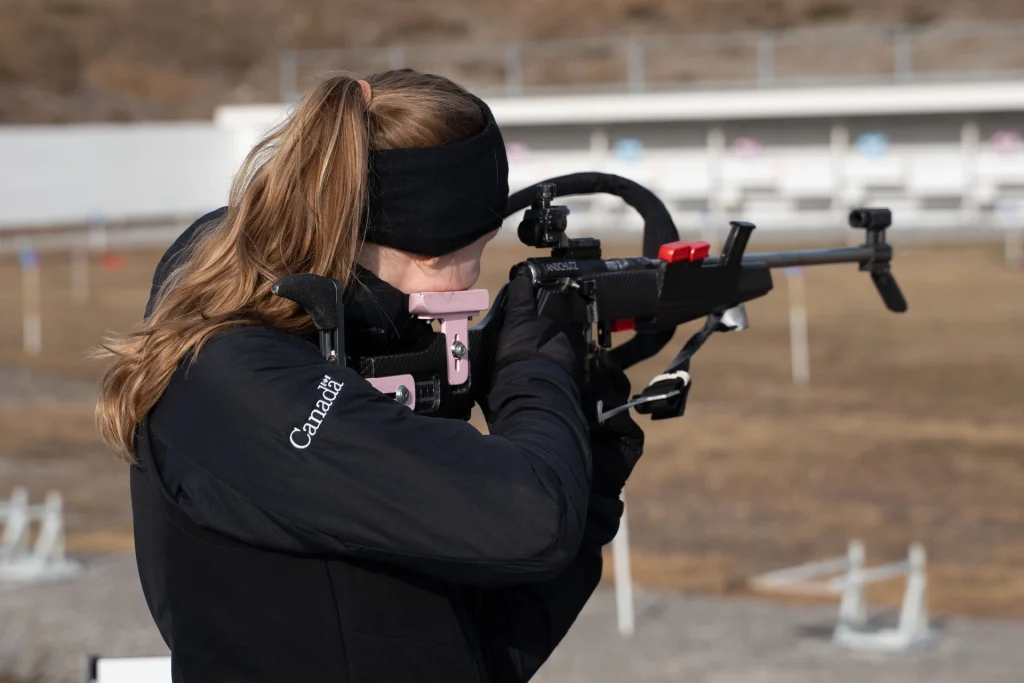
Biathlon Canada has five full-time employees, 14 national team athletes and an annual operating budget of around C$2.6 million. Alpine Canada has nearly 50 national team athletes and a budget of around C$19 million. Kerry Dankers, chief executive of Biathlon Canada, said the merger would give her federation access to specialist support in human resources, marketing, finance and technology. Some of that work currently falls to Dankers herself, part-time staff or the board. The difference in scale explains what biathlon stands to gain from sharing services and why its representation matters when budgets are approved.
In March, the Future of Sport in Canada Commission recommended that the government encourage mergers and shared services to address duplication and shortages of resources. Its report found that federal funding was the main source of income for 90% of national sports federations. In October, Bobsleigh Canada Skeleton and Luge Canada announced plans to bring bobsleigh, skeleton and luge under one national body. The government allocated more than C$1.5 million to support the merger. The organisations aim to begin operating together in spring 2027, subject to approval by their boards and members.
How federations set boundaries
British Cycling combines backing from sponsors such as Lloyds and Shell with around £30.5 million in government and National Lottery funding for its high-performance programme through the Los Angeles 2028 Olympic cycle. In December 2025, it set up British Cycling Ventures to attract outside investment and develop its commercial activities. The federation said at the time that its commercial revenue had risen by 286% since 2023.
Canada Soccer offers an example of how a contract can define a company’s role. Its agreement with Canadian Soccer Media & Entertainment, published in February, sets out a revenue-sharing model, guaranteed minimum payments and a joint committee to oversee the commercial partnership. The company is consulted on match scheduling. A clause gives the federation sole control over the strategic direction of the national teams and the final say on when they play.
Who will decide where the money goes
A multi-year sponsorship gives a smaller federation room to plan and pay for services it would struggle to provide on its own. If those services come to depend on one sponsor, the terms of any renewal can influence how much goes to high-performance sport, clubs or disciplines with less commercial visibility. Public funding also comes with conditions. Sport Canada requires athlete representation on the board, financial controls and the publication of governance documents, among other measures.
Alpine Canada and Biathlon Canada have said that provincial and territorial organisations will remain independent. They have also committed to designing governance and funding arrangements that preserve the expertise of each discipline and support the different regions. The announcement leaves open how the new board will be formed, who will approve the allocation of funding between disciplines and whether Capital Power will have a formal role in the new organisation’s governance.
 Last related articles