In less than two decades, Qatar has followed a path that many traditional sporting powers needed generations to achieve. A country with a small population, no significant historical legacy in many major sports, and limited traditional sporting foundations has become one of the most influential players in the global sports economy and political landscape.
This transformation was not the result of a broad athlete development system, decades of sporting culture, or a deeply rooted tradition of elite competition. The main driver was capital, a financial power that opened the doors to major clubs, international federations, and the world’s most prestigious sporting events.
Qatar understood that in the 21st century, sport had become one of the most powerful instruments for building international influence. A country with limited geopolitical weight could place itself at the centre of global attention through ownership of major clubs, recruitment of international stars, and hosting billion-dollar sporting events.
But behind this strategy lies a fundamental question. Is Qatar developing sport, or is it buying influence in a sporting world whose traditional rules were built around competition, gradual development, and sporting merit?
The acquisition of Paris Saint-Germain in 2011 marked a turning point. Qatari investment transformed a club that had held a relatively modest position in European football into one of the wealthiest teams in the world. The deal later became linked to revelations published through Football Leaks, which named figures including Gianni Infantino, Michel Platini, Nasser Al-Khelaifi, and Khaldoon Al Mubarak.
This rapid transformation forced European football to confront a difficult question. If a club can operate with the financial backing of a wealthy state, is competition still between football clubs, or has it become a contest between political and economic powers?
PSG’s sponsorship agreements with Qatari state-linked companies, particularly deals whose valuations were examined by UEFA, highlighted the challenges facing European football’s financial regulations. The issue was not simply spending money, but whether financial resources beyond the traditional football market could create an advantage that other clubs were unable to match.
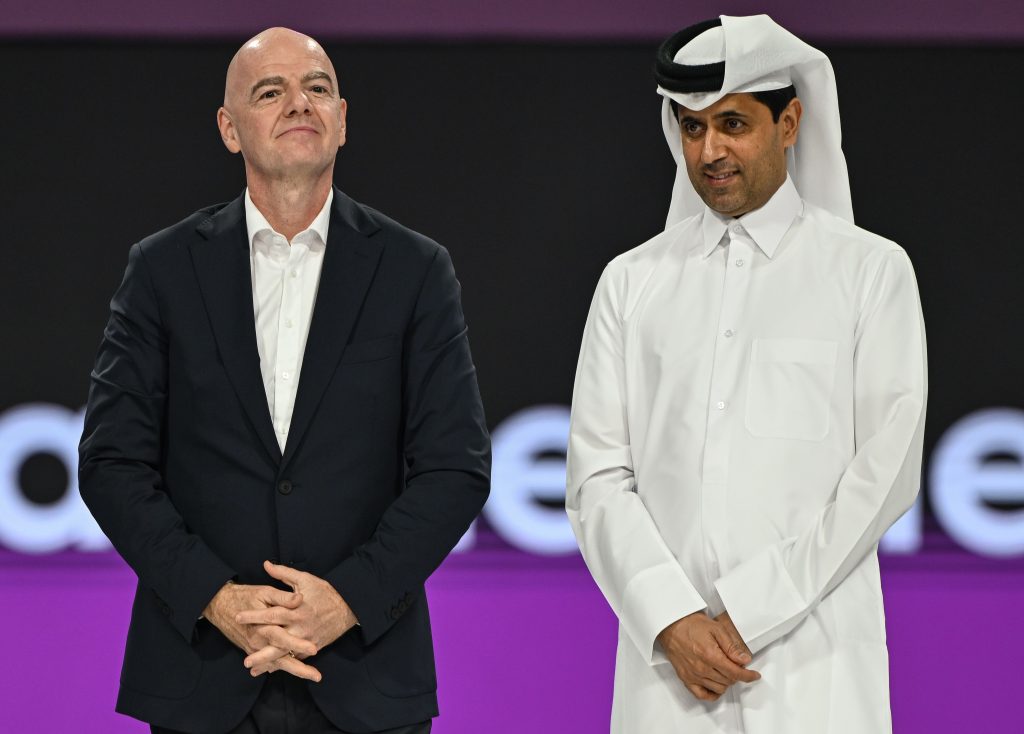
Gianni Infantino and Nasser Al-Khelaifi
The Málaga case in Spain
The Málaga case in Spain demonstrated that investment alone does not guarantee long-term sporting success. Abdullah bin Nasser Al Thani, a member of the Qatari royal family, acquired Málaga in 2010 and launched an ambitious project.
The arrival of players such as Santi Cazorla, Isco, and Ruud van Nistelrooy quickly transformed the club into one of Europe’s emerging forces. Málaga reached the quarter-finals of the UEFA Champions League, creating one of the most remarkable stories in European football at the time.
However, when Qatari financial support was halted following legal intervention in Spain, the club’s structural weaknesses became clear. Financial problems, internal disputes, and management failures pushed Málaga from a European contender into a club struggling in the lower levels of Spanish football.
The case revealed an important reality. Buying sporting recognition through financial power is possible, but building a sustainable sporting institution requires much more than investment. Club culture, professional management, youth development, and long-term planning are elements that even enormous financial resources cannot create overnight.

Jassim Bin Hamad Stadium in Doha
Qatar and Athletics
In athletics, Qatar followed a different model. Instead of developing a generation of home-grown athletes, the country focused on attracting established international talent.
The most prominent example was Stephen Cherono, the Kenyan distance runner who changed nationality and competed for Qatar under the name Saif Saaeed Shaheen. He became one of the world’s leading athletes in the 3,000 metres steeplechase.
The transfer was permitted under the regulations of the time, but it generated significant debate. Critics argued that wealthy nations could shorten the traditional path of athlete development by recruiting already established champions, while other countries spent decades building sporting systems.
Following the corruption scandals involving Lamine Diack and his son, and after changes in the leadership of World Athletics, regulations on nationality transfers became stricter. These reforms were part of an effort to balance the global nature of sport with the need to protect the identity and integrity of national competition.
Handball provided another example of Qatar’s approach, but with a different outcome. The 2015 IHF World Men’s Handball Championship in Doha represented the peak of a major sporting project.
Using the regulations that existed at the time within the International Handball Federation, Qatar recruited several foreign players and created a national team largely composed of athletes born outside the country.
From a sporting perspective, the project was successful. Qatar reached the World Championship final, becoming the first non-European team to achieve such a result in men’s handball history.
However, the achievement also triggered a wider debate about the meaning of a national team. Should a national team be defined solely by official citizenship, or should it represent a historical, cultural, and sporting development process?
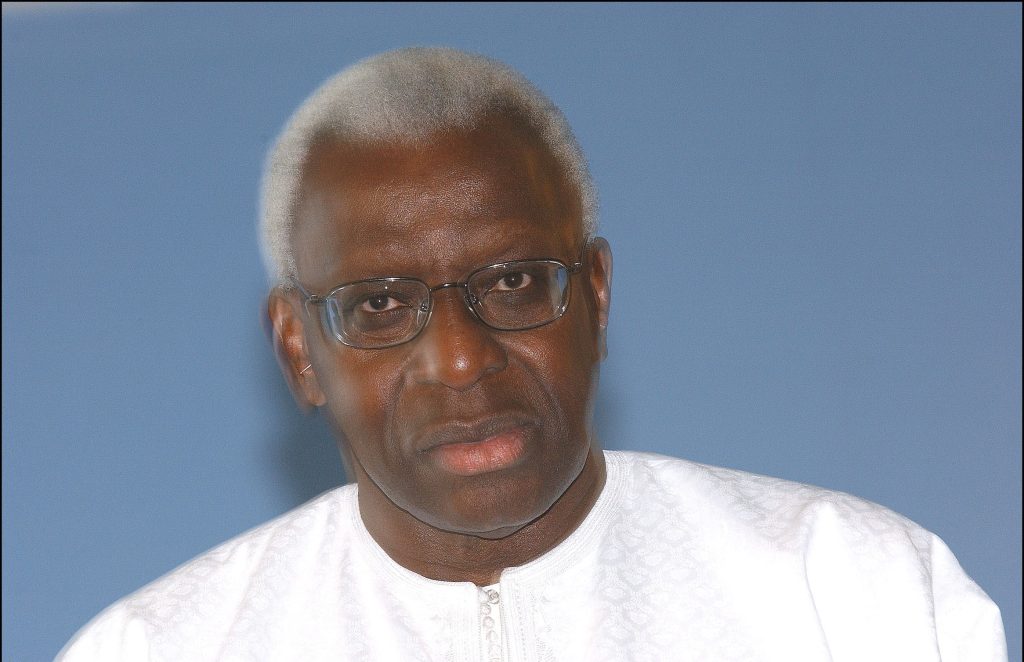
Lamine Diack
Qatar’s expansion into emerging sports
Qatar’s involvement in padel showed that its ambitions extend beyond traditional sports. The country has not only focused on established global competitions but has also targeted emerging sports markets.
Investment by Qatar Sports Investments in Premier Padel helped reshape the professional structure of the sport within a short period of time.
However, the hosting of the FIFA World Cup in 2022 became the most significant chapter of Qatar’s sporting strategy.
FIFA moved the tournament from its traditional summer schedule to November due to the extreme heat conditions in Doha. At least ten members of Qatar’s national football team were not born in the country. The role of Mohammed bin Hammam and the departure of Sepp Blatter from FIFA leadership also became part of the wider controversy surrounding the World Cup bid and its aftermath.
At the same time, human rights organisations repeatedly raised concerns over the treatment of migrant workers involved in the construction of stadiums and infrastructure projects for the tournament.
Today, Qatar’s Olympic ambition represents the latest chapter in a remarkable transformation from a small sporting nation into a global power broker. But its journey has also exposed a deeper tension within modern sport, where the pursuit of influence through investment continues to challenge the balance between financial power and sporting tradition.
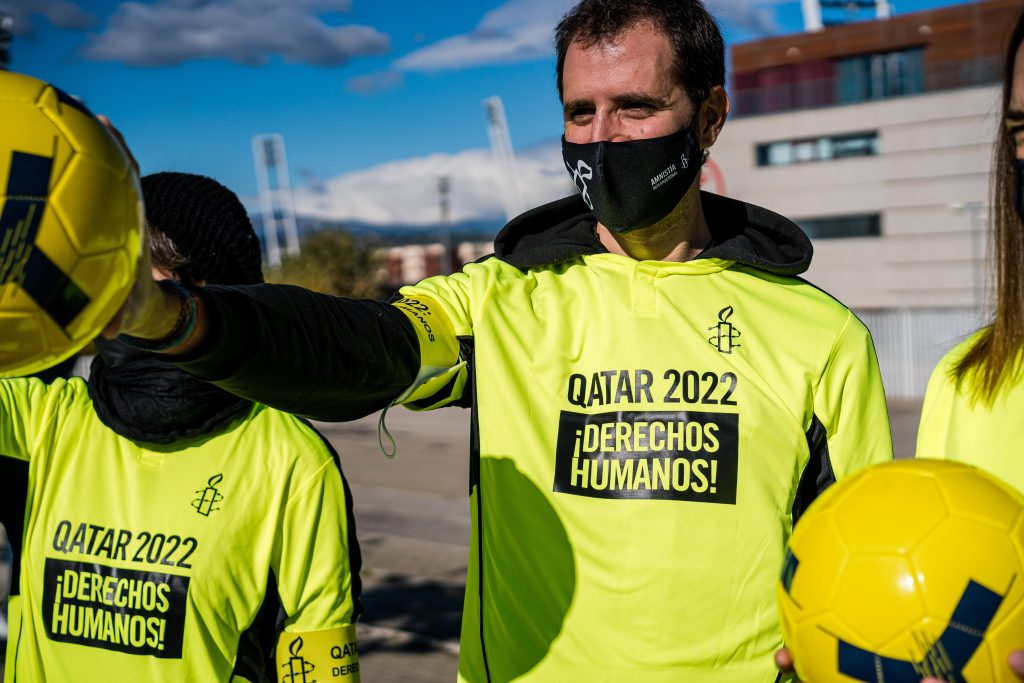
Demanding the rights of migrant workers in Qatar
 Last related articles