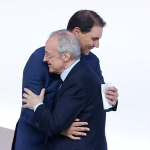
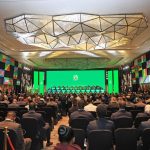
Florentino Pérez invited Rafa Nadal to sit on his right last Saturday, 21 November, before the delegates had even voted on his appointment to Real Madrid’s board of directors. They gave him a standing ovation in the pavilion at Valdebebas, and a few hours later the Extraordinary General Assembly confirmed his appointment with 1,704 votes in favour, four against and five abstentions. The 99.5% backing for the former tennis player offered a picture of unity at the club’s first Assembly since the election. Florentino knows how hard that is to achieve.
On 7 June, Florentino won the election with 21,741 votes, or 65%. Enrique Riquelme received 11,814, or 35%. The president therefore knows that more than one in three members who voted wanted a different president. Seen from the stands at the Bernabéu, that result helps explain why some supporters whistle when things do not go as they expect. Florentino Pérez sought to blame those whistles on sections of the press misleading the fans. He even went so far as to suggest that those who whistle are not Real Madrid supporters.
Member ownership and the return to UEFA
Against that backdrop, Florentino ruled out selling Real Madrid and insisted that the club’s roughly 100,000 members will remain its sole owners. He is still working on a reform intended to strengthen their control and protect the club’s assets. But he knows the timing is wrong, given that the ownership model was one of his main points of disagreement with Riquelme. On Saturday, the delegates voted on Nadal’s appointment, the accounts and the budget. The proposed changes to the club’s statutes have yet to go to a vote.
In Europe, the shift is more tangible. After years of conflict with UEFA over the Super League, Madrid are working to rejoin European Football Clubs (EFC), formerly the ECA, and return to UEFA’s committees. Florentino traced that rapprochement back to the agreement the three parties reached on 11 February. The club that sought to change European football by launching a competition of its own now wants to shape it from within the institutions it once challenged. That is the Madrid whose board Nadal has joined.
A €1.25 billion budget
The accounts go a long way towards explaining the support Florentino retains among the delegates. Madrid closed the 2025–26 financial year with €1.221 billion in revenue and €26.2 million in net profit, and 99.2% voted to approve the accounts. For 2026–27, the Assembly approved a record budget projecting €1.25 billion in revenue and €14.2 million in profit. The next commercial step is to reach Madrid supporters who live thousands of miles from the stadium. The club is developing a global loyalty programme that will recognise fans when they buy a shirt, watch a match or take part in an event at their local supporters’ club. Through Infinite Bernabéu, Madrid are already exploring how to give those fans the experience of being in the stands. The first immersive documentary was filmed during a Champions League match against Juventus.
For the fans who do go to the stadium, the president had a different message. As we have seen, he asked them to stop whistling at the players and pointed to the influence of “certain media outlets”. It is worth going back to the league opener against Real Sociedad. The Bernabéu applauded the team onto the pitch, whistled them off at half-time with the score at 1–1 and ended up celebrating a 4–1 win and a hat-trick from Mbappé. Just 45 minutes separated the whistles from the applause. What changed in that time was the way Madrid played. Much the same happened last Saturday. Madrid trailed Celta Vigo 1–0 at half-time and left the pitch to scattered whistles. By the end, the crowd were celebrating after Espí struck in the 86th minute to seal a 2–1 win. For many in the stands, though, watching this team still feels much as it has for the past two years.
The midfielder Madrid needed and the manager who came back
To understand the whistles, go back to Toni Kroos’s retirement in 2024. The problem became more apparent when Luka Modrić left in 2025. First, Madrid lost the player who knew what tempo each match called for. A year later, they lost the one who could still come off the bench and change it. This summer, a midfielder with many of those qualities was within Madrid’s reach. Rodri Hernández had just been named the best player at the World Cup. Madrid took their time making up their minds and, faced with that lack of urgency, Rodri chose Barcelona. No other playmaker arrived. That decision does more to explain the Bernabéu’s impatience than anything said on a football talk show…
For the manager’s job, Florentino did have someone in mind. He brought back José Mourinho, whose first spell divided Madrid supporters so deeply that for years they defined themselves as pro- or anti-Mourinho. Florentino can defend those decisions with the authority the members gave him at the ballot box on 7 June… But the members never voted on those decisions. They did vote on the appointment of Rafa Nadal, whom many already see as a future Real Madrid president (albeit with a CEO working behind the scenes).
 Last related articles