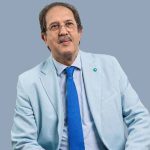
Vincent Roberti has been appointed interim president of the French Alps 2030 Olympic and Paralympic Games Organising Committee -OCOG- following Edgar Grospiron’s departure. An Extraordinary General Assembly approved a temporary amendment to the statutes on 14 September, allowing the director general to serve simultaneously as president during the transition. The Executive Board subsequently formalised Roberti’s appointment. He has held the director general position since June and will perform both roles until a permanent successor is selected.
The measure is intended to prevent a leadership vacuum during an immediate period of sporting and organisational decisions. “I am ensuring the continuity of the Organising Committee until a new president is appointed. The OCOG is fully operational,” Roberti explained. “I will carry out this interim role for as long as necessary.” Pierre-Olivier Beckers-Vieujant, chair of the International Olympic Committee -IOC- Coordination Commission, said the appointment “guarantees stability and continuity for the project” and highlighted the experience, professionalism and calm leadership Roberti has demonstrated since his arrival.
Two roles for one transition
The arrangement temporarily places two functions originally conceived as separate in the hands of one person. The president represents the project institutionally and heads its governance structure, while the director general coordinates its day-to-day operations and implements the decisions adopted by its governing bodies. The Executive Board retains its responsibilities, but Roberti’s dual role reduces the possibility of the presidency and director general’s office once again operating as competing centres of authority during the transition. The former prefect of Tarn-et-Garonne, a senior representative of the French state at departmental level, assumes this responsibility only three months after joining the Organising Committee.
The decision responds to instability that had already affected the organisation’s two most senior positions. Grospiron left the presidency 18 months after taking office in February 2025. His departure followed that of former director general Cyril Linette, who left the project over “insurmountable disagreements”, as well as other senior officials responsible for areas including operations and communications. Beckers-Vieujant acknowledged tensions among the stakeholders: some felt they were not being sufficiently heard, while others believed they lacked enough freedom to perform their roles. “The departure of the president of an Olympic and Paralympic Games Organising Committee is not a trivial event,” he said.
The IOC’s immediate review
The leadership change coincides with the second visit of the IOC Coordination Commission, scheduled in Lyon from 14 to 16 September. The commission is reviewing preparations and will hold a press conference on Wednesday with Roberti, Beckers-Vieujant and IOC Olympic Games executive director Christophe Dubi. The review will assess whether the organisation can maintain its operational capacity during the change of president, while also addressing practical matters. These include final approval of the allocation of the sports and disciplines selected for Lyon’s new ice sports cluster.
That venue reorganisation illustrates the complexity of the project Roberti must manage. Nice was initially designated as the principal ice sports hub, but its mayor, Eric Ciotti, rejected the use of the Allianz Riviera stadium as a temporary ice rink for the men’s ice hockey tournament. The IOC’s objective of retaining a unified cluster led to most of those events being transferred to Lyon. Speed skating is the exception and will take place at Thialf in Heerenveen, in the Netherlands. French Alps 2030 must therefore coordinate venues across different French regions as well as one competition staged outside the country.
The permanent presidency remains unresolved
The Organising Committee has not yet established a timetable for selecting its permanent president. The amendment to the statutes was adopted exclusively to cover the interim period and allows Roberti to continue performing both functions for as long as necessary. The permanent appointment will need to determine how institutional representation and executive management are divided, while also establishing a procedure for resolving disagreements between the committee, the French Government, the host regions and the Olympic and Paralympic organisations.
The temporary concentration of responsibilities answers the immediate question of who is directing preparations, but it does not complete the governance reset previously identified by ‘SportsIn’. Responsibility for the project is distributed among the French state, the regions of Auvergne-Rhône-Alpes and Provence-Alpes-Côte d’Azur, local authorities, the French Olympic and Paralympic committees and the IOC itself. Roberti’s dual role provides continuity during the Coordination Commission’s visit; the selection of a new president and the subsequent division of responsibilities will define the structure responsible for leading preparations through to 2030.
 Last related articles