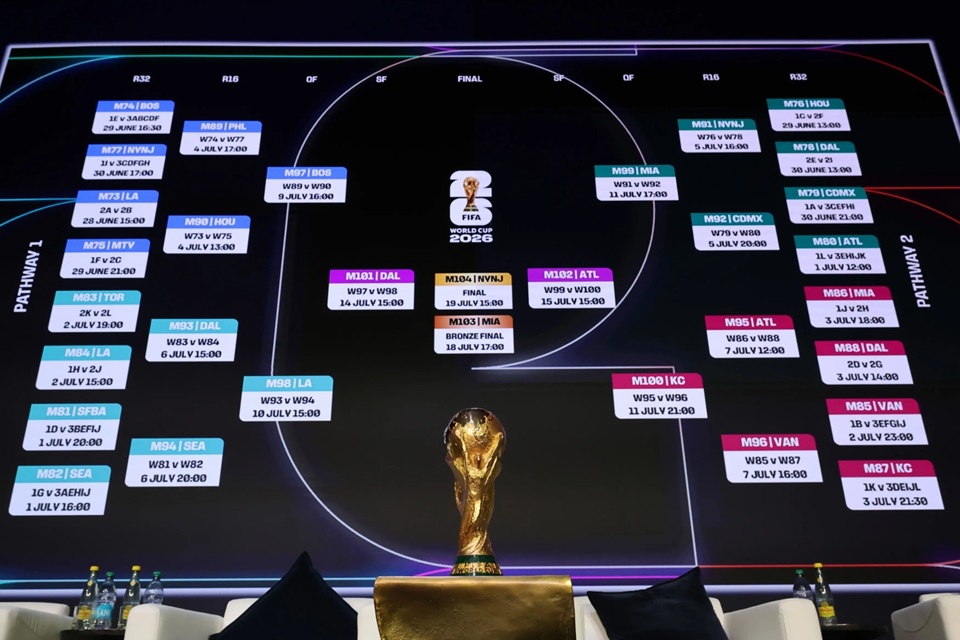
The schedule for the 2026 World Cup can be explained by heat, player rest and logistics. It can also be explained by television, ticketing and the business surrounding the biggest tournament in history. FIFA says it has designed the calendar to protect players’ health, make travel easier and organise a competition with 48 teams, 104 matches, 16 venues and several time zones. Its own schedule also reveals another layer: the World Cup has been built to be broadcast, sold and consumed across different markets at the same time.
The impact is especially clear in Europe. Around half of the matches will kick off after midnight in standard European time, while a significant share of the group stage falls between 2am and 6am. The shift is striking when compared with USA 1994 or Brazil 2014, when most matches still fitted into a European late afternoon or evening window. In 2026, following the tournament live will mean staying up late, choosing specific games or accepting that part of the World Cup will be watched the next day.
Why is FIFA no longer adapting the World Cup to the European market?
The answer lies in the map of the tournament itself. Europe remains a central market for the World Cup, especially for the major knockout matches, but the 2026 schedule follows a broader logic. The tournament will be played in North America, with the United States, Mexico and Canada as hosts, and it has to account for the local market, South America, Asia, digital audiences and fans who buy tickets, travel, consume hospitality or follow matches across different platforms. The old European prime time no longer sets the rhythm of the whole calendar by itself.
The climate argument also carries weight. FIFA has explained that one of the main complaints during the 2025 Club World Cup concerned matches played at 3pm local time, an especially tough slot in several US cities during the summer. Moving games later helps improve conditions for players and spectators, particularly in venues exposed to heat. At the same time, every scheduling adjustment fits into a wider operation in which rest, travel, security, transport, fan availability and broadcasting all form part of the same board.
Who really chooses the kick-off times?
The formal decision belongs to FIFA. Its regulations give it overall responsibility for organising, hosting and staging the World Cup, as well as authority over the operational decisions of the tournament. FIFA’s own explanation of the schedule also points to a technical process involving venue analysis, average temperatures, cooling systems, public transport and security, alongside discussions between functional areas such as competition, team services, medical, television and broadcasting, and ticketing.
FIFA chooses the kick-off times by weighing up different priorities. The competition department looks at rest, fairness and the simultaneous kick-offs required in the final round of each group; the medical area looks at heat and recovery; security and transport focus on access, mobility and operations in very different cities; ticketing looks at attendance and the fan experience; broadcasting looks at transmission windows and global audiences. The final calendar comes from that intersection of interests.
Where television and money enter the picture
Television enters that conversation directly because it is part of the design process. FIFA has acknowledged that it considered broadcast timings, fan availability, climate and heat. That list already describes the model: the match must be played in acceptable conditions, but it must also be watchable, sellable and able to fit markets with different habits. A difficult slot for Europe may work better in the Americas or Asia. It is impossible to satisfy everyone at once.
The US market helps explain the change. The United States is not only one of the host countries; it is also a television, advertising and commercial market of enormous value for FIFA, operators, sponsors and brands. The US opener against Paraguay, with 24.9 million combined viewers on Fox Sports and Telemundo, showed the size of that opportunity. The schedule is designed to activate stadiums, local audiences, American prime time, digital consumption, hospitality and commercial packages in a tournament built to generate value on and off the pitch.
The 2026 World Cup as a television, commercial and consumer event
The 2026 World Cup also reflects a change in how football is followed. The live match remains at the centre, but consumption now extends to streaming, clips, social media, highlights, podcasts, bars, second screens and on-demand content. The schedule absorbs that fragmented consumption and turns it into part of the product.
That logic also reaches the brands, platforms and businesses orbiting the tournament. The World Cup drives audiences, but also television sales, commercial campaigns, promotions, bars, travel, hospitality and digital activation. Market analysis suggests that the so-called FIFA effect exists, although it depends on region, time, screen and fan behaviour. The 2026 World Cup schedule leaves a clear conclusion: the tournament is programmed for the match and for everything that happens around it.
 Last related articles