The 2026 World Cup will also be a competition between brands. Adidas will kit out 14 national teams, Nike 12 and Puma 11, meaning the three major companies will account for 37 of the 48 participating countries, 77% of the tournament. The expansion of the competition opens up an unprecedented commercial showcase: more teams, more shirts, more markets, more stores and more campaigns in an event that, for one month, turns every kit into a global consumer product.
The World Cup shirt is no longer just a playing uniform. It is a performance product, a fashion item, a tournament souvenir and a national symbol. That is why some brands have placed greater emphasis on nostalgia in their designs. Adidas, for example, has brought back retro references in several 2026 kits, with visual nods to the past of teams such as Germany, Argentina and Mexico, a line that connects with fans who do not buy a shirt only to watch a match, but as a piece linked to memory, identity and football archive.
From sporting uniform to global product
In the early World Cups, the shirt was above all a national garment. It had sporting and identity value, but not the commercial dimension it would later acquire through television, the professionalisation of football, the expansion of retail and the visible arrival of technical manufacturers. That change was built gradually, and Adidas was one of the major actors in that transformation. The German brand linked its history to the World Cup through balls, boots, champion teams and iconic kits. At Italy 1990, when the tournament still featured 24 national teams, Adidas dressed 15 sides. Four years later, at United States 1994, also with 24 participants, it still led with 10 teams, although the market was already beginning to fragment and the World Cup was entering a more commercial, televised and global sports culture.
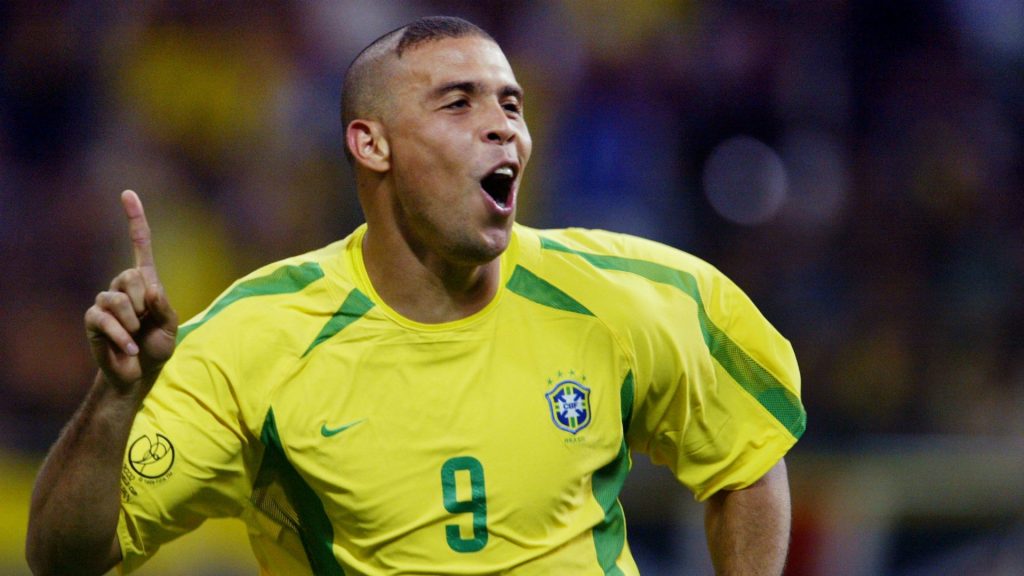
Nike’s arrival changed the tone of the competition. In the late 1990s, with Brazil as a major asset and campaigns that mixed music, stars, style and spectacle, the American brand understood that the World Cup was also played through advertising, boots, franchise players and popular culture. France 1998, already with 32 national teams, marked a new stage: more teams, more brands and a greater ability to turn the shirt into part of the tournament’s narrative.
At Korea and Japan 2002, also with 32 teams, Adidas retained a very strong presence, with 10 sides, while Nike was already emerging as its major global rival and Puma kept a relevant space. Since then, the distribution has shifted from one edition to another, but the logic was set: Adidas brought World Cup tradition and archive; Nike brought commercial aggression, campaigns and stars; Puma remained a historic alternative with room to grow when the market opened up.
 From concentration to a 48-team World Cup
Recent history confirms that concentration among the major brands, although leadership has changed depending on the edition. At Brazil 2014, with 32 national teams, Nike dressed 10 sides, Adidas nine and Puma eight, while other brands occupied smaller spaces. At Russia 2018, also with 32 teams, Adidas returned to the lead with 12 national teams and Nike dressed 10. At Qatar 2022, Nike moved ahead with 13 teams, compared with seven for Adidas and six for Puma, in a tournament that featured nine manufacturers.
The jump in 2026 changes the scale. With 48 national teams, Adidas recovers first place with 14 sides, Nike maintains a very strong presence with 12 and Puma emerges as the quiet winner by rising from six teams in Qatar to 11. It does not have the same World Cup archive as Adidas or the same media portfolio as Nike, but the new format gives it more visibility and more opportunities in markets that did not always enter the World Cup showcase before.
One of the symbols of that commercial change will be Germany. The 2026 World Cup will be its final major tournament dressed by Adidas before its agreement with Nike comes into force from 2027. The break ends more than seven decades of partnership between the German national team and the brand founded by Adi Dassler, a relationship that accompanied the ‘Mannschaft’ in the conquest of its four world titles and turned its shirts into part of international football’s visual memory.
Stars, smaller brands and new markets
Alongside that battle for national teams comes the battle of individual names. Lionel Messi and Cristiano Ronaldo may play their final World Cup, Kylian Mbappé and Erling Haaland arrive as leading figures of the current generation and Lamine Yamal represents the emergence of a new commercial asset with enormous potential. Alongside them, figures such as Jude Bellingham, Vinicius Junior, Pedri, Jamal Musiala and Florian Wirtz feed campaigns that no longer depend only on the national shirt, but also on boots, social media, advertising, video games, fashion and global content.
The expansion also gives visibility to alternative manufacturers. Brands such as Kelme, Reebok, Kappa, Umbro, Marathon, Jako, Saeta, 7Saber, Majid and Tempo find in the World Cup a window that is difficult to replicate. The commercial evolution of the tournament is summed up there: Adidas, Nike and Puma still control most of the showcase, but a 48-team World Cup allows a smaller brand to also have minutes on football’s most-watched runway. The World Cup no longer only crowns a national team; it also shows who dresses, who sells and who manages to turn a shirt into collective memory.
 Last related articles