World Boxing faces a decisive election at its annual Congress on November 23 in Rome. The federation, created in 2023 to guarantee credibility and transparency in Olympic boxing, is now facing its first major controversy with the inclusion of a candidate whose situation raises criticism over internal procedures. All of this comes at a time when, under this electoral period, the organization will also need to oversee the boxing competition at the Los Angeles 2028 Olympic Games.
The race for the World Boxing presidency features two names. On one side, Gennadiy Golovkin, a boxing legend, Athens 2004 Olympic medallist and former President of the National Olympic Committee of Kazakhstan. On the other, the Greek candidate Mariolis Charilaos, who was president of his country’s national federation until July 2025, when he was removed from office following court rulings that deemed him unfit to hold any sports-related position. The question is simple: if national legislation disqualifies him, how is it possible that he is appearing as a candidate to lead the international federation governing Olympic boxing?
The role of the vetting committee under scrutiny
World Boxing’s statutes state that all candidacies must be validated by an independent vetting panel, supported by Sport Resolutions, an entity specialized in sports arbitration. However, the case of the Greek candidate raises doubts about the actual effectiveness of this mechanism. Did the vetting committee properly review the documentation presented? Were the organization’s Secretary General and CEO aware of the situation? Is there a lack of rigor in the verification process?

McAtee, the SG of World Boxing
The situation becomes even more complex with another relevant detail: the current president of World Boxing, Boris van der Vorst, will not stand for re-election. He was the one who led the creation of the federation and secured its provisional recognition by the International Olympic Committee in February 2025. This raises more questions: why is the leader who worked for the establishment of this organization not running? What reasons explain his absence in such a crucial election? Wouldn’t his continuity be the most solid way to guarantee stability and credibility for the project? It has undoubtedly been under van der Vorst’s leadership that Olympic boxing managed to recover from a disastrous situation.
Credibility at stake ahead of the Rome Congress
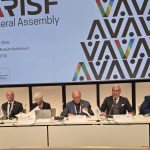
This year’s World Boxing Congress will not only elect a president but also a vice-president and new board members. It is confirmed that Vice President Dinah Glykidis will chair the assembly and that an independent third-party organization will oversee the fairness of the process.
Yet, the controversy surrounding the Greek candidacy already casts a shadow over the meeting. What impact will this have on the perception of the IOC, which decided to trust World Boxing after years of doubts with the previous international federation? To what extent does this situation erode the image of an organization that was born precisely to avoid governance scandals? And what happens if a candidate who was removed by his own national federation ends up being elected? And one last question, by the way, about the upcoming Congress in Rome: why was it originally announced and scheduled in India and then moved to Italy?
 Last related articles