The Global Pickleball Federation –GPF- closed 2025 as the first full year of consolidation of its international structure, following a foundational year in 2024 marked by the creation of governance bodies and the holding of its first General Assembly. Over the past year, the federation expanded its institutional and operational footprint, reaching 76 member countries across five continents and increasing its visibility within the international sports ecosystem.
The step change compared to 2024 is reflected both in scale and reach. While the first year focused on laying organisational foundations, 2025 was defined by the rollout of strategic programmes, international partnerships and an institutional agenda geared towards Olympic recognition. “From Madagascar to Manila, the Global Pickleball Federation travelled the globe in 2025, connecting with our member federations on every continent,” said GPF President Javier Regalado.
Strategic programmes and partnerships for professionalisation
One of the main pillars of 2025 was the launch of initiatives aimed at standardising and professionalising pickleball at a global level. Notably, the GPF Coaching Endorsement Program was introduced in collaboration with four specialised partners — PPR, RPO, IFPA and PCI — with the objective of establishing common criteria for technical education and coach certification, an area that lacked an international framework in 2024.
In parallel, the GPF signed an agreement with DUPR as its official rating system, adding a key tool for performance measurement and competitive comparability between countries. These initiatives were complemented by the launch, alongside Pickleheads, of the world’s first international pickleball court and game finder, strengthening the sport’s digital infrastructure and facilitating its expansion into new markets.
Olympic projection and unification
Another significant milestone was the formal start of the process towards Olympic recognition, with the GPF entering procedures with AIMS and SportAccord in Lausanne, alongside meetings with stakeholders from the International Olympic Committee -IOC- ecosystem. This represented a substantial shift from 2024, when the federation’s priority was internal legitimisation.
From a governance perspective, the federation established a Legal Committee comprising European experts in ethics, conduct, anti-doping, competitive integrity and disciplinary procedures. In addition, the announcement of a joint Task Force with the United World Pickleball Federation -UWPF- to advance institutional unification was widely interpreted as a strategic step to reduce fragmentation within the sport and strengthen its credibility with international governing bodies.

Federative growth and presence at official events
Growth in the federative base was another key indicator in 2025. The GPF added 22 new members during the year, consolidating a total of 76 national federations, compared with 54 at the end of 2024. Two of them — the Philippine Pickleball Federation and Polski Pickleball — also achieved recognition of pickleball by their respective National Olympic Committees. On the competitive side, the GPF officiated the pickleball tournament at the 13th African Games in Accra, Ghana. The federation was also present at events such as the Pickleball World Cup in Fort Lauderdale and European competitions including the Barcelona Open, which paved the way for the Real Federación Española de Tenis to join the GPF.
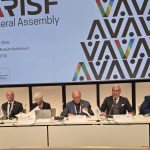
The institutional evolution was reflected in the Congress and Annual General Meeting held in Manila in 2025, attended by delegates from 24 countries across four continents, compared with the first AGM in 2024 in Mesa, which had a distinctly foundational character. Throughout the year, members of the GPF Board served as speakers at sports industry and pickleball forums in Miami, Palm Beach, Scottsdale, Boston, Tbilisi, Princeton, Las Vegas and Dubai, strengthening the federation’s positioning in business, innovation and sports governance environments.
Development, social impact and sustainability of the model
Beyond the institutional sphere, the GPF advanced social impact initiatives such as Operation PaddleLift, a programme designed to distribute sports equipment in under-resourced countries, in collaboration with Franklin Sports, Pickleball for Good and Good Sport Foundation. In 2025, the federation also supported targeted solidarity actions, including the delivery of equipment to families affected by the Palisades fires in Los Angeles.
The year concluded with the implementation of the Active8 Strategic Plan, which sets objectives and performance metrics for the GPF’s eight committees, integrating federative growth, technical development and economic sustainability. This approach positions the federation in a second phase of maturity, in which territorial expansion is matched by governance structures, stable programmes and a long-term strategic outlook.
 Last related articles