The World Sailing Inclusion Championships began on Monday in Al Mussanah, in the Sultanate of Oman, marking the first edition of an international event created specifically for sailors with disabilities. The opening ceremony, led by His Highness Sayyid Azan bin Qais Al Said, President of the Oman Olympic Committee, brought together more than 100 athletes and coincided with the United Nations International Day of Persons with Disabilities.
For World Sailing, the championship forms part of a decisive phase in the organisation’s strategy to consolidate the Para Sailing pathway. The federation is finalising the documentation required by the International Paralympic Committee -IPC- and the International Olympic Committee -IOC-, including the recent submission of classification compliance reports on 30 November, and its formal dossier for Brisbane 2032, scheduled for 15 December.
A global strategy reinforcing Para Sailing’s Paralympic ambitions
Racing is taking place across four internationally recognised classes: Hansa 303, ILCA 6, RS Venture Connect and the FarEast 28R for athletes with visual impairments. World Sailing highlighted that the introduction of both Visual Impairment and Intellectual Impairment categories strengthens the depth of Para Sailing and demonstrates the sport’s ability to integrate diverse impairment profiles within a standardised competition framework.
Ahead of racing, World Sailing delivered an Emerging Nations Programme to support technical development for coaches and athletes, alongside the largest-ever edition of the Inclusive Development Programme (IDP), which gathered 97 participants. In its first two years, the IDP has reached 164 representatives from 34 countries, a figure World Sailing considers significant within the materials presented to the IOC.
New nations and development pathways as key elements for IOC evaluation
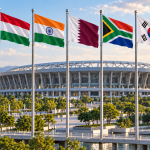
This first edition has also marked the debut of India, Indonesia, Korea, Saudi Arabia, Trinidad and Tobago and Uruguay in inclusive sailing, broadening Para Sailing’s international footprint. World Sailing will highlight this increased universality in the documents submitted to the IOC, which evaluates global presence as a key criterion for Paralympic programme inclusion.
The federation also noted the expansion of regional initiatives, including the second edition of the Asian Inclusive Sailing Series in Mysore, as well as the development of emerging disciplines such as Para Wing Foiling in Australia. These examples, alongside strengthened education and coaching pathways, are presented as evidence of Para Sailing’s current momentum and its capacity for global growth.
A competition model aligned with Paralympic technical standards
The classification system used in Oman assesses the functional impact of an athlete’s impairment on sailing performance, assigning scores that determine crew composition and ensure equitable racing conditions. This process, overseen by medical and technical classifiers, aligns with IPC requirements for international-level Para sport.
The championship features more than 150 athletes across Para, Inclusive, Intellectual Impairment and Visual Impairment categories, acting as the flagship expression of World Sailing’s Para Inclusive Strategy. The federation confirmed that participation levels and competitive outcomes from this event will contribute to its reinstatement bid presented for future Paralympic cycles.

 Last related articles