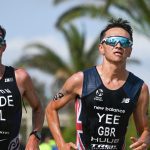
World Triathlon approved at its March 31 meeting the immediate return of Russian and Belarusian athletes in junior, youth and paratriathlon categories to international competition, in a decision that brings triathlon into line with the reopening that several federations have already begun to apply in grassroots categories and, in some cases, in the Paralympic sphere. The measure allows those athletes to compete representing Russia or Belarus, including under their national flag and colors, while restrictions for senior competition remain unchanged.
The move is part of the shift backed by the International Olympic Committee -IOC- at the 14th Olympic Summit in December 2025. In the statement released after that meeting, the body said that young athletes holding Russian or Belarusian passports “should no longer be restricted in their access to international youth competitions, in both individual and team sports”, while maintaining sanctions against the governments of Russia and Belarus, keeping the framework for senior competitions in place, and leaving each international federation to define how that recommendation would be applied in its own regulations.
Triathlon opens the door the IOC began to move in December
In triathlon’s case, the decision sets out its scope with precision. Russian and Belarusian junior and youth athletes will be allowed to return to international events in those categories under their national symbols, but World Triathlon states in its official communication that the authorization “is strictly limited to Junior and Youth events”. The body adds that participation in elite and age-group international competitions does not change, even when the athlete is of junior age. At the same time, the Executive Board also approved the return of Russian and Belarusian paratriathletes under their national flag and colors, in line with the decision adopted by the International Paralympic Committee -IPC-.
The measure also has an immediate impact on the calendar. According to the official communication, Russian and Belarusian athletes in those categories can now enter the next events scheduled for April, including the European Junior Cup in Torremolinos and the Samarkand Para Cup. World Triathlon adds that all readmitted athletes must continue to comply with the conditions already established for neutral participation, including not being members of the Armed Forces, not having made public statements in support of the war, and respecting the eligibility and registration procedures approved for each category.

Swimming, handball, curling and fencing join the reopening
World Triathlon’s decision is part of a pattern already visible in other international federations. World Aquatics updated its participation guidelines for youth and junior athletes during periods of conflict and aligned that change with the recommendation approved by the IOC in December, with immediate effect in both categories. The International Handball Federation -IHF- also announced on March 24 the gradual return of youth national teams from Russia and Belarus, with immediate effect, although in a first phase limited to friendly matches and self-organized friendly tournaments, and subject to a signed declaration from athletes, coaches and staff certifying the absence of links to military structures or state security agencies.
The same trend had already emerged weeks earlier in World Curling and the International Fencing Federation -FIE-. World Curling announced on January 30 the return of Russian and Belarusian juniors and explicitly linked that decision to the IOC recommendation, with application from the World Junior Mixed Doubles Curling Championship 2026, while keeping adult athletes excluded. FIE, for its part, said on December 27, 2025 that cadet and junior fencers holding Russian or Belarusian passports would be allowed to return in those categories under their national flag, anthem, acronym and uniform, moving away from the Individual Neutral Athletes -AIN- formula, while keeping that regime in place for seniors and clarifying that a cadet or junior competing at senior level would still do so under AIN conditions.
Ukraine says the return of Russians and Belarusians weakens the sanctions
The controversy, however, remains open alongside this reopening in lower age categories and in part of the Paralympic circuit. Ukraine and other actors argue that these decisions blur the sanctions adopted after the invasion and reopen spaces for international representation by Russian and Belarusian athletes under national symbols. That criticism has been directed both at the broader Olympic movement and at the bodies that have started adapting their regulations since late 2025.
The Paralympic sphere has become one of the main points of friction, and it also explains World Triathlon’s reference to the IPC. In February, the body confirmed that Russia and Belarus would receive ten quota places for Milano Cortina 2026, six for Russia and four for Belarus, following the restoration of membership rights approved in September 2025 and the route opened by the Court of Arbitration for Sport -CAS- in December. The move drew immediate criticism from Ukraine. “It is absurd that they are being given quota places,” Ukrainian athlete Vladyslav Heraskevych told Reuters, adding that allowing them to compete “with national flags, with national symbols” opened the door, in his view, to “spreading Russian propaganda”.
 Last related articles