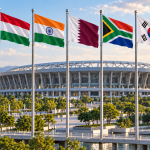
Milano Cortina 2026 will not be just another edition of the Olympic Winter Games. By its scale and concept, it will be an unprecedented experiment: the most geographically extensive Olympic event ever staged, spread across 22,000 square kilometres of northern Italy, from metropolitan Milan to the Alpine valleys near the Swiss border, passing through Cortina d’Ampezzo, Livigno, Bormio or Verona. This is how it is explained by Olympics.com in an extensive feature told through the voices of some of its key protagonists.
The vast geographical spread of Milano Cortina 2026 is not driven by a desire to grow, but by the opposite logic: to reduce impact. The project aligns with Olympic Agenda reforms, opting to adapt the Games to the territory rather than the other way around, reusing existing venues and avoiding unnecessary large-scale construction.
This approach was already seen in Paris 2024, where sport was integrated into the urban core through temporary venues. In Italy, the idea takes a different form: competitions are scattered across Alpine valleys, drawing on a deeply rooted winter tradition, with venues long accustomed to hosting World Cups and international championships.
Alpine tradition and organisational experience
Italy is often associated with the Mediterranean, art and historic cities, but its mountain identity is just as strong. “Mountain culture and winter sports are part of our DNA”, explains Andrea Varnier, CEO of the Organising Committee, recalling that the country has one of the largest Alpine areas in Europe.
That sporting heritage is matched by Milan’s experience as a major host of global events, from UEFA Champions League finals to Expo 2015, as well as the expertise built after Turin 2006. Part of the organising team returns to the Olympic stage and more than half of the 120,000 registered volunteers have already taken part in major international sporting events.
Returning to iconic venues
If the model is lighter, the symbolic impact of the venues will be anything but. Many events return to places considered true sanctuaries of their disciplines. “Many athletes will have the chance to win the ‘Wimbledon’ of their sport”, notes Pierre Ducrey, IOC Sports Director.
Anterselva, with more than half a century of biathlon history, Bormio and its demanding Stelvio slope, or the Olympia delle Tofane, the legendary “Queen of Speed” in Cortina, will once again act as unforgiving judges. Even the new Cortina Sliding Centre connects with the past, rising on the layout of a former track that once defined the town’s winter identity.
Competing where the public understands the sport
For athletes, these settings are far more than a backdrop. “There is nothing like competing in a venue full of spectators who understand your sport”, stresses Kaveh Mehrabi, Olympian and Director of the IOC Athletes’ Department, an experience he himself lived at Beijing 2008.
That connection between audience and discipline turns the Games into a kind of sporting pilgrimage. Even ski mountaineering, making its Olympic debut, will take place in the natural environment that shaped the sport, reinforcing the bond between sport, landscape and identity.
Milan, an urban laboratory for ice sports
Not all winter sports have deep roots in Italy, and that is where Milan comes into play. Ice disciplines will find their stage in a city accustomed to reinvention, blending industrial heritage, design and contemporary culture.
Speed skating will be held for the first time in a temporary venue inside the pavilions of Fiera Milano Rho, transformed into an Olympic oval. Ice hockey will occupy a new arena set to become one of the city’s major concert and entertainment venues after the Games.
A legacy designed for the day after
The urban vision extends to the Olympic Village, conceived from the outset to be transformed into student housing. The project will revitalise a former rail yard and give momentum to a neighbourhood aiming to establish itself as Milan’s next cultural hub.
“Milano Cortina 2026 tells a very beautiful story, with some sports returning to their natural homes in the mountains and others building new urban identities”, summarises Ducrey, underlining the balance between heritage and future that defines the project.
A logistical challenge with a shared spirit
Organising Games spread between snowy mountains and major cities involves clear logistical challenges. Each cluster will have its own Olympic Village and facilities, grouping sports and audiences, while still functioning as part of a single ecosystem.
“Even operating across such vast territories, everything will be under one spirit, one roof: that of the Olympic Games”, says Dubi, convinced that technology, shared ceremonies and cultural life in public squares will help Milan, Cortina, Livigno or Predazzo feel connected throughout the event.
This model also opens up new legacy opportunities. The Olympic footprint extends to small Alpine towns rarely seen on the global stage, showcasing landscapes such as the enrosadira of the Dolomites, high-altitude gastronomy in South Tyrol or the Roman baths of Bormio overlooking snow-covered peaks.
 Last related articles