Panagiotis Bitados won the men’s individual triathlon gold medal for Greece at the 2026 Mediterranean Games, beating Italy’s Euan De Nigro and Spain’s Eduardo Blanco Molla in a race decided on the final run.
Bitados was forced to chase De Nigro through the first two disciplines, with the Italian establishing an early advantage in the swimming and cycling legs and drawing strong support from the home crowd.
The Greek athlete, however, produced the fastest response when the race reached the run. He gradually closed the gap on De Nigro before moving ahead to secure the Mediterranean title and put Greece at the top of the podium.
The victory marked a significant result for the 25-year-old, who immediately turned his attention towards his next major target, qualification for the 2028 Los Angeles Olympic Games.
Speaking to SportsIn after the race, Bitados said he was delighted with both the competition and the organisation in Taranto.
“I’m very happy to participate in the Mediterranean Games. It was a really good organisation, and I really enjoyed it. I’m very happy to win the gold medal for Greece. Congratulations to all the athletes and to the Italian Federation for this great organisation.”
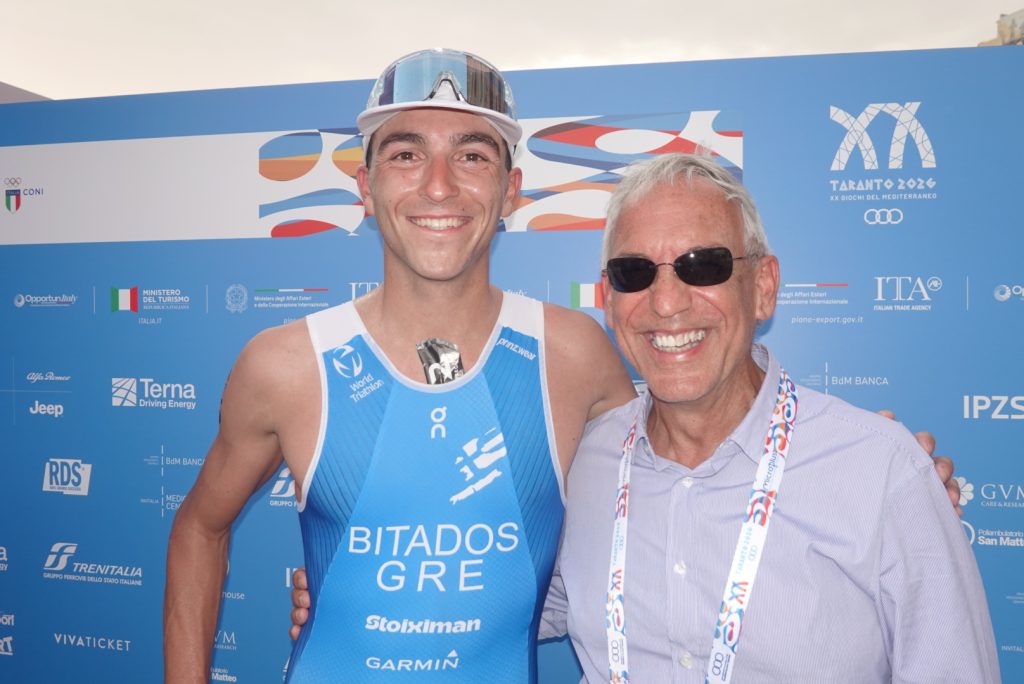
EOTRI President, Yerolimpos and Bitados
De Nigro wins silver
De Nigro had looked in control during the opening stages and carried his advantage into the final discipline. The Italian ultimately had to settle for silver after Bitados produced the decisive move on the run.
Despite missing out on gold, De Nigro secured a podium place for the host nation in front of the home supporters and congratulated Bitados after the finish.
“So today I finished second in the triathlon at the Mediterranean Games. All in all, I think we as a federation are working very well with President Riccardo Giubilei, Sports Director and Technical Director.”
“My next competition will be WTCS Pontevedra. It’s the highest league in triathlon, and it’s the last race of the Championship Series. Triathlon will crown the world champion there, so let’s see who’s going to get it this year.”
For Italy, the silver added another strong result to a race in which the home athlete had been backed throughout by the Taranto crowd.
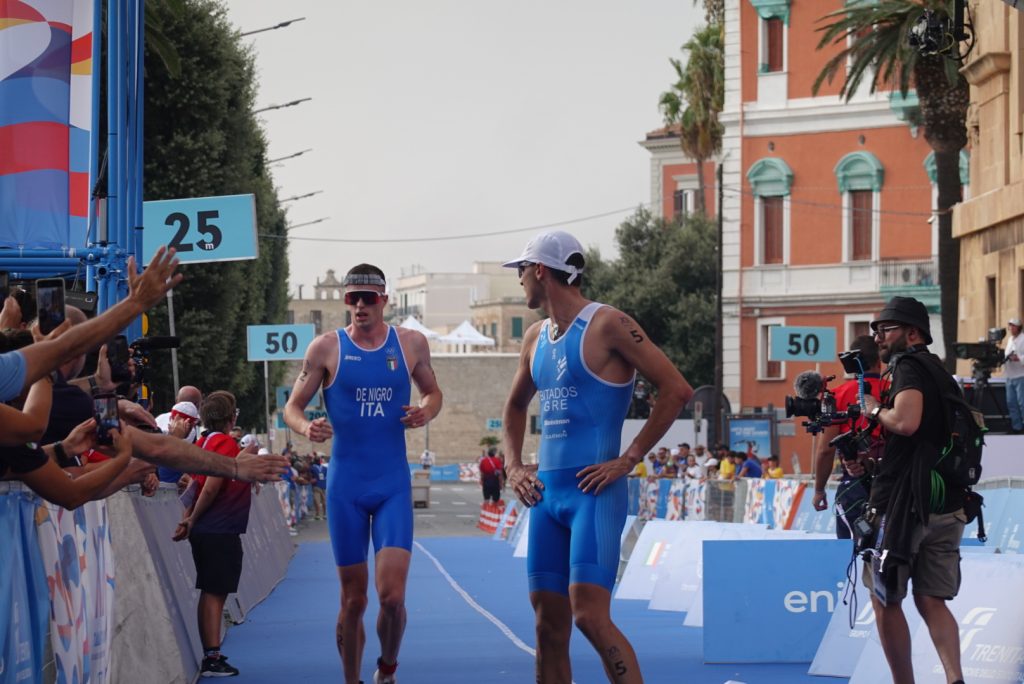
Euan De Nigro
Yerolimpos praises triathlon’s place in Taranto
George Yerolimpos, President of the Mediterranean Triathlon Federation and President of the Hellenic Triathlon Federation, EOTRI, was in Taranto to follow the competition.
He welcomed the decision to stage the triathlon in the historic city, arguing that bringing the event into the streets had helped showcase the sport to spectators.
“Triathlon is a sport full of excitement. The athletes compete in three hard and demanding disciplines, swimming, cycling and running. I am very grateful to the Organising Committee of these Mediterranean Games.”
“Yerolimpos also praised the cooperation between the Taranto 2026 Organising Committee, the International Committee of the Mediterranean Games, and the international and Italian triathlon federations involved in the event.”
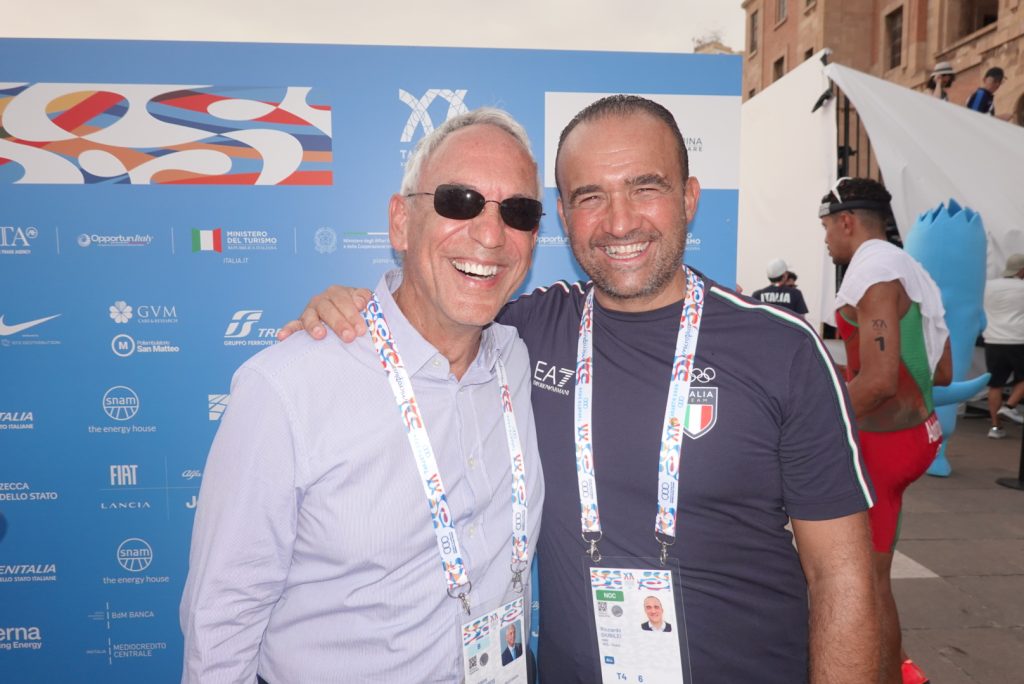
George Yerolimpos and Riccardo Giubilei
Bitados’ victory, he said, would be particularly significant for Greek supporters and officials who had travelled to the Games.
“Triathlon is attractive to Greeks and naturally this gold medal will make many of them happy.”
The result also provided a major sporting statement from EOTRI, which had proposed Bitados for the Mediterranean Games. According to Yerolimpos, the federation’s coaches structure and technical staff played an important role in preparing assisting the athlete for the competition.
He also pointed to the difficulties faced by Greek triathlon outside the race course, including the federation’s financial situation and the institutional dispute surrounding the sport in Greece. Those issues became particularly relevant in the selection of the Greek delegation for Taranto.
EOTRI had expected Nikolas Keramydas to be another contender for a strong result, but he did not compete at the Games. According to the Greek federation EOTRI, his absence followed a selection process involving the Greek National Olympic Committee in which considerations beyond sporting merit ultimately influenced who represented Greece in Taranto.
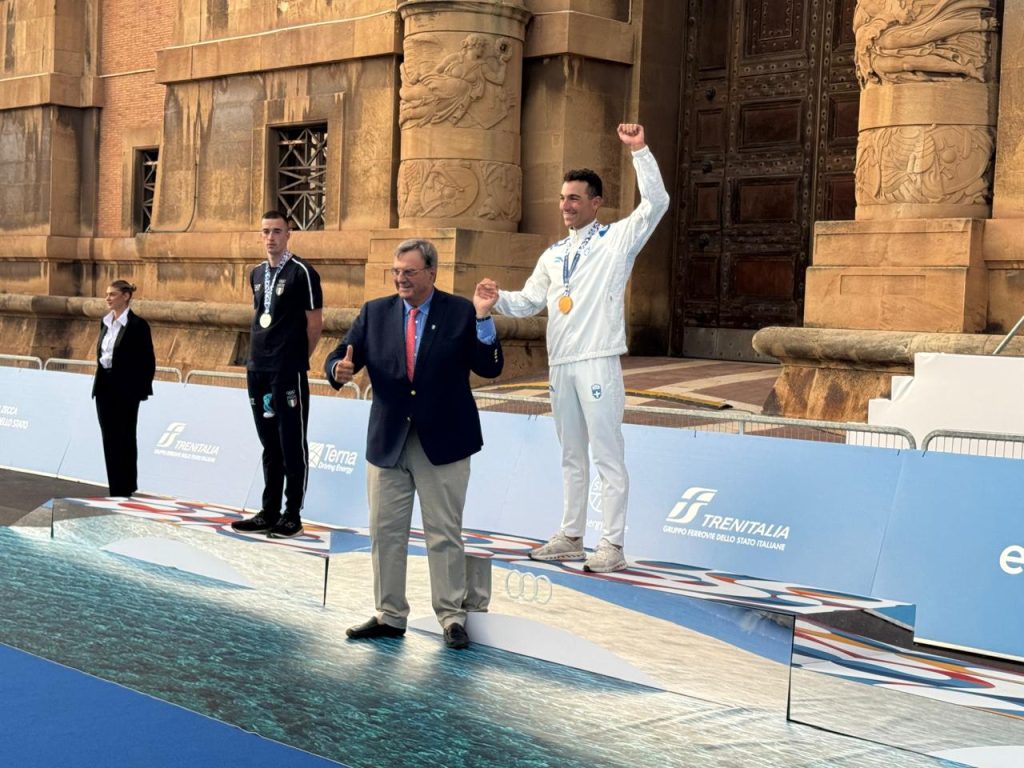
Isidoros Kouvelos
Gold medal highlights Greek triathlon paradox
EOTRI is the Greek national federation affiliated to World Triathlon and was the federation that proposed Bitados for participation in the Mediterranean Games. Yet it currently operates without Greek state sports funding and remains outside the domestic state recognition framework as a result of direct political interventions in the governance of the sport.
That contrast became particularly striking in Taranto. An athlete proposed through EOTRI not only represented Greece but also won the Mediterranean title, defeating established European competitors and demonstrating that, despite the federation’s limited resources and continuing institutional difficulties at home, its sporting structure continues to produce and promote athletes capable of competing successfully at the highest international level.
“There is a striking paradox in Greek triathlon. EOTRI is the federation affiliated to World Triathlon, developing athletes capable of winning medals for Greece at this level, yet it remains outside state recognition as a consequence of political intervention in the governance of the sport. Results like this raise a simple question about whether sporting institutions should ultimately be judged by political decisions, or by their legitimacy, their work and what they deliver for their athletes.”
“Gold medals are won by athletes and the sporting structures that support them, not by political organisations.” Yerolimpos said.
 Last related articles