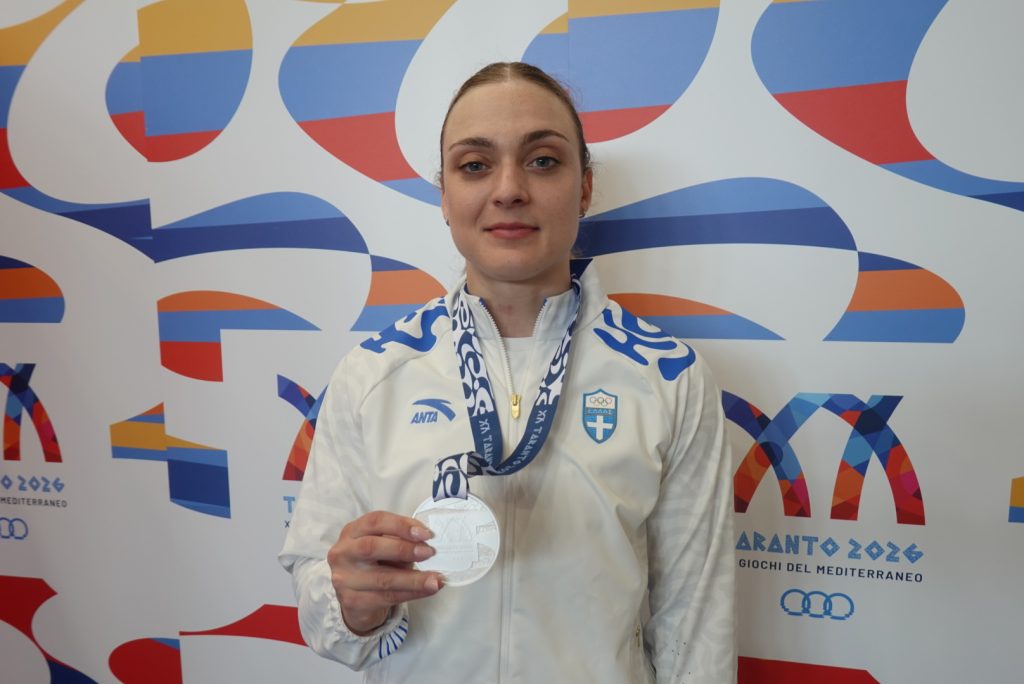
Despoina Polaktsidou’s silver medal in the women’s 69kg weightlifting competition at the Taranto 2026 Mediterranean Games was her first international medal. For someone who had spent years training without knowing exactly where that work might lead, the podium finally provided an answer. “I was really anticipating this moment,” she said. “I have spent a lot of years training, not wasted, but invested in it.”
Polaktsidou did not enter weightlifting through the usual route. She started at the age of 20, after only a few years of playing volleyball at a low level. There was no long sporting background behind her decision. She simply discovered weightlifting, fell in love with it and decided to find out how far she could go.
But weightlifting has never been her only professional identity. Polaktsidou is a biologist and works as a teacher, which means her training has had to fit around a career outside sport. “I’m a part-time biologist and a full-time athlete,” she said. The arrangement allows her to compete, but it also means she cannot dedicate herself to weightlifting in quite the same way as athletes whose entire working life is built around the sport.
She is currently a professor, teaching biology to high school students and preparing them for their final examinations. It is demanding work, but she has managed to maintain both careers. The medal in Taranto gave her something particularly valuable: evidence that the combination is possible.
Her family and federation have supported her ambitions, but she is not certain what the next stage will look like. Another Olympic cycle would require a major commitment, particularly because of the demands of qualification. She describes the process as “really, really demanding”. At the same time, she remains deeply attached to weightlifting. Sometimes, she says, she enjoys training even more than competing. Training is simply part of her daily life.
That tension between sport and the rest of life is central to the message she wants to pass on. “You can be more than one thing,” Polaktsidou said. For her, becoming an athlete did not mean giving up the profession she had built outside the platform. She wants other athletes to understand that sporting ambition and another career do not necessarily have to be competing choices.
The harder part, she says, was believing that she could actually become a successful athlete while maintaining a life beyond sport. There are also practical pressures. Athletes do not always have every cost of training, competition and recovery covered, and sometimes have to find ways to support their own sporting ambitions.
“First of all, you have to help yourself to get where you want to be,” she said.
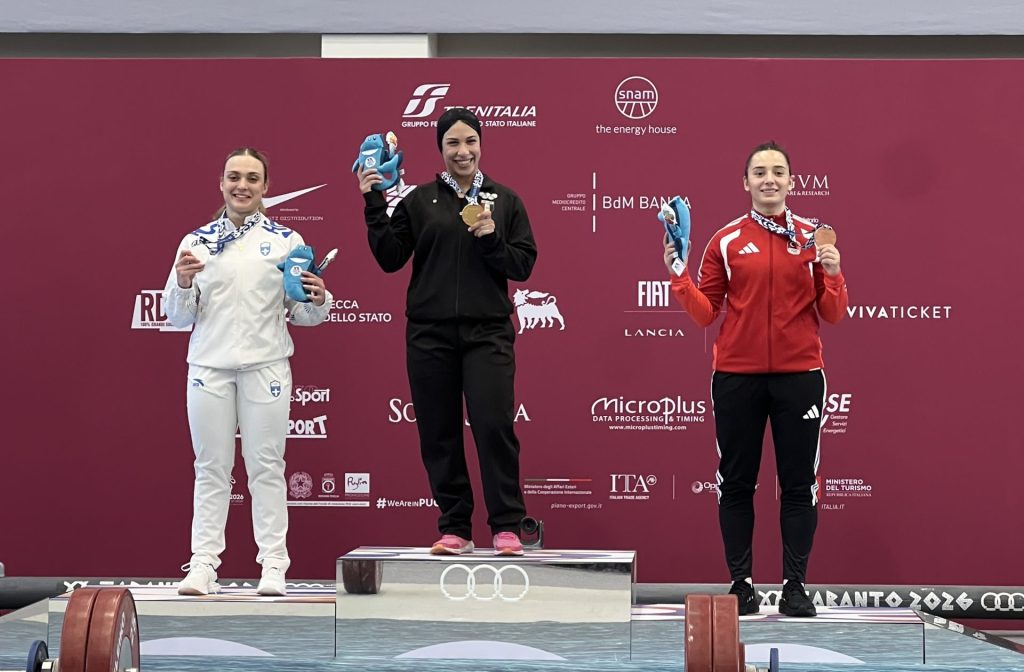
Taranto offered another new experience. It was her first time competing in weightlifting as part of a much larger multi-sport event, surrounded by athletes from sports with very different cultures and demands. She enjoyed the opportunity to meet them, exchange ideas and experience the atmosphere beyond her own competition.
The Mediterranean Village was particularly important to that experience. Polaktsidou described its atmosphere as positive and said being around athletes returning from successful competitions gave her energy, regardless of which country or sport they represented. Her own team also had a strong sense of unity and support, something she felt contributed to the positive experience in Taranto.
The Mediterranean Games had been one of her goals since she first began weightlifting. In Taranto, she achieved it while also continuing her work away from the competition platform.
Polaktsidou is the secretary of the European Weightlifting Federation Athletes Commission and was a member of the federation’s first Athletes Commission before being elected to the next one. Her role is to help give athletes a voice in the sport’s decisions. Her story, meanwhile, offers a different perspective on what an athlete can be: not only someone who competes, but also a teacher, a biologist and an advocate for other athletes.
 Last related articles