“Coe has something personal against us.” The accusation from the Russian athletics federation, RusAF, puts a name to a conflict that has kept its athletes out of international competitions for years. This week’s remarks attribute personal responsibility to the World Athletics president for blocking their return. That is the Russian federation’s interpretation, not an established fact.
The criticism accompanies a legal offensive before the Court of Arbitration for Sport (CAS). RusAF filed an appeal on 9 July against the extension of its athletes’ exclusion and announced another on 10 August challenging the restrictions affecting the federation itself. These are two related claims involving different parties: those who want to compete again and the organisation seeking to regain the ability to exercise its international rights.
The doping case was resolved; the exclusion continued
To understand the situation, we need to go back to 23 March 2023. That day, World Athletics approved RusAF’s reinstatement after seven years of suspension for serious institutional doping violations. The decision followed confirmation that the reinstatement requirements had been met and included monitoring conditions. However, Russian and Belarusian athletes remained excluded under restrictions adopted following the invasion of Ukraine. The federation had cleared one hurdle, but that did not restore its athletes’ access to international competition.
World Athletics maintained that position in July 2026. In August, Coe announced that he would appear before CAS to defend it and asserted international federations’ authority to decide who can participate in their competitions. His argument rests on sporting integrity and the difficulties the war continues to impose on Ukrainian athletes. In response to Russia’s accusation of a personal veto, the governing body defends its decision on the conditions of competition.
Russia’s return moves at different speeds
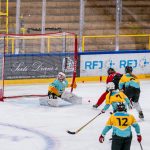
While athletics maintains its exclusion, other sports have changed their approach. On 7 July, the IOC provisionally lifted the Russian Olympic Committee’s suspension and declared its previous recommendations on the participation of Russian athletes and teams no longer applicable. The decision changed the Olympic framework, but its implementation has followed different paths depending on the sport. The Federation of International Bandy, for example, explicitly acknowledged that change in its statement the following day.
Handball provides another concrete example. On 15 July, the IHF announced that it was lifting the ban affecting teams, officials and other representatives from Russia and Belarus in its activities, aligning itself with the IOC’s decisions. That opening coexists with World Athletics’ position. For a Russian athlete, the possibility of returning therefore depends on their sport and the decisions of its international federation.
RusAF has Los Angeles 2028 among its objectives and wants to regain access to Olympic qualification in time. The remarks against Coe raise the temperature, but the appeals will have to be decided on their merits and under the applicable rules. For those still training in Russia, the tangible outcome of this dispute will be a return date: one that allows them to face the rivals who are currently competing without them.
 Last related articles