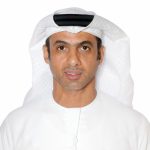
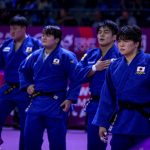
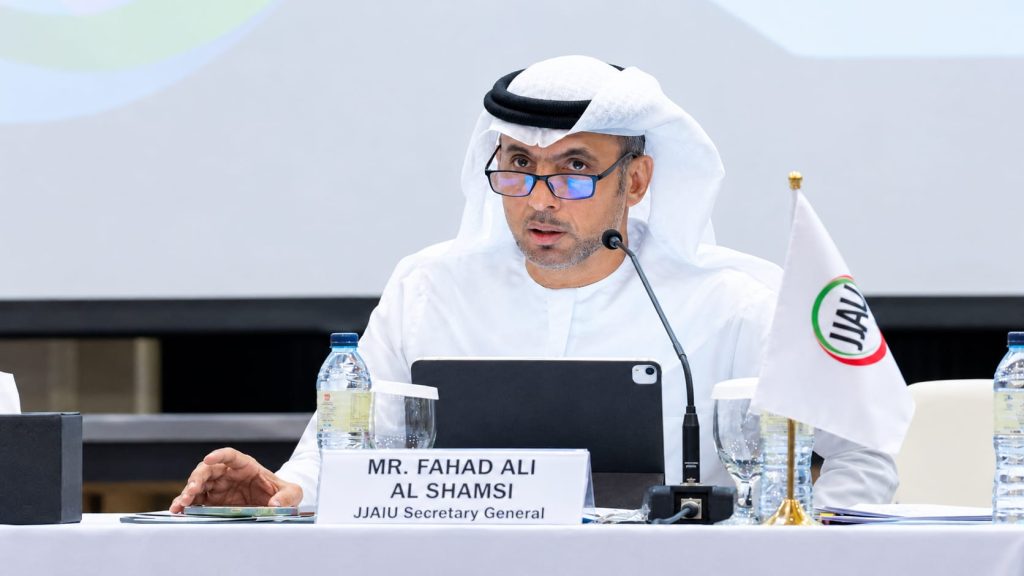
The Ju-Jitsu Asian Union secretary general speaks to SportsIn about the sport’s growth in Asia, the results at Aichi-Nagoya 2026, gender equality and the priorities for expanding international competition.
Ju-Jitsu has established a presence at three consecutive editions of the Asian Games, making its debut at Jakarta-Palembang 2018 before returning at Hangzhou 2023 and Aichi-Nagoya 2026. For Fahad Ali Al Shamsi, secretary general of the Ju-Jitsu Asian Union, this progress reflects years of investment in athlete development, technical standards and cooperation between sporting institutions.
The challenge now is to extend that progress beyond major events. In an interview with SportsIn, Al Shamsi discusses the results at Aichi-Nagoya, the development of national federations, the need for regular competition and the work required to strengthen Ju-Jitsu’s long-term case for Olympic inclusion.
Ju-Jitsu’s inclusion in the Asian Games followed years of work to develop the sport’s technical and institutional foundations. Al Shamsi said the three editions had provided opportunities to improve competitive standards and expand participation across the continent.
“The inclusion of Ju-Jitsu in the Asian Games represents the result of many years of continuous investment in technical development, institutional governance, international cooperation, and athlete development.”
He highlighted the cooperation between the JJAU, the Ju-Jitsu International Federation, the Olympic Council of Asia and national federations in strengthening the sport’s structure and ensuring that competitions meet international standards.
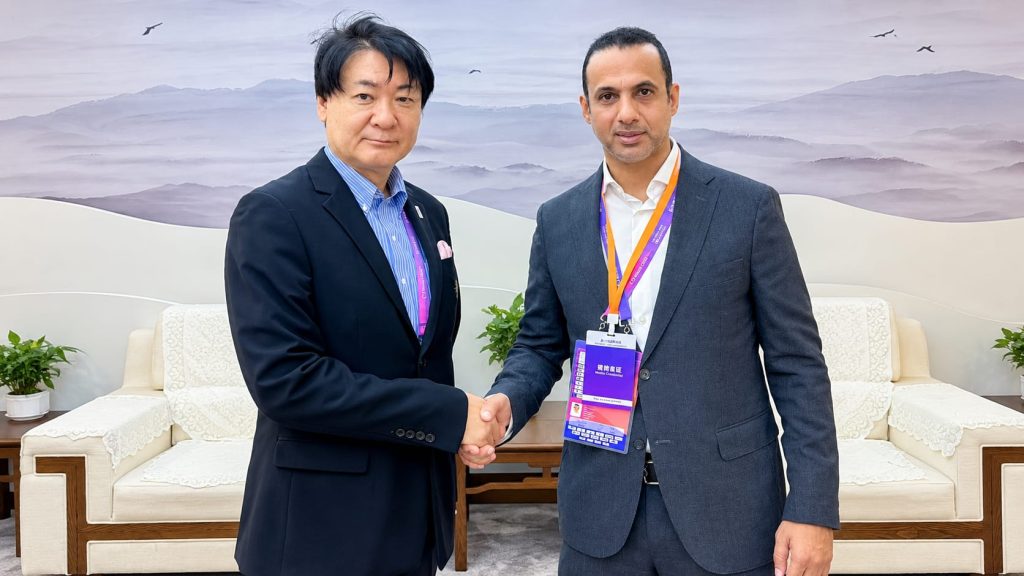
“Asia has become one of the driving forces behind the global development of Ju-Jitsu,” Al Shamsi said. “Our responsibility now is to build upon these achievements and ensure that future generations of athletes have even greater opportunities to compete at the highest levels.”
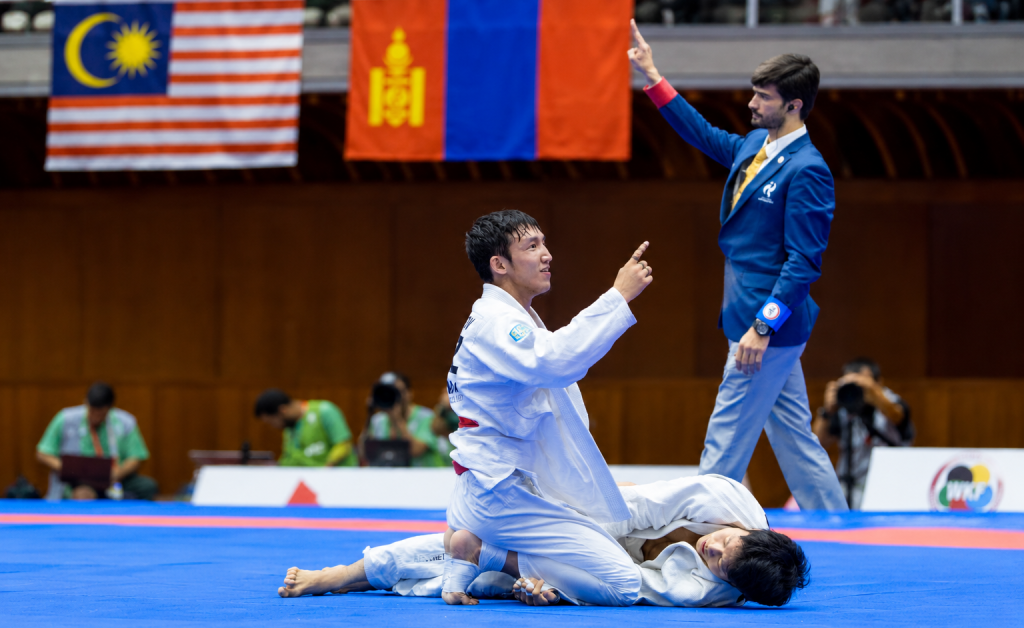
Al Shamsi gave a highly positive assessment of Ju-Jitsu’s performance at the 2026 Asian Games, pointing to the standard of competition and the growing number of countries achieving success.
Nine nations secured places on the medal table, which he said reflected the increasing depth of talent and progress among national federations.
The United Arab Emirates led the standings with eight medals, including five gold, two silver and one bronze.
Beyond the medal results, Al Shamsi said the competition raised Ju-Jitsu’s international profile and provided opportunities to strengthen relationships with the OCA, National Olympic Committees and other sporting stakeholders. He also acknowledged the contribution of technical officials, referees, volunteers and organising teams.
“For us, Aichi-Nagoya 2026 was not simply another championship,” he said. “It was an opportunity to demonstrate that Ju-Jitsu is a well-organised, competitive, and internationally relevant sport capable of contributing significantly to the Asian Games programme.”
The challenge for the sport is to translate the exposure generated by major events into sustained development at national and regional levels.
Olympic inclusion remains one of the international Ju-Jitsu community’s long-term ambitions. Al Shamsi stressed, however, that successful championships and sporting popularity alone would not be sufficient.
He identified broader geographical representation, stronger national federations, transparent governance, safeguarding and anti-doping compliance as essential priorities. The sport must also provide accessible opportunities for young athletes and demonstrate a commitment to gender equality.
A clear and attractive international competition structure is another requirement, particularly if Ju-Jitsu is to engage spectators, broadcasters and the wider sporting community.
“Achieving this objective requires more than sporting popularity or successful championships,” Al Shamsi said. “It requires a comprehensive strategy that demonstrates the sport’s alignment with the values, principles, and expectations of the Olympic Movement.”
He added that closer cooperation with the International Olympic Committee, the OCA, National Olympic Committees and other recognised sporting institutions would help support this objective.
“We believe that continued progress in these areas, supported by a unified international strategy under the leadership of the JJIF, will further strengthen Ju-Jitsu’s long-term case for Olympic inclusion.”
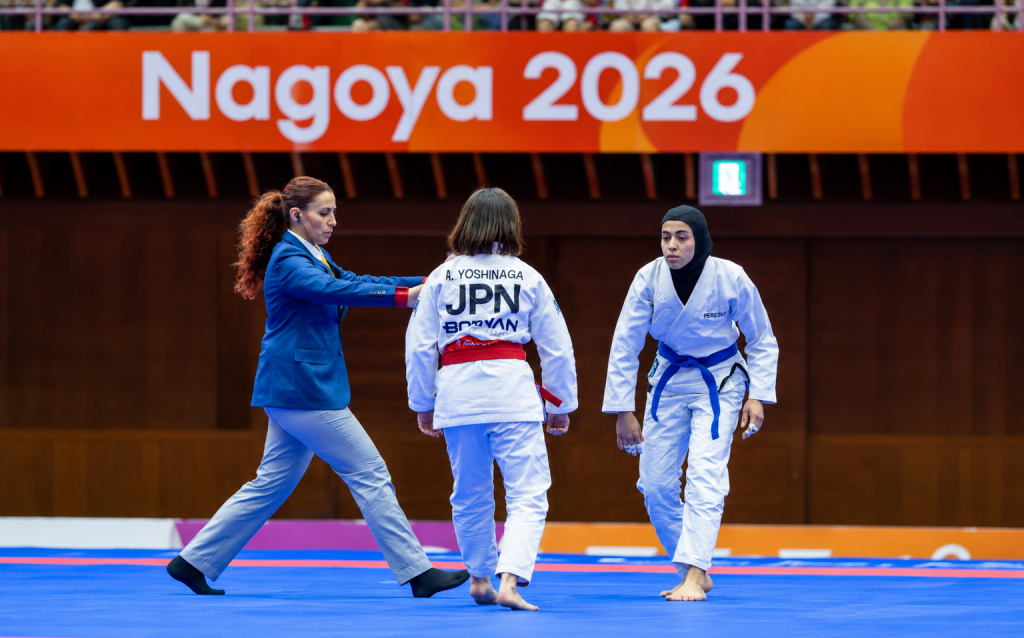
Al Shamsi described the growth of women’s participation as one of the most encouraging developments in Asian Ju-Jitsu. He pointed to the increasing number of female athletes competing internationally and their performances at major championships and multisport events.
The Asian Games, he said, have given women athletes a platform to demonstrate their abilities and inspire younger generations. However, he acknowledged that progress remains uneven across the continent.
The JJAU wants to support national federations in expanding participation at grassroots and youth levels while encouraging more women to become coaches, referees and technical officials. Greater representation in administrative and leadership positions is also part of this effort.
Al Shamsi emphasised that training and competition environments must be safe and inclusive. He also highlighted the role of media coverage and digital platforms in raising the profile of female athletes and encouraging more girls to take up the sport.
“Gender equality must not be viewed simply as a participation target,” he said. “It should be embedded within the long-term development strategy of our sport.”
His stated ambition is to ensure that women and girls across Asia have equal opportunities to participate, compete and lead in Ju-Jitsu.
Al Shamsi believes that regular competition throughout the year is essential to the next phase of Ju-Jitsu’s development. International championships and major multisport events remain important, but athletes also need frequent opportunities to test their skills and maintain their performance levels.
He proposed encouraging sustainable national league structures, supported where appropriate by regional competitions. Over time, these could form a wider Asian competition framework alongside the existing JJIF and JJAU championship calendars.
A more consistent calendar could strengthen links between grassroots programmes, national events, regional championships and international competitions. It could also create opportunities for commercial partnerships and greater media and broadcasting exposure.
However, Al Shamsi acknowledged that countries across Asia have different levels of sporting infrastructure, financial resources and athlete participation. Development plans must therefore reflect national circumstances.
Regular competitions would also give coaches, referees and technical officials more opportunities to gain experience and develop professionally.
“I believe the most effective approach would be to encourage the development of sustainable national league structures, supported where appropriate by regional competition opportunities,” he said.
For Al Shamsi, the long-term development of Ju-Jitsu depends on creating opportunities for athletes at every stage of their careers, from grassroots participation to international competition.
He said the JJAU wants every Asian country to have the opportunity to join the sport’s development, regardless of its current level of progress or available resources.
That ambition requires national federations to strengthen their programmes while maintaining cooperation across the continent. It also means ensuring that growth is supported by sound governance, athlete education and opportunities for women and young people.
“Our responsibility is not only to organise successful championships, but also to build a sustainable sporting legacy through education, athlete development, good governance, gender equality, and international cooperation.”
He reaffirmed the JJAU’s commitment to strengthening Ju-Jitsu’s position in Asia while supporting the international federation’s ambition to bring the sport closer to the Olympic Games.
“Our vision is to see Ju-Jitsu continue growing across every region of Asia, creating opportunities for future generations and inspiring more young people to become part of our sport,” he said.
 Last related articles