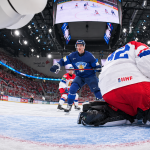
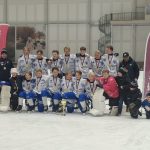
IFK Vänersborg retained the World Bandy boys’ U16 Club World Cup title with a 2–1 victory over Villa Lidköping BK in Katrineholm, Sweden. Held from 30 October to 1 November, the ‘Mini World Cup’ brought together ten teams from Sweden, Norway and Finland for its second consecutive year in the city. Organised locally by Katrineholm Bandy, the competition continued a tradition stretching back four decades under World Bandy, the Federation of International Bandy (FIB).
The final brought together the same opponents as in 2025, when Vänersborg won 4–3. This time, Alvin Apell put Villa Lidköping ahead in the twelfth minute, before Love Bergius equalised in the twenty-fifth and Emil Magnusson scored the winner in the sixty-first. Magnusson had also scored in the previous final. IK Sirius completed the podium with a 6–3 victory over Porin Narukerä, the Finnish representative that reached the semi-finals alongside the three Swedish teams.
Forty years of history and a change of venue
The tournament began in 1986 in Bollnäs, which hosted it for much of its history, and also visited Vetlanda before moving to Katrineholm in 2025. Its continued presence gives youth players an international club competition distinct from national-team championships. This edition featured six Swedish teams, three Norwegian sides and one Finnish team, including several joint entries such as Katrineholm/Västerås SK, Spånga/Helenelund and Tillberga/Örebro, bringing together players from different clubs.
The move to Katrineholm received municipal backing. In October 2025, the local authority approved a grant of SEK 50,000 for the city’s first edition. Separately, it awarded SEK 55,000 towards four tournaments during the 2025–2026 season to help keep entry fees down. The agreement required the club to provide a written account of how the funding had been used. That support accompanied the international tournament’s arrival on the local calendar.
A municipal arena for competition and community sport
The Kronfågel Ice Arena, part of the Backavallen sports complex, provides the main infrastructure for this chapter in the tournament’s history. Opened in October 2020, it is owned and operated by the municipality and has capacity for 2,000 spectators. Swedish federation documentation puts the project cost at SEK 76 million, including work on the ice surface, refrigeration, heat recovery, solar panels and other facilities. The Mini World Cup therefore uses an existing venue to bring together three days of international competition.
The arena combines athletes’ needs with everyday community use. It recovers heat to warm changing rooms, water and other facilities, while a service building shared with the neighbouring ice rink includes six changing rooms, officials’ rooms, a meeting room and accessible facilities. The municipality and local sports organisations also work together to offer public skating activities during the winter. The venue’s role consequently extends beyond tournament weekends.
A first taste of international competition
The tournament’s developmental role was already evident in Katrineholm Bandy’s announcement ahead of the 2025 event: “For many, this is their first major international experience.” The club presented the gathering as an opportunity to grow both on and off the ice. Travelling with teammates, meeting players from other countries and facing different approaches to the sport are all part of an event that brings Nordic youth teams together at the start of the season.
World Bandy’s youth calendar continues from 6 to 8 November with the girls’ U17 Club World Cup, shared between Åby Ice Stadium in Mölndal and Ruddalen Ice Hall in Gothenburg. Six teams from Sweden and Norway will compete, with Västerås SK defending the title. Coverage is available through Bandyplay in Sweden and FIB TV elsewhere, allowing audiences to follow the competition beyond the host communities.
 Last related articles