African football’s governing body reports record revenues, stronger reserves and increased funding for national federations and clubs, but long-term sustainability remains the real test.
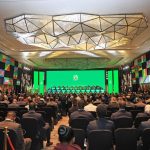
The Confederation of African Football (CAF) has announced a significant financial recovery, reporting revenues of $284 million and a net profit of $31.2 million for the 2025-26 financial year. The figures, presented at its 48th Ordinary General Assembly in Abuja, Nigeria, on November 21, mark a substantial turnaround for an organization that was struggling with debts exceeding $100 million just five years ago.
Under the presidency of Patrice Motsepe, CAF has strengthened its financial position, moving from negative reserves of $16.8 million to positive reserves of $14.4 million. Its cash balance reached $118.8 million at the end of June 2026, providing a stronger foundation for investment across African football.
The recovery has been supported by growing commercial revenues, particularly from the Africa Cup of Nations. The 2025 tournament in Morocco attracted a record 23 commercial partners and generated more than $100 million in commercial revenue, demonstrating the increasing market value of African football’s flagship competition.
More importantly, CAF is beginning to translate its improved finances into greater support for the game. Annual allocations to each of its 54 national associations have risen from $200,000 in 2021 to $700,000, while funding for the six regional unions has increased to $900,000 each. Investment in African club football has also grown substantially, reaching $48 million, alongside higher prize money and solidarity payments.
These developments represent more than an accounting improvement. African football has long possessed exceptional sporting talent and considerable commercial potential, but institutional weaknesses, limited resources and uneven development have often prevented that potential from being fully realized. Stronger central finances offer CAF an opportunity to address some of these structural disadvantages.
There are, however, important questions beyond the impressive figures. CAF’s ability to maintain profitability will depend on sustained commercial growth, disciplined financial management and reduced vulnerability to fluctuations in revenue from major tournaments. Equally important will be the transparency and effectiveness with which national associations distribute and use increased resources.
The presentation of two sets of financial accounts in 2026, addressing a long-standing reporting backlog, is a positive development. Yet timely reporting, independent scrutiny and measurable development outcomes must become permanent features of CAF’s governance rather than exceptional achievements.
Motsepe’s administration deserves recognition for the scale of the financial recovery. But the ultimate measure of success will not be the size of CAF’s bank balance. It will be whether stronger finances produce stronger institutions, more competitive domestic football and lasting opportunities for African players, clubs and federations.
Financial recovery is an achievement. Turning it into institutional progress is the next responsibility.
 Last related articles