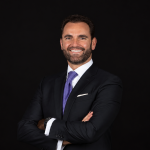
Axel Clerget’s invitation to Senegal to lead the second edition of the ‘On the Road to Dakar’ masterclass, alongside Nicolas Messner, media and Judo for Peace director at the International Judo Federation -IJF-, offers a strong way into his story. The French Olympic and world mixed team champion, as well as a world medallist, travelled to Dakar as part of an initiative also supported by Olympic Solidarity, the African Judo Union and the Senegal Judo Federation, but his presence there made sense for more than just his record. It made sense because of an idea that has run through his life since childhood. “Passing on knowledge is a duty,” he said in Senegal, summing up a conviction learned at home and reinforced over the years.
That sense of transmission is no accident in someone raised in a family where judo was a way of life. The Clerget family add up to 21 dan between them, with his father, mother, sister and brother all connected to the sport, and he himself has said more than once that he practically grew up on a tatami. “I must have been less than a year old. My father is a judo teacher, so from the time I was very little I was already on a mat,” he recalled in an interview. He started at the age of four in his father’s club in Saint-Dizier, and one of his earliest happy memories has all the hallmarks of a child fascinated by the game and the hierarchy of the dojo: “I remember the first time I threw a champion. I was so happy. For me, it was an achievement, it was a dream.” Before he became a judoka measured by results, Clerget was a child shaped by that family environment, by repetition and by an almost physical closeness to judo from the very beginning.
Judo as a family inheritance and a way of being in the world
Born in Saint-Dizier, in Haute-Marne, and arriving in Paris while still young to join INSEP, Clerget has said that the change weighed on him. “I arrived in Paris at 18. It was a very big city. It was difficult for me, because I came from the countryside,” he explained in an IJF video profile. In that same piece, he added something even more revealing: “I didn’t think I was capable of becoming a champion.” That sentence gives his career a different texture. Instead of the flatter story of an athlete destined for success, Clerget comes across as a judoka who moved forward through sacrifice, through hours and hours of training, and through a relationship with ambition that was built far more through work than instinct.
The decisive part of that story came when he stopped. In 2009, he made a choice that is unusual for an athlete in the middle of a career: he stepped away from judo for nine months. “I’d had enough. I didn’t know anymore why I was there,” he said years later. The break was not a whim or a side note. It was a deep rupture. It helped him recover the meaning of what he was doing and return to a much cleaner idea of the sport. “I came back to judo for one very simple reason: in everyday life, you don’t experience emotions as beautiful as the ones you feel in judo.” That sentence explains a great deal about what followed. Clerget did not come back simply to keep competing. He came back because he rediscovered pleasure, emotional intensity and a personal truth he could only find on the tatami. In another interview, he put it just as clearly: “I enjoy it so much now that I can’t see myself stopping.”
 A life project shaped by physiotherapy, judo and fatherhood
His career also cannot be understood without the other life he built outside the tatami. Clerget trained as a physiotherapist and spent years defending a dual path that set him apart from the more conventional profile of an elite champion. While still competing, he was studying, working and carrying accumulated fatigue. He has explained himself that for seven years he lived between physiotherapy and judo, almost constantly in a state of over-fatigue, without real spaces for recovery. Even so, that professional path gave him something he still sees as decisive: security. “It was very important for me to have that dual project,” he said in a talk years after graduating. “It allowed me to feel free and then commit one hundred per cent, knowing that from one day to the next, if I had a major injury or if I got tired of high-level sport, I could always go back to my profession.” In his case, studying was not a distraction from performance. It was a way of breathing inside a demanding career.
That blend of craft, care and maturity also shaped the best version of him as an athlete. Clerget explained in one interview that for a long time he was only the fourth- or fifth-ranked French judoka and that he finished his years of study around 150th in the world before taking the leap forward. Later, with more maturity, he changed parts of his preparation, worked on his diet, started relying on a strength coach and a psychologist, and gave more value to quality than quantity. “I feel better now, I’m smarter, I’ve built up hours and hours of work,” he said in a press interview, adding that he had learned to understand himself better and to train better. In another conversation, he also spoke about what fatherhood changed in his relationship with pressure: “Having a child changed the way I see life. I’m much happier every day. It helped me put judo into perspective, enjoy it much more. And I know that whatever happens, my son will always be there.” Those are the kind of words that explain why his later success feels built more on calm than on urgency.
A late champion
With all of that behind him, Dakar makes more sense. Clerget arrived in Senegal to teach, but also to observe and to let himself be affected by what he saw. There he spoke about the respect shown by the young judoka, about the use of the word “master”, now far less common in Europe, and about the discipline with which they repeated and listened. He was also struck by the technical level of the group, especially their movement on the ground, and by the seriousness and concentration with which they worked. But what marked him most was the human side. After years of travelling the world through judo, he said he was still impressed by societies capable of doing so much with so little. “They know how to do a lot with very little, and that is a strength,” he said when speaking about Senegal. More than a sentence about material limitations, it was a way of recognising a human richness and resilience that left a mark on him.
That is why the trip to Dakar also feels like a natural continuation of his own life story. Clerget no longer appears there only as the French judoka with medals, nor only as the ne-waza specialist some rivals nicknamed ‘the Anaconda’, nor only as the physiotherapist who learned to live with injuries and wear and tear. He appears as someone who has gone through a childhood in the dojo, doubt, a break, rebuilding and maturity, and who now sees judo through the lens of transmission as well. The sentence with which he summed up the experience in Senegal probably explains that personal evolution better than any other: “There is a time for yourself, a time with others and a time for others.” In Axel Clerget’s case, that time seems to have arrived without erasing what came before, but by putting it in order.
 Last related articles