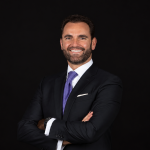
In an exclusive interview with SportsIn, Camilo Pérez López Moreira, president of the Paraguayan Olympic Committee and member of the International Olympic Committee -IOC-, looks back on the path that took him from sport into sports leadership and then to the presidency of the South American Sports Organization -ODESUR-. In the conversation, he returns to his family roots, defends the work carried out at the head of the organisation, explains why he sees sports leadership as a task of transformation in the service of athletes, officials and communities, and sets out why he has now decided to open a new chapter in Paraguayan politics.
Before moving into management, his background was linked to tennis and other sports that shaped his family environment. In his conversation with SportsIn, Pérez López Moreira returns to that origin to explain how he developed a way of understanding sport based on discipline, high standards and service. “Our parents encouraged us to spend our time in some kind of sporting activity, regardless of whether you had talent or a vocation that you could put at the service of others. My father was a guide, a great motivator who pushed me to set goals, whether small or big,” he says.
From sport to South American sports leadership
From that foundation, Pérez López Moreira describes a progression that moved from high performance sport to sports governance. “I have always sought excellence in everything, in competition as an athlete, and then I discovered that I had the skills to become a sports administrator and I took the chance. In the end, high performance is about improving day by day, improving your marks, and in leadership work, being able to make changes that benefit athletes and the wider community,” he says.
Along the same lines, he links his career in sports administration to team building and the ability to listen. “My life has been full of magical moments, but to reach each of them there has been work, building great teams, leading firmly, but also caring about the people around you. Without them, success is difficult to achieve. We all depend on one another. Nothing is the result of chance,” he says. In that reflection, he also stresses the importance of listening within federated sport and of working with governments and states as part of a broader transformation through sport.

Rebuilding ODESUR as the core of his presidency
One of the central moments of the interview comes when SportsIn asks why he accepted the challenge of leading ODESUR during a period of major institutional difficulty. His answer returns to the idea of personal challenge and management. “I like difficult and extreme situations. Finding an institution without legal status, without bank accounts, without money in the bank, in a critical situation, that motivated me and forced me to be diligent in the new position I was taking on,” he explains.
Pérez López Moreira argues that the period ended with a stronger and financially stable organisation. “We are leaving behind an orderly ODESUR, with more than four million dollars in the bank, important assets, and a level of development that was unthinkable at the time,” he says. ODESUR itself announced in April its recognition of that work and named him Honorary President, while Argentina’s Mario Moccia, president of the Argentine Olympic Committee, will lead the organisation until April 2027 to complete the term.
Asunción, the next objective
In the final part of the interview, Pérez López Moreira explains why he has now decided to begin a new chapter in Paraguayan public life. “If there is one thing that motivates and moves me, it is feeling the call of my people, my city and my country,” he says. In his account, that step is tied to family support and to a desire to apply in Asunción an idea of transformation similar to the one he associates with his work in sport.
“My great wish is to turn Asunción into a meeting point, where today there is nothing, a place can exist for development, where people feel proud of their capital, where visitors feel it is a clean, orderly city, with streets that can be used and where safety is for everyone and not a privilege for a few,” he says. His departure from ODESUR became effective after Panama 2026, following a period in which the organisation consolidated a more stable financial and administrative structure within South American sport.
 Last related articles