The Court of Arbitration for Sport -CAS- expects to issue its ruling in late November on Senegal’s appeal against the decision awarding Morocco the 2025 Africa Cup of Nations title. The announcement, published on Monday, extends the wait following the hearing on 8 October. Senegal won the final 1-0 after extra time, but the Confederation of African Football -CAF- Appeal Board subsequently changed the result to a 3-0 victory for Morocco because of Senegal’s temporary walk-off during the match.
The panel is continuing its deliberations and has decided to issue a full award setting out the legal grounds for its decision. That process will take several weeks. After the hearing, a decision had been expected within days, although no firm date was given. The revised timetable offers no indication of the outcome or whether the arbitrators have accepted or rejected either side’s arguments. It extends the wait to resolve a central question: what consequences can a temporary walk-off carry under the regulations when the match subsequently resumes and is completed?
A completed match and an overturned result
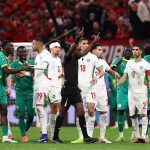
The dispute stems from January’s final in Rabat, where several Senegal players left the pitch, some heading to the dressing rooms, after the hosts were awarded a penalty in the closing minutes of normal time. The interruption lasted around fourteen minutes. Senegal returned, Morocco missed the penalty and the match continued into extra time, when Senegal scored the winning goal. The Senegalese team celebrated a title whose award subsequently became the subject of disciplinary proceedings.
On 17 March, CAF’s Appeal Board upheld the Royal Moroccan Football Federation -FRMF- appeal and set aside the earlier Disciplinary Board decision. It found that Senegal’s conduct breached Article 82 of the competition regulations and applied Article 84 to declare the match forfeited, recording a 3-0 result. That appeal ruling overturned the result, converting Senegal’s victory on the pitch into an administrative defeat. CAS is now examining the challenge to that decision.
Refereeing authority and disciplinary consequences
Senegal argues that the match resumed under the referee’s authority and was completed, so its result should stand. That argument places the way the match unfolded against CAF’s interpretation of its regulations. The dispute concerns whether the team’s conduct justified subsequently declaring the match forfeited. The closed-door hearing in Lausanne, Switzerland, allowed the tribunal to hear the positions of the Senegalese federation, CAF and the Moroccan federation.
Allowing a match to continue and determining its disciplinary consequences involve different forms of authority. The fact that the final was completed is central to Senegal’s appeal, but does not by itself settle how the provisions cited by CAF should apply. Equally, the existence of those rules does not automatically establish that they were correctly applied to these circumstances. The award must resolve the dispute through an interpretation of the regulations and an assessment of what happened during the match, without either position being presumed to prevail.
A title under arbitral review
The case involves three distinct facts: Senegal won the final on the pitch; CAF subsequently recorded a 3-0 Moroccan victory; and the challenge to that change remains pending. October’s announcement concerns the proceedings and the expected timetable, rather than a further alteration to the result. The tribunal has also specified that official announcements about the case will be published through its own channels.
The award expected in late November must establish whether CAF’s decision stands or Senegal’s challenge succeeds. Its reasoning will explain how the panel assessed the relationship between the temporary walk-off, the authorised resumption and the subsequent forfeiture. For the competition’s governance, that explanation will clarify the scope of the applicable rules when a completed match becomes subject to disciplinary review. The announced timetable remains an expectation for issuing the award, with no specific date confirmed.
 Last related articles