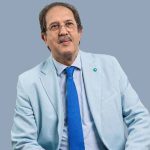
The IV South American Youth Games – Panama 2026 are currently underway in the country that connects the American continent, bringing together fourteen other nations aiming to develop their top sporting prospects. These Games would not be possible without the strong management of the Panama Olympic Committee, led by Damaris Young, which has generated full confidence at a state, business and, above all, sporting level. SportsIn spoke with her in an exclusive interview to analyse the future of the competition and the country’s sporting outlook.
The sporting event – which concludes on April 25 – is expected to mark a turning point in the development of sport in a country that has produced renowned global athletes, but still has many sporting careers to nurture in order to sustain them over a competitive lifespan. “For the entire team behind Panama 2026, for the sporting community, the Games represent a starting point for the reality we want for Panama in the global sports landscape. So, without a doubt, that was the motivation, that is the vision, that was the planning and that is the legacy we hope will remain,” said Damaris Young.
When it was announced that San Luis would no longer host the Games, Panama – which had withdrawn from hosting the Central American and Caribbean Games in 2020 – saw an opportunity. “I will always say it. The management model we were able to implement was extremely important, working in coordination with the State through the institutions that are part of the Institutional Technical Committee and as a team with the Panamanian Sports Institute, with its director and the entire staff, but also understanding that this coordination required the private sector, which has been important and relevant not only from an economic standpoint and its impact, but also in elevating the human talent and capabilities of our professionals so that Panama can continue to grow,” explained Young.
Understanding the Olympic Committee from within
The current president of the Panama Olympic Committee previously worked in the legal field and also served as vice president during the administration led by Camilo Amado, which laid the foundations for restoring credibility to the national sports body. “The governance situation the organisation faced was very difficult and when Camilo Amado took over – honestly, I take my hat off to him – I was part of that process, advising him on legal matters but also on management, and the challenge was monumental, we didn’t even have recognition. I believe the great legacy Camilo Amado left was establishing the foundations so that, when I later took office, those foundations could be developed.”
That development began by putting the house in order, establishing administrative standards for each federation, association or sports union with international recognition or participation, as the reality of some was unacceptable even at an organisational level, which hindered the development of their athletes.
Faced with this situation, the Panama Olympic Committee has made significant efforts to train sports leaders so that their organisations could be managed responsibly, with communication based on transparency towards the State, international sports bodies and, above all, their athletes. “We work with a strategic plan approved by our national federations during our term, from which all management indicators are derived, and each year we report on the fulfilment of those indicators. Hosting multi-sport events was clearly one of those objectives,” the president of the Panama Olympic Committee explained.
Athletes as the main focus
The relationship between the Olympic Committee and the Panamanian Sports Institute has been very different compared to previous periods, although there now seems to be a better understanding between both organisations in terms of planning and collaboration since Miguel Ordoñez – an active golfer – took office at the Panamanian Sports Institute. “Athletes are at the centre of our decisions. And that’s not just something we say, it’s reflected in our actions. I also believe it’s important to highlight that having a director general who is an athlete, who understands what athletes go through, makes things much easier, because when you sit down to discuss planning, it’s not something unfamiliar,” said Damaris Young.
This positive dynamic has made it possible to focus on other key aspects, including physical and mental preparation, equipment, working tools, technology, and even infrastructure specifications – one of the most complex areas – for the development of athletes across the country’s federations and associations. “I am always grateful that we have coincided in the same period, because I believe it is part of why we are now able to pursue the country’s objectives. All of these objectives are agreed upon together, which I think is the key message and the great opportunity. It is also a way for future administrations to understand that, in order to avoid challenges, the first step is to sit down and agree on where you want to go,” she concluded.
Panama is now looking to take the next step in its ambition to host multi-sport events, with its sights set on the 2029 Junior Pan American Games. The initiative already has government backing, official letters have been submitted, and a process with Panam Sports has begun to formalise its candidacy.
 Last related articles